




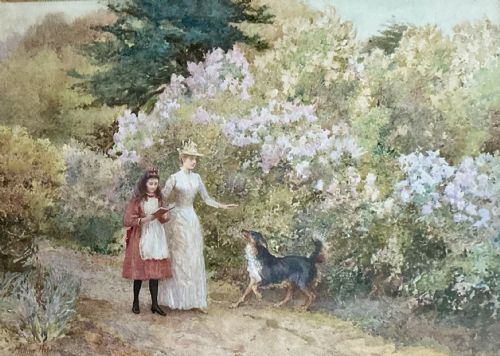


Victorian Genre Print
A victorian genre print brings domestic narrative and idyllic charm into a room through nineteenth-century reproductive techniques and original works on paper.
Victorian Genre Print
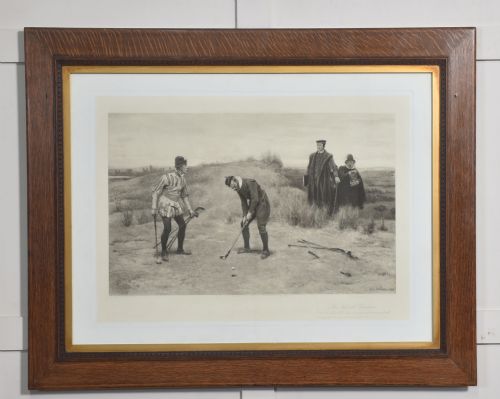
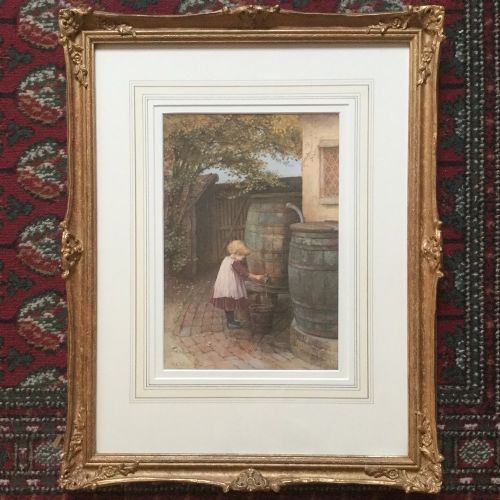
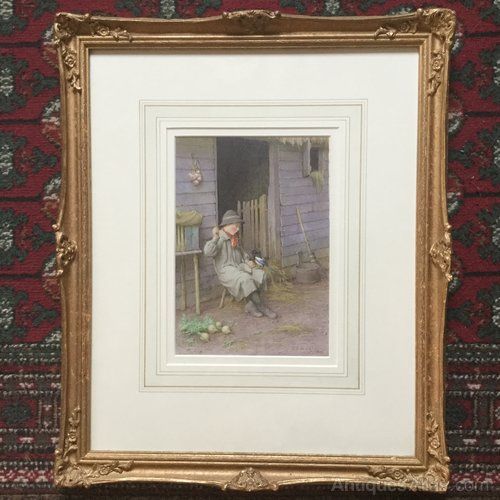
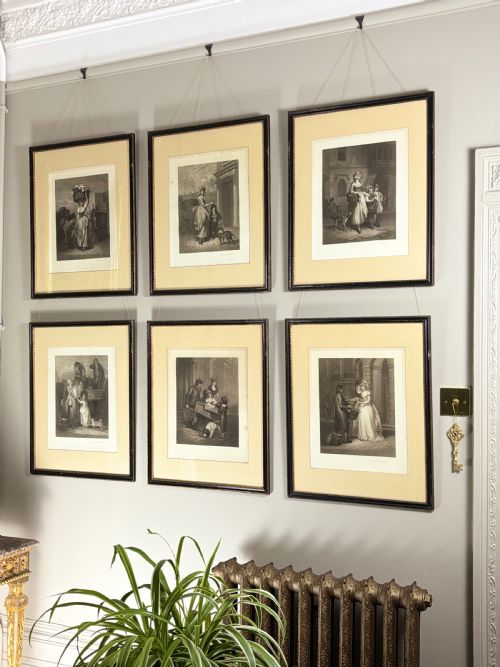
When you search for a victorian genre print, you encounter framed works depicting everyday scenes, domestic animals, and narrative moments from the nineteenth century. These pieces capture the tastes of an era that prized sentimental storytelling, children, and rural life in domestic interiors.
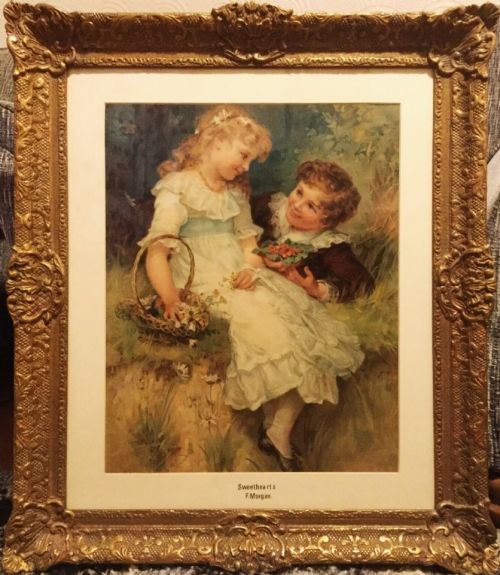
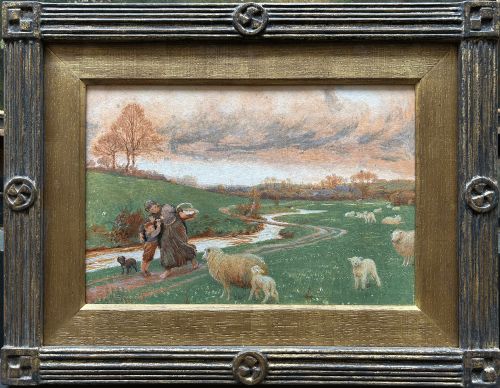
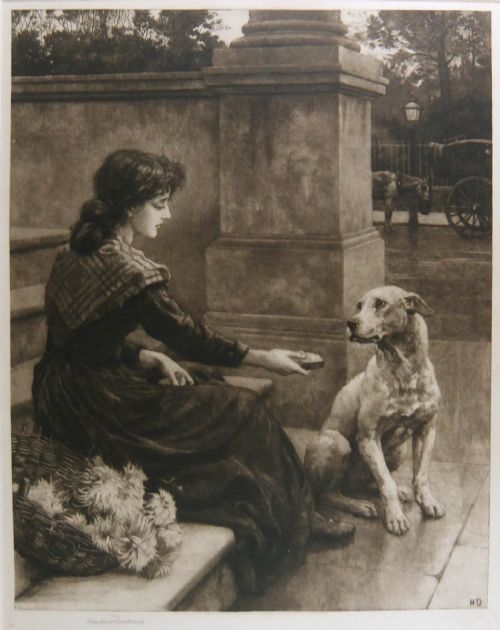
The selections available range from Pears advertising prints and lithographs to mezzotints, etchings, and chromolithographs framed in wood, gesso, and giltwood. Alongside reproductive prints, the category encompasses original oil paintings, watercolours, and chrystoleums that share the same narrative subject matter.
Materials and reproduction methods
The works rely primarily on paper supports for printed images, utilising techniques such as lithography, mezzotint etching, and chromolithography to translate original paintings into multiple impressions. Advertisers and publishers also employed specialised mediums like chrystoleums, where hand-coloured prints were mounted to glass and clarified with oil or varnish.
Original compositions within the category utilise oil on canvas or watercolour on paper, executed by named artists and painters of the period. These visual works are typically housed in period frames constructed from wood, gesso, and gold leaf or gilt wood.
Framing materials often feature decorative gesso mouldings finished with gilt leaf, providing the protective borders characteristic of nineteenth-century presentation. Glass covers the paper prints and chrystoleums to protect the delicate surfaces from atmospheric moisture and dust.
Victorian Genre Print Retail Price Guide 2026
Typical asking prices for victorian genre print among the pieces listed under this phrase on Sellingantiques today, from the lower quarter to the upper quarter. They describe what is for sale here now, not the wider market.
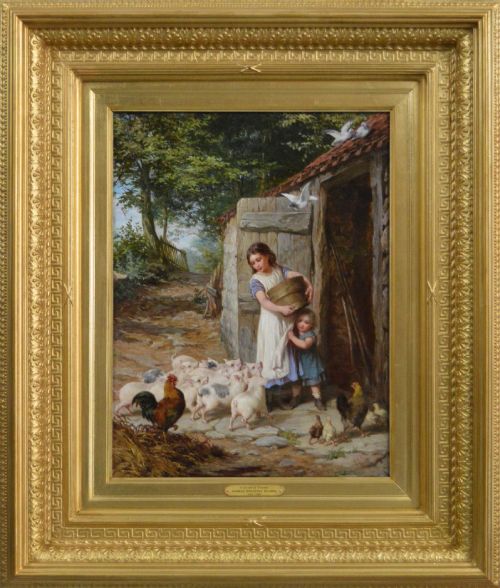
Several pieces preserve the domestic amusements of the era, capturing kittens at tea parties and small children feeding very reluctant piglets.
Evaluating quality and condition
Quality in these works rests upon the fidelity of the printing process and the clarity of the impression, where sharper lines and richer ink saturation distinguish superior plates from worn examples. Hand-colouring on prints and chrystoleums adds a layer of individual artistry that elevates the visual depth.
The integrity of the original frame significantly impacts the overall standard, with original giltwood, carved frames, and gesso mouldings commanding greater appreciation than later replacements. Surviving glass on chrystoleums and prints without severe foxing or fading on the paper represent better-preserved specimens.
Frederick Morgans·George Augustus Holmes·Herbert Dicksee·Charles Edward Wilson·Thomas G Appleton·Charles Burton Barber·Arthur Hopkins·Agnes Augusta Tallboys·Jules Le Roy·Schweninger
The Victorian Genre Print Glossary
- Chrystoleum
- A convex glass painting technique where a coloured print is stuck face down to glass, the paper backing rubbed away, and the remaining transparent image hand-painted from behind. This method creates a luminous, three-dimensional effect popular in the nineteenth century.
- Chromolithography
- A planographic printing method that uses multiple limestone blocks or metal plates to apply different chromatic inks in register. The process produces vibrant, multi-coloured reproductive prints.
- Mezzotint
- A tonal intaglio printmaking process where the copper plate is roughened uniformly to hold ink, then scraped and burnished to create gradations of light and shade. It yields rich, velvety darks and subtle mid-tones.
- Oleograph
- A chromolithographic reproduction printed on canvas to imitate the texture and appearance of an oil painting. They were frequently varnished and framed like original canvases.
- Gesso
- A plaster-like binder mixture applied to wood frames before gilding or painting, allowing artisans to carve intricate decorative reliefs. It forms the crisp surface details seen on period frames.
Victorian Genre Print: Frequently Asked Questions
What is a chrystoleum?
A chrystoleum is a nineteenth-century picture made by applying a paper print face down onto convex glass, removing the paper backing, and painting the reverse by hand.
This intricate process gives the image a luminous depth that resembles an enamel miniature or oil painting under glass.
How do I care for framed paper prints?
Keep framed prints out of direct sunlight to prevent the paper from yellowing and the inks or watercolours from fading over time.
Maintain a stable indoor humidity level to protect both the antique paper and the wooden gesso frames from warping or cracking.
Are these prints original works?
The category includes both original oil paintings and watercolours alongside reproductive prints such as lithographs, mezzotints, and Pears advertising prints.
Reproductive prints were published in editions after popular paintings of the era, while paintings and watercolours remain unique hand-executed creations.
How can I date a Victorian frame?
Nineteenth-century frames typically feature hand-carved wooden construction or moulded gesso finished with genuine gold leaf or early gilding techniques.
Inspect the backboards, fixings, and corner joins for signs of age, such as hand-cut screws, old nails, and oxidized backing papers.