





Victorian Genre Landscape Artwork
Victorian genre landscape artwork captures everyday scenes of rural life and coastal work painted during the nineteenth and early twentieth centuries.
Victorian Genre Landscape Artwork
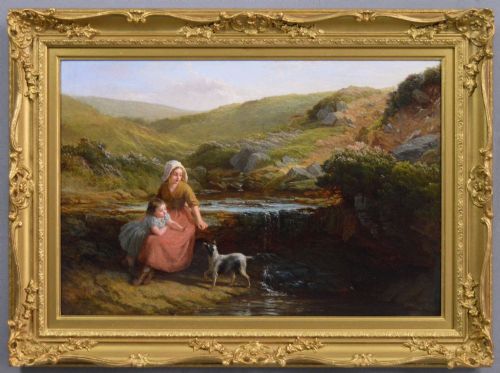
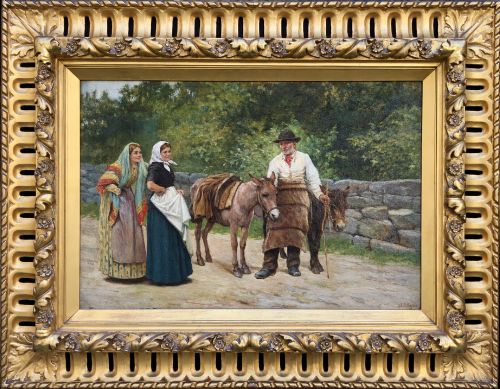
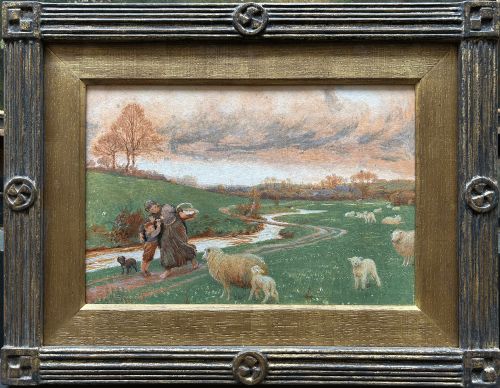
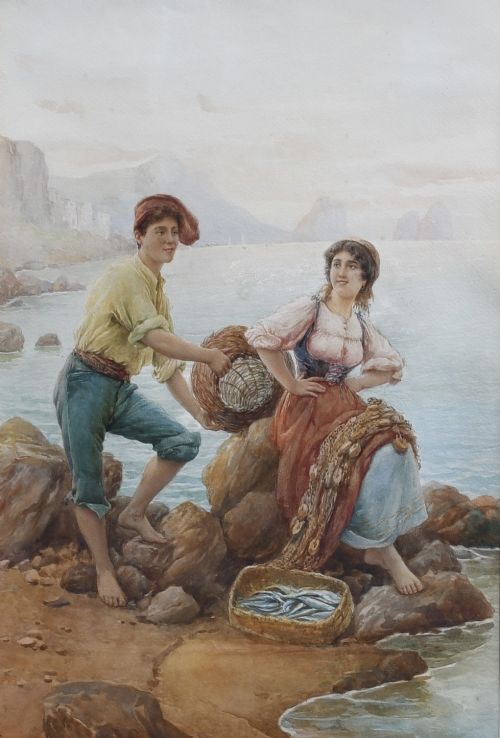
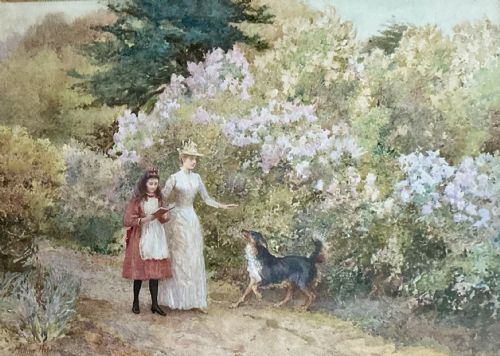
Victorian genre landscape artwork combines scenic countryside views with human activity, portraying domestic moments, agricultural labour and coastal communities. Buyers find pieces depicting children gathering firewood, fisherfolk resting by the sea and farmyards populated with livestock.
The most common examples on this page are oil paintings on canvas and watercolours on paper housed in period frames. These works span the nineteenth century into the early twentieth century, reflecting romantic, realist and pastoral traditions.
Materials and Technique
Artists painted primarily using oil on canvas, oil on board, or watercolour pigment on paper. Canvases provide depth and rich texture for pastoral and farmyard scenes, while watercolours offer fine detail for delicate cottage gardens and coastal views.
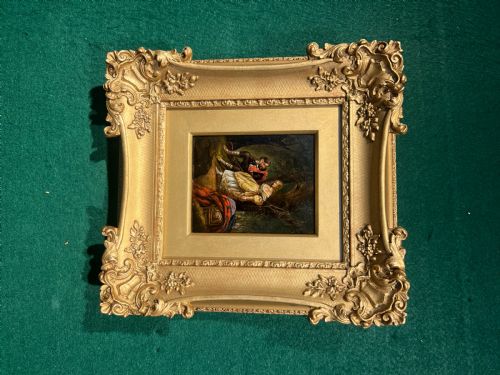
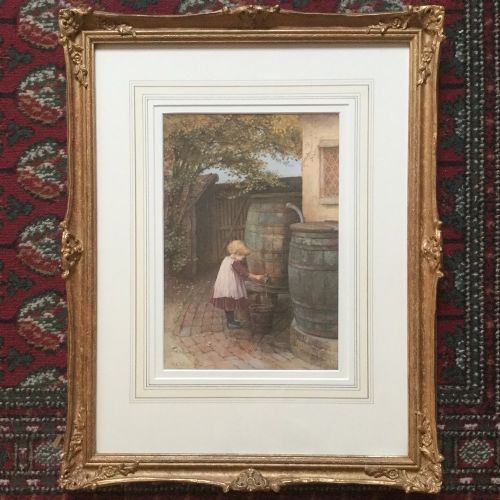
Frames form an integral part of these pieces, constructed from wood finished with gesso and gilt wood to complement the painted composition.
Materials represented across the collection include oil on canvas, watercolour pigment on paper, wood, gesso and gilt frames.
Distinctions in Quality
Quality rests upon the artist's ability to render human expression and natural light within the landscape. Masterly handling of pigment brings vitality to figures such as children gathering berries or fishermen mending nets.
The preservation of the original medium and the craftsmanship of the period frame influence the overall integrity of the work.
Charles Edward Wilson·William Arthur Breakspeare·James Mallard Bromley·Arthur Hopkins·James Hardy Junior·Arthur Longley Vernon·Frank Hyde·John Henry Dell·Kate E Booth·Jane Maria Bowkett·George Kilburne·Charles H Poingdestre·Sydney Kendrick·Paul Viry·Alfred Banner·Henry Sykes·John Frederick Herring Jnr·Edward Killingworth Johnson·Madeline Hughes·Robert McGregor·Robert Farren·Edward H Holder·Francis William Topham·Arthur Claude Strachan
The Victorian Genre Landscape Artwork Glossary
- Genre painting
- Art that depicts aspects of everyday life by portraying ordinary people engaged in common activities. These works focus on domestic scenes, rural labour and social interactions rather than grand historical or mythological subjects.
- Watercolour
- A painting method in which the paints are made of pigments suspended in a water-based solution. Artists utilise this technique on paper to achieve translucent washes and delicate details.
- Gesso
- A plaster-like mixture applied to wood or canvas as a prepared surface before painting or gilding. In framing, it provides a smooth base for intricate decorative mouldings.
- Gilt wood
- Wood coated with a thin layer of gold leaf or metallic powder. This finish appears frequently on nineteenth-century picture frames to enhance the visual weight of the artwork.
Victorian Genre Landscape Artwork: Frequently Asked Questions
What subjects appear in these paintings?
These artworks typically show rural workers, children playing, farm animals and coastal scenes set within nineteenth-century landscapes. Figures engaged in daily tasks like fishing, gathering firewood or tending gardens form the central focus.
The compositions merge detailed landscape backgrounds with narrative human elements, reflecting Victorian romantic and realist traditions.
How do I care for watercolour art?
Watercolour paintings on paper require protection from direct sunlight to prevent the pigments from fading over time. Maintaining a stable environment away from excessive moisture preserves both the paper and the surrounding frame.
Displaying pieces behind appropriate glazing shields the delicate pigments from atmospheric pollutants and physical damage.
Are these works original period pieces?
The listings comprise nineteenth-century and early twentieth-century creations, including original watercolours and oil paintings. Many bear the signatures of noted artists from the period alongside historical framing.
Documentation within the titles often references specific dates, artist lifespans and regional schools of painting.
What framing accompanies these pieces?
Many artworks retain their period frames constructed from wood, gesso and gilt finishes. These frames are selected to complement the specific aesthetic of the Victorian or Edwardian era.
Original frames contribute to the historical context of the piece, though condition varies across individual works.