

Victorian Genre Art
When you handle victorian genre art, you are dealing in painted narratives of everyday life that capture domestic scenes, social history and human character from the nineteenth century.
Victorian Genre Art
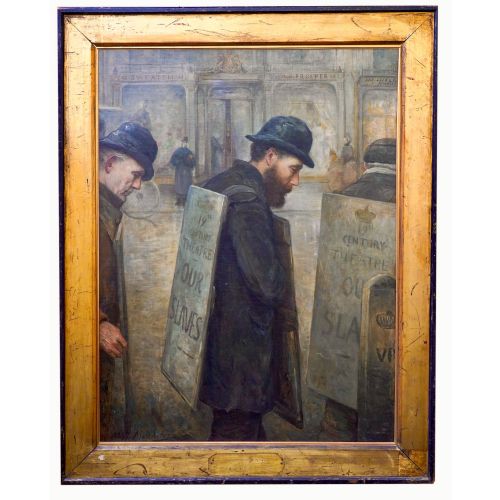
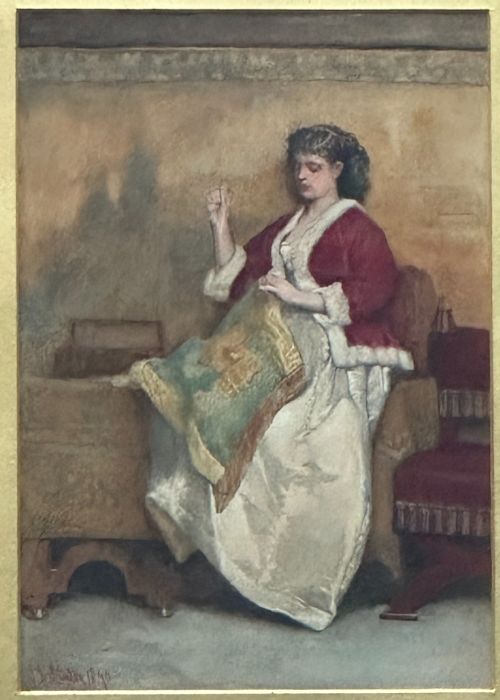
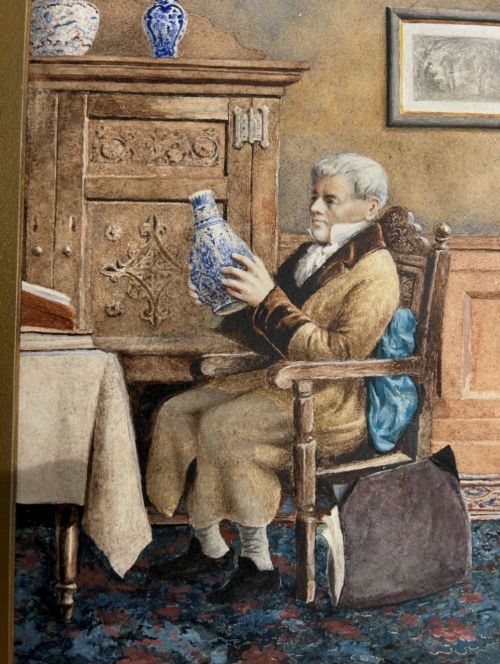
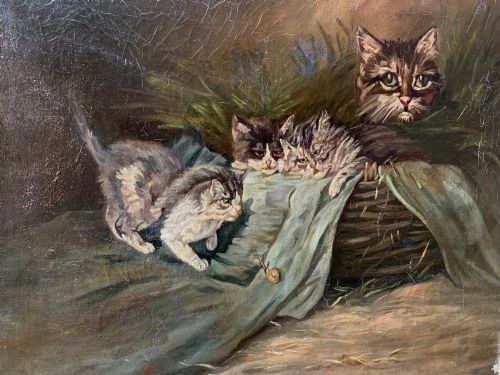
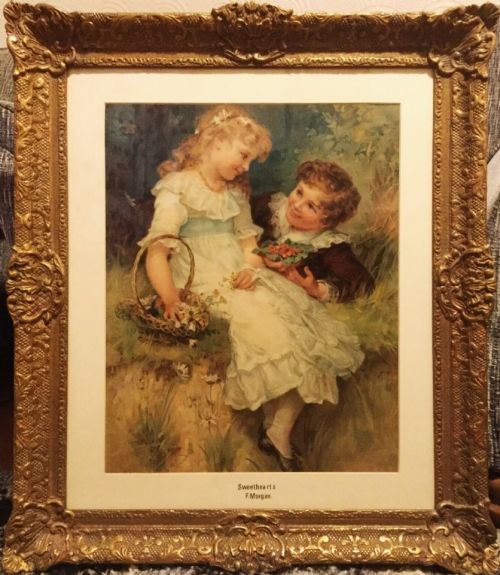
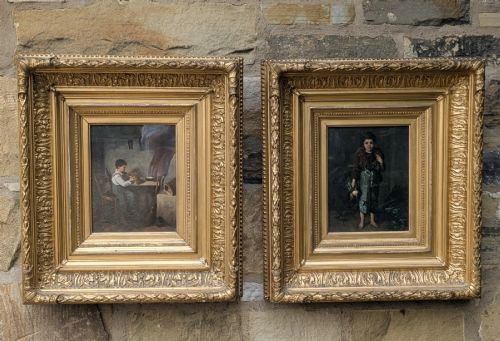
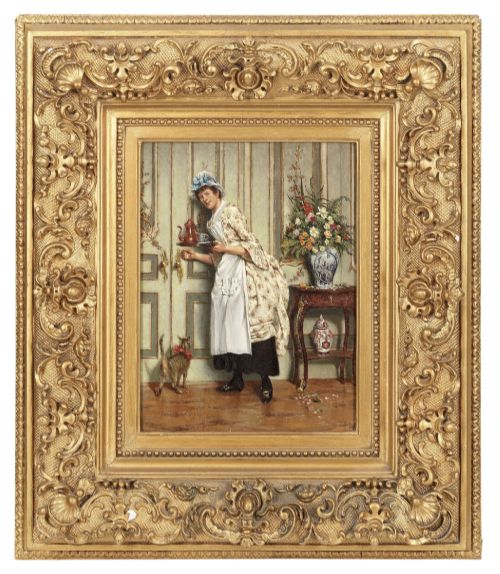
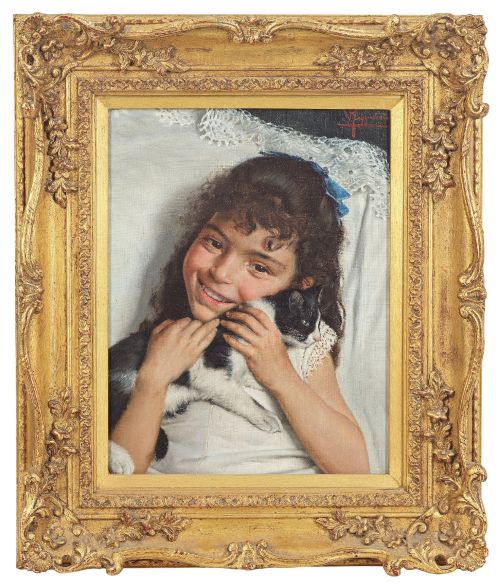
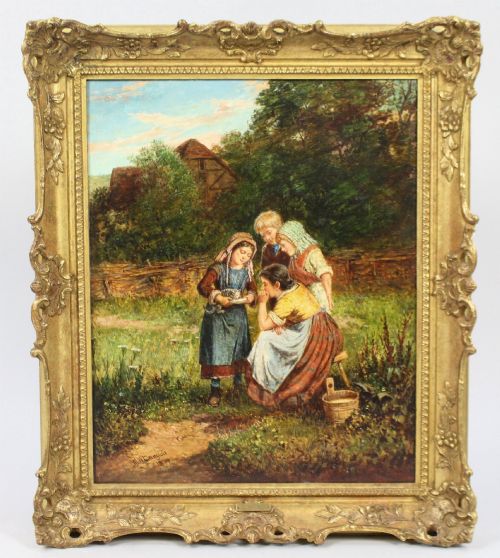
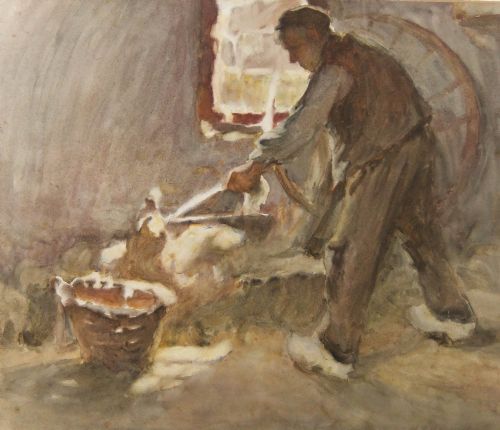
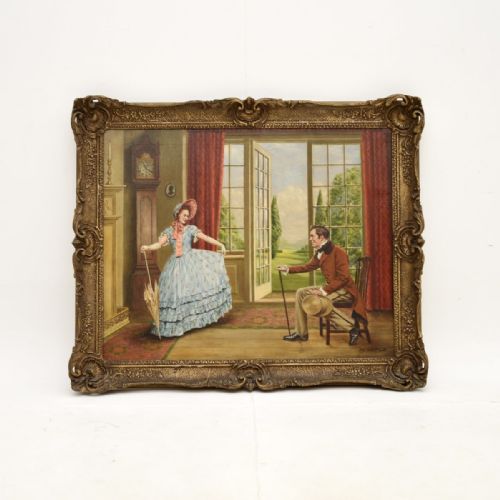
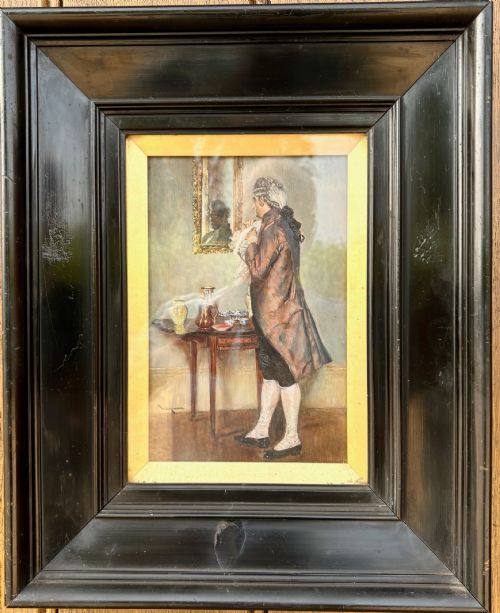
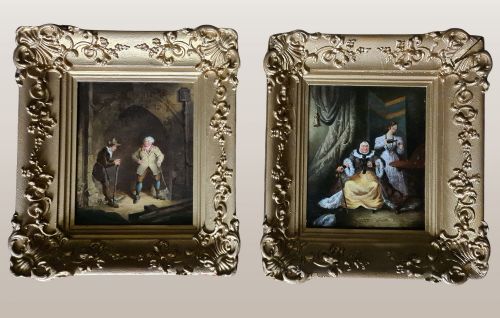
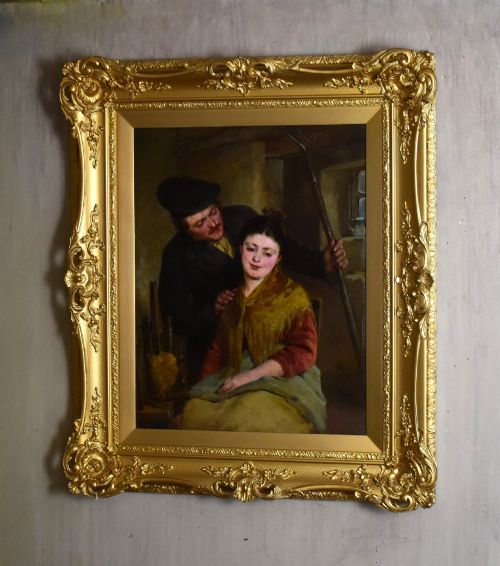
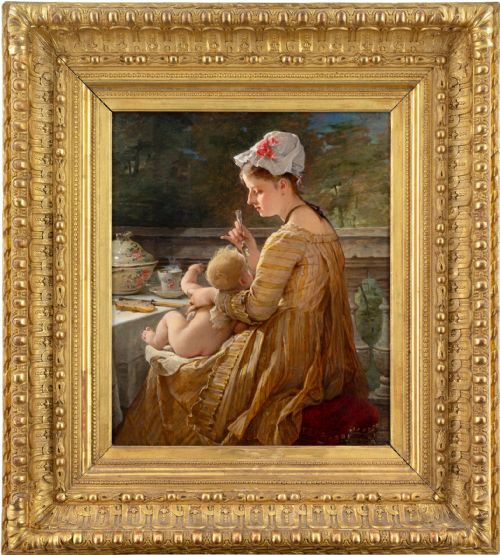
Victorian genre art encompasses oil paintings, watercolours, etchings and engravings depicting everyday human activities, domestic interiors and social narratives from the nineteenth century. The examples found here span diverse subjects ranging from children with pets and country house tea times to blacksmiths at work and historical scenes of entertainment.
You will most commonly encounter original oil paintings on canvas and board alongside period watercolours, often housed in heavy giltwood and gesso frames. These works originate from British, French, Italian and Scottish schools active between the mid-nineteenth century and the early twentieth century.
The form developed to satisfy a strong appetite for relatable storytelling, moving away from grand historical or mythological subjects to focus on the charm of rural labour, children, animals and quiet domestic moments.
Materials and technique
The primary mediums recorded are oil on canvas and watercolour on paper, supplemented by oil on board, lithographs and original etchings. Painters built up their compositions using traditional layering techniques, capturing light and texture with fine brushwork.
Frames play a significant part in the physical makeup of these pieces, utilising carved wood, gesso and gold leaf to create ornate gilded borders that complement the painted surface. Paper works are typically protected behind glass within framed mountings.
Canvas supports are stretched across wooden frames, while board provides a rigid alternative used by artists seeking a firm surface for detailed figurative work.
Cats, kittens and piglets appear with surprising frequency, proving that nineteenth-century households loved animal antics just as much as we do.
Quality and execution
Quality in these works rests upon the artist's ability to render human expression, hand gestures and anatomical proportions convincingly. Superior pieces display a confident command of light, shadow and composition that brings the narrative scene to life without stiffness.
The handling of secondary elements, such as interior furnishings, fabrics and background livestock, distinguishes a master hand from routine studio output. Furthermore, the condition of the original paint layer and the integrity of the period giltwood frame contribute substantially to the standing of any given piece.
Felix Stone Moscheles·Sir James Dromgole Linton·Valentine T. Garland·Henry Stacy Marks·Stephen Samuel Lewin·Vittorio Reggianini·Mark William Langlois·Henry Silkstone Hopwood·Alfred Lyndon Grace·W.D. Almond·Howard Helmick·Adelaïde Salles-Wagner·Max Kaltenmoser·George Augustus Holmes·Joseph H. Barnes·Frederick Walker·Louis Charles Verwee·James Hamilton·Charles Hunt·Herbert Dicksee·Joseph Farquharson·Carlo Ferranti·Renato Moretti·Alfred Arthur Brunel de Neuville·Delapoer Downing
The Victorian Genre Art Glossary
- Genre painting
- A style of art depicting scenes from ordinary life, typically domestic interiors, street scenes or social gatherings. It derives from the French word genre, meaning kind or sort.
- Giltwood
- Wood that has been coated with a thin layer of gold leaf or gold paint. This finish was standard for nineteenth-century picture frames.
- Gesso
- A plaster-like mixture used as a smooth base for paint or moulded into decorative reliefs on wooden frames. It provides the foundation for subsequent gilding.
- Social realism
- An artistic movement focusing on the everyday conditions of the working classes and the poor. It served to highlight social issues of the nineteenth century through direct observation.
- Watercolour
- A painting method in which the paints are made of pigments suspended in a water-based solution. Paper serves as the primary support for these translucent works.
Victorian Genre Art: Frequently Asked Questions
What defines a genre painting?
A genre painting depicts ordinary people engaged in daily activities rather than heroic historical, religious or mythological subjects. The focus rests on human interactions, domestic chores and leisure moments.
These works offer a direct window into the social habits, dress and interiors of the nineteenth century through carefully observed realism.
How should I care for an antique oil painting?
Keep oil paintings away from direct sunlight, high humidity and sudden temperature fluctuations to protect the canvas and paint layers. Dust the surface gently with a soft, dry brush without applying pressure.
Avoid using water or chemical cleaners on the paint or the giltwood frame, as moisture causes irreversible damage to nineteenth-century materials.
What is the difference between an etching and a painting?
An etching is a print made by scratching a design through a protective ground on a metal plate, which is then acid-etched and inked. Paintings are unique handmade works created directly on canvas or board.
While paintings exist as singular objects, prints like etchings and lithographs allowed popular Victorian imagery to be shared across households.