



Victorian Gemstone Band
A victorian gemstone band brings together colourful precious stones and rich gold in enduring forms that look as striking today as they did a century ago.
Victorian Gemstone Band
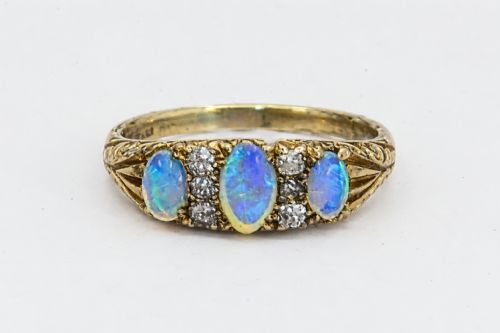
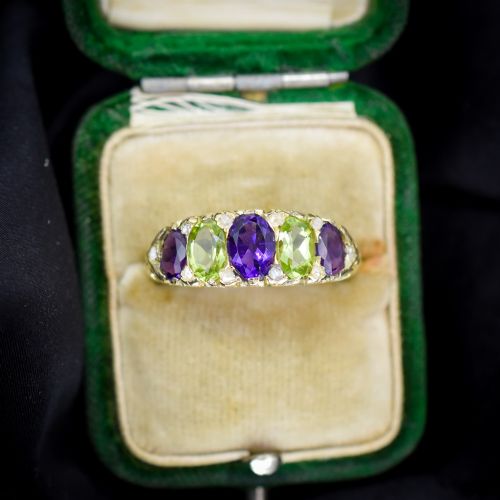
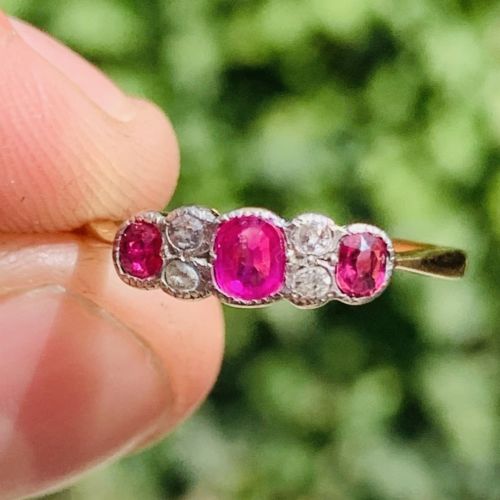
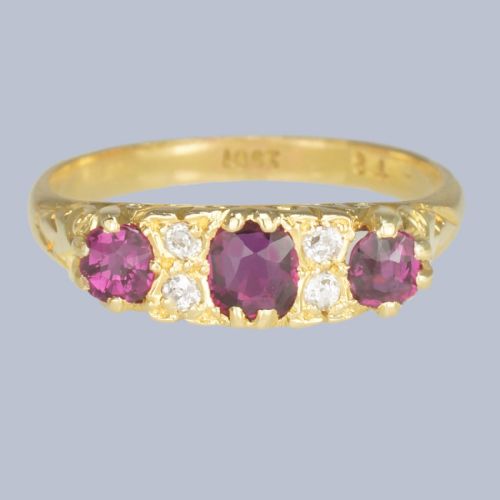
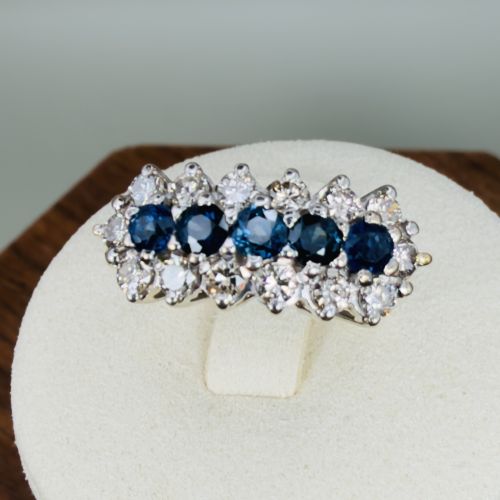
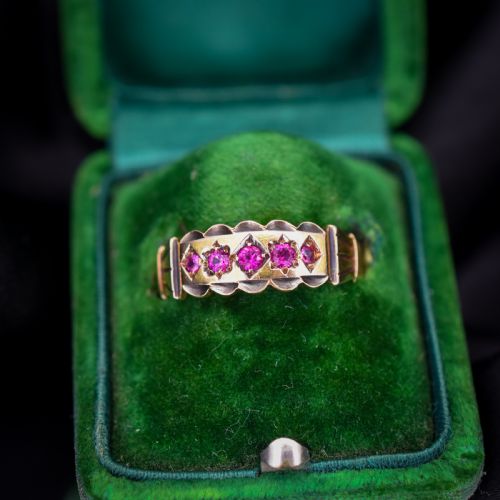
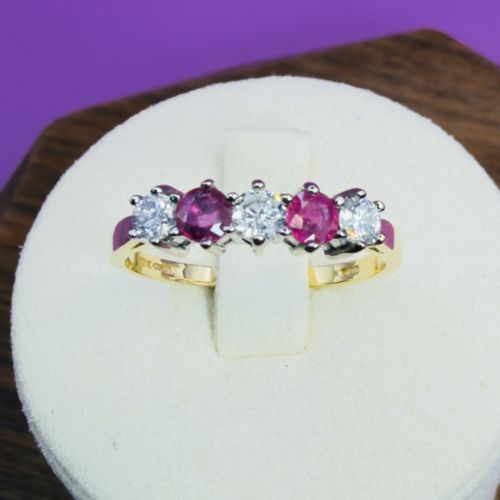
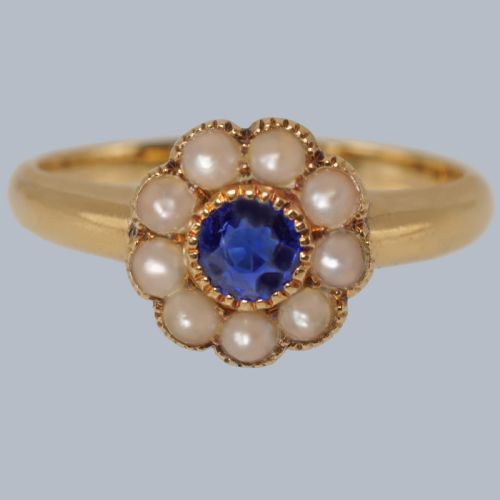
When you search for a victorian gemstone band, you encounter pieces designed to sit close to the finger, often featuring alternating gems such as rubies, diamonds, sapphires and turquoise. These include multi-stone configurations, starburst settings and low-profile hoops that reflect the intricate jewellery design of the nineteenth century.
Materials and construction
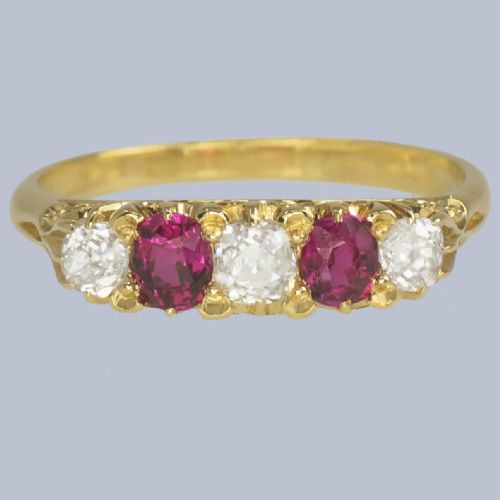
Goldsmiths of the era worked primarily with 18ct and 15ct yellow gold to construct the foundational bands and settings, occasionally incorporating platinum for specific stone mounts. Stones were hand-cut, typically displaying old mine or old European cuts for diamonds alongside natural rubies, sapphires, opals and turquoise.
Techniques such as starburst engraving and flush gypsy settings allowed artisans to secure gems directly into the metal band while adding decorative surface detail. Hallmarks stamped inside the shanks often record assay office origins in cities like Birmingham, Chester and London.
Listings feature 18ct and 15ct yellow gold alongside turquoise, rubies, sapphires and diamonds across Victorian and Edwardian periods.
Distinctions in craftsmanship
Quality in these rings is determined by the depth of the gold work and the match of the selected gemstones. Superior pieces display crisp setting edges, well-matched stone sizes and substantial shank thickness that has resisted thinning through decades of wear.
The choice of materials also dictates the standing of a piece, with high-carat gold and certified unheated gemstones representing the more refined end of the selection. Engraved detail and clear hallmarks add further weight to the construction.
The Victorian Gemstone Band Glossary
- Gypsy ring
- A style where stones are flush-set directly into a heavy tapered band. This form became popular in the late nineteenth century for both men and women.
- Boat ring
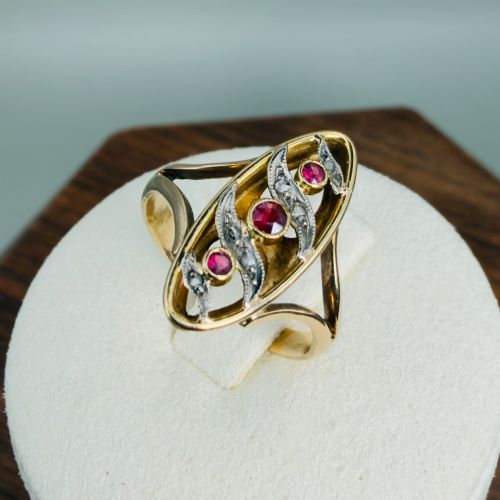
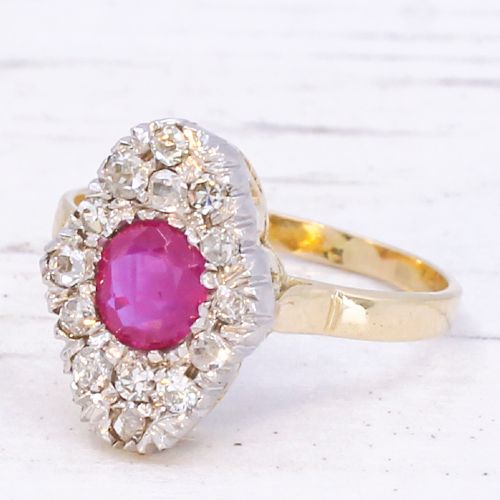
- A navette-shaped setting that curves across the finger like the hull of a boat. It typically holds a central cluster of stones flanked by smaller gems.
- Old cut
- A hand-faceted diamond shape predating modern brilliant cuts. These stones feature smaller tables, higher crowns and open culets that catch candlelight.
- Trilogy
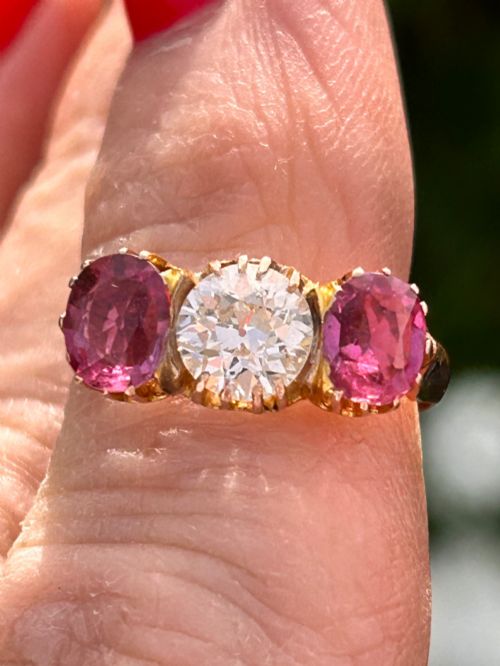
- A three-stone arrangement representing the past, present and future. In these bands, diamonds frequently flank a central ruby or sapphire.
- Navette
- A boat-shaped gemstone or setting design that points outward toward the sides of the finger. The term derives from the French word for a little ship.
Victorian Gemstone Band: Frequently Asked Questions
Can I wear a gemstone band daily?
These rings were built for regular wear using durable gold alloys and securely bezel or starburst set stones. However, softer materials like turquoise or opal require extra care and should be removed during physical tasks.
Checking the thickness of the gold band with a jeweller ensures the structure remains robust enough for everyday use.
How do I know the ring is Victorian?
Authentic pieces often feature hallmarks stamped inside the shank indicating assay offices, alongside characteristic stone cuts like old mine diamonds. Design traits such as boat settings and low-profile five-stone layouts also point to nineteenth-century manufacture.
Matching the overall weight and patina of the gold helps confirm the age of the piece.
What does a five stone ring mean?
A five-stone setting lines up gems of graduating or matching sizes straight across the finger. Victorian makers used this layout to showcase combinations of diamonds with rubies, sapphires or turquoise.
The balanced arrangement allows the ring to sit comfortably alongside other bands.