

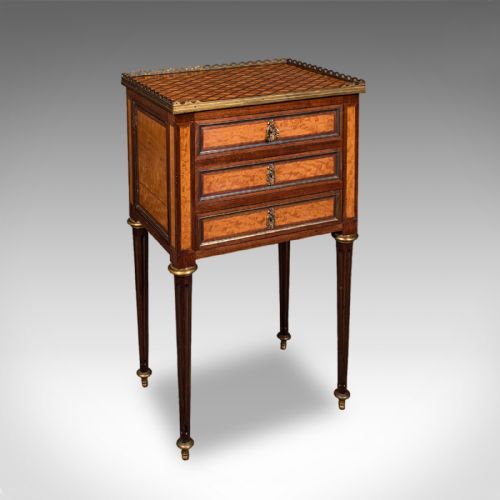

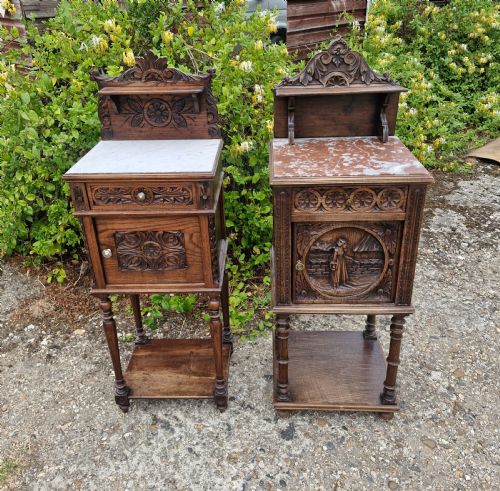
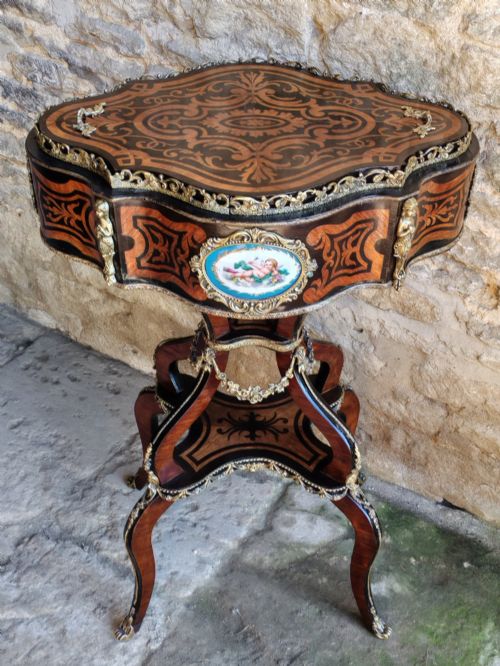
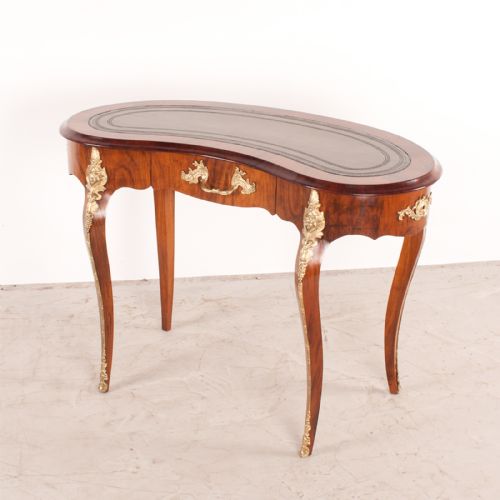
Victorian French Revival Table
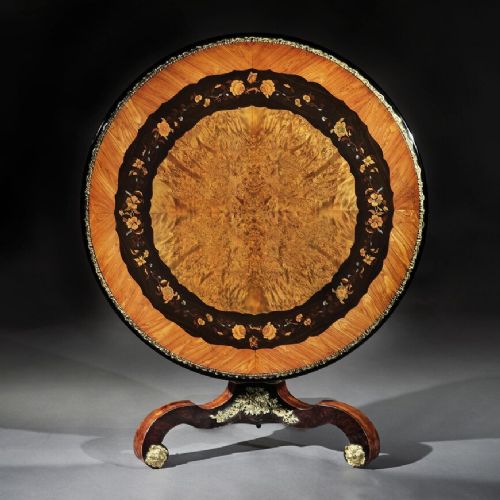
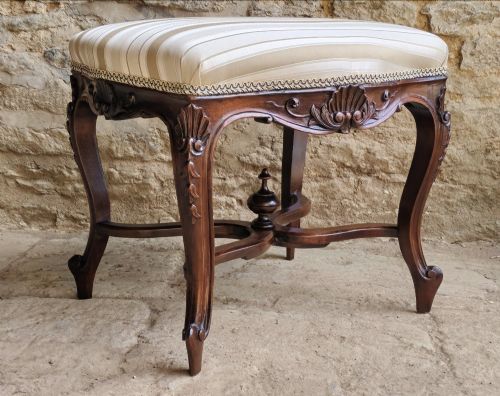
A victorian french revival table brings continental grandeur into a room through serpentine forms and rich marquetry.
Victorian French Revival Table
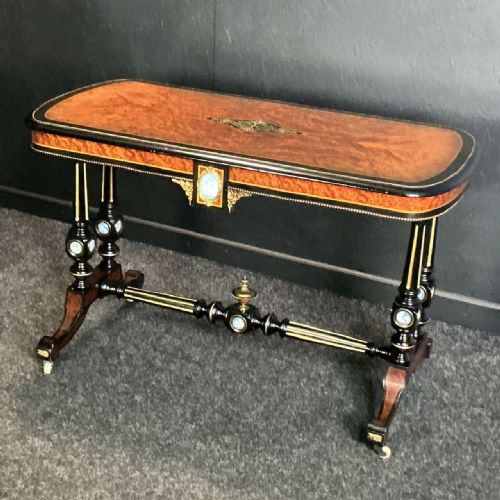
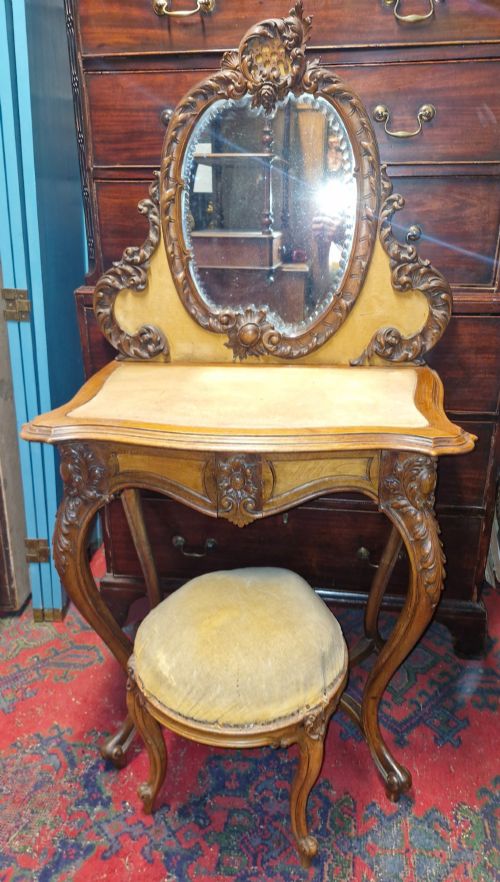
When you search for a victorian french revival table, you encounter nineteenth-century pieces that borrow the fluent, curvilinear vocabulary of earlier continental courts. These items span various forms intended for display and correspondence, including centre tables, writing desks, and card tables.
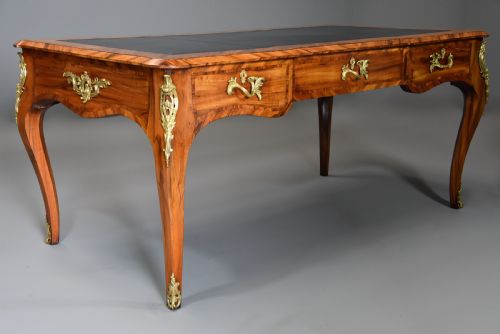
The most frequent examples on this page are walnut and burr walnut writing tables and centre pieces, often featuring kidney shapes or intricate marquetry. These furniture forms bridge English Victorian production methods with Louis XV and Rococo design influences.
Makers working in London and beyond adopted these continental motifs during the mid-to-late nineteenth century, producing freestanding tables finished on all sides. Such pieces serve effectively in reception rooms where a decorative silhouette matters as much as a writing surface.
Materials and construction methods
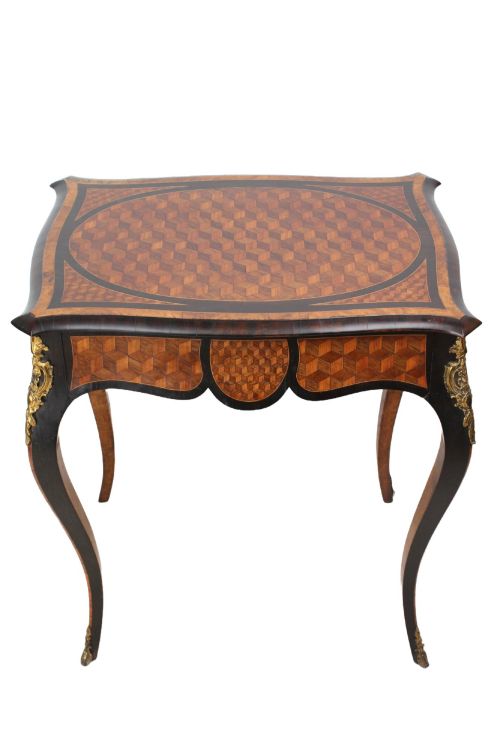
Cabinet makers utilised dense timber foundations such as walnut, kingwood, and satinwood, applying delicate parquetry and marquetry in geometric or floral patterns. Rich veneers provide the characteristic patterned surfaces across tabletops and drawer fronts.
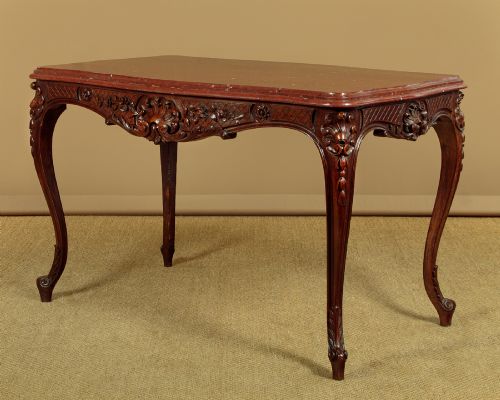
Ormolu and gilt bronze mounts appear frequently, cast and chased to accentuate corners, aprons, and cabriole legs. Marble tops, particularly rouge marble, also provide solid surfaces on console and centre variations.
Joinery techniques balance structural rigidity with slender profiles, supporting serpentine edges and freestanding designs without heavy central pillars.
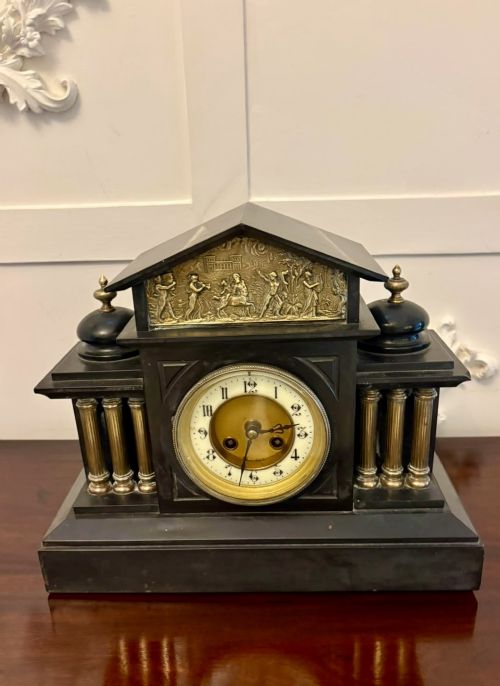
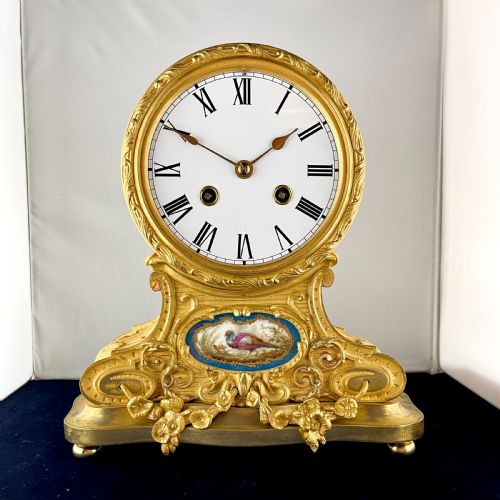
Several mantel clocks hiding among the tables feature unexpected architectural marble cases or bustling brass work described as having lots going on.
Distinguishing quality across examples
The distinction between standard production and exceptional work rests upon the crispness of the gilt bronze mounts and the complexity of the wood inlay. Hand-chased ormolu exhibits sharp relief and depth, whereas lesser casting appears flat and uniform.
Timber selection dictates visual weight, with burr walnut and figured kingwood displaying superior grain movement and rich natural colouration. The precision of the marquetry cutting determines whether floral and geometric motifs remain tight and flush over time.
Edward Holmes Baldock·JAS Shoolbred·Edward And Roberts·Philippes Paris·Leroy Paris
The Victorian French Revival Table Glossary
- Ormolu
- Gilded bronze or brass mounts applied to furniture and clocks. This technique was widely utilised during the nineteenth century to highlight structural contours.
- Marquetry
- Inlaid wood veneers arranged to form decorative pictures or geometric patterns. Craftsmen combined contrasting timbers to achieve tonal depth.
- Boulle
- A style of marquetry using tortoiseshell and brass inlay, named after a royal cabinet maker. It adds striking metallic contrast to dark wood surfaces.
- Bureau plat
- A freestanding writing desk with a wide rectangular top and one or more drawers. These tables typically stand on slender cabriole legs.
- Parquetry
- Geometric wood inlay forming repeating patterns such as cubes or chequers. It differs from marquetry by relying on angular shapes rather than pictorial designs.
Victorian French Revival Table: Frequently Asked Questions
How do I identify a true period piece?
Examine the timber shrinkage, hand-cut dovetails within the drawers, and the method of gilt mount attachment. Nineteenth-century construction relies on traditional joinery rather than modern mechanical fixings.
Look closely at the underside and interior surfaces for secondary woods appropriate to the era, alongside signs of age-related wear in the finish.
Were these tables made in England or France?
Makers in both countries produced this style during the nineteenth century, often adapting French Louis XV motifs for Victorian drawing rooms. English workshops frequently employed imported French hardware or trained artisans.
Cabinet makers in London and Paris shared pattern books, leading to a strong cross-channel exchange of design ideas.
Can I use a writing table for daily work?
These tables function well for contemporary use, though historic surfaces benefit from protective blotters and careful placement away from direct sunlight. The smaller kneehole and kidney variants suit laptop use or occasional correspondence.
Ensure that fragile marquetry or gilt mounts receive gentle dusting with a dry cloth rather than modern chemical polishes.