



Victorian French Cushion Mirror
A victorian french cushion mirror brings deep convex moulding and gilded warmth to a room, offering both wall and overmantel presence.
Victorian French Cushion Mirror
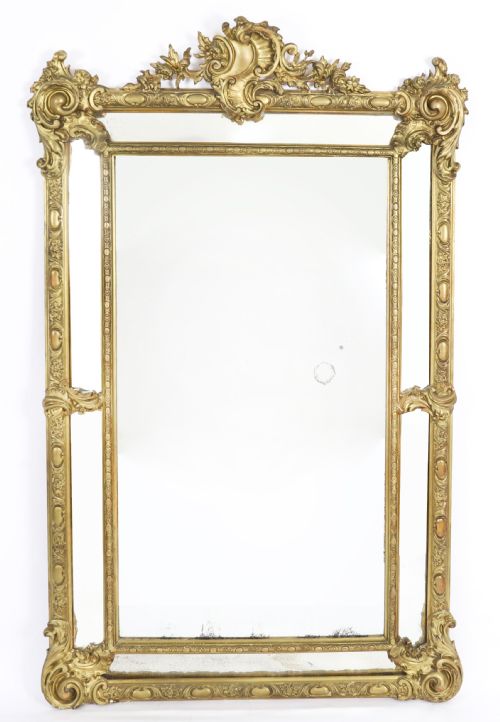
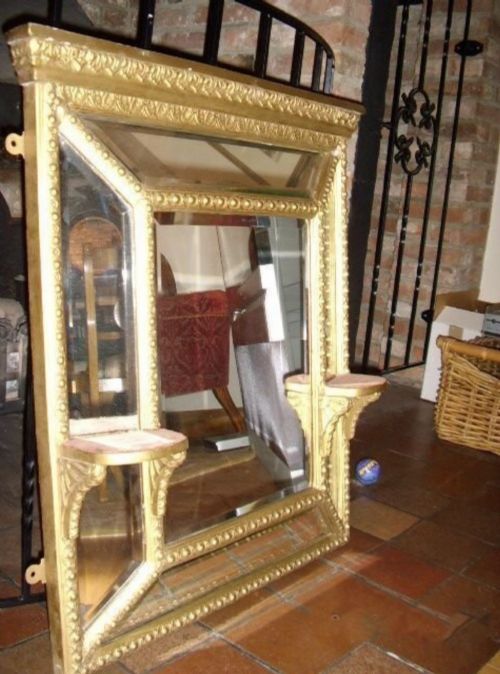
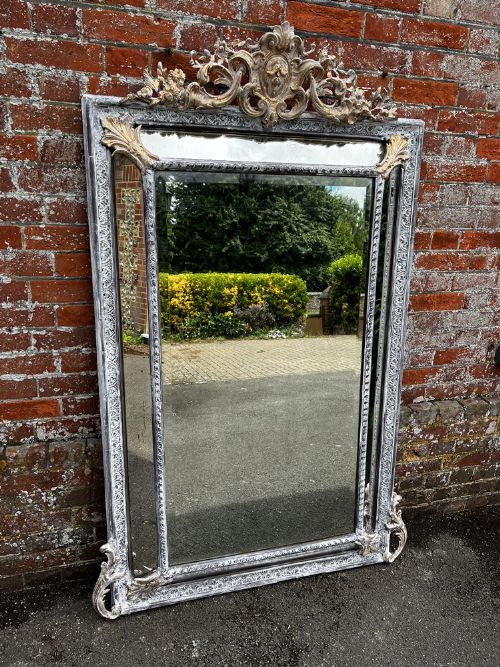
A victorian french cushion mirror is a substantial wall or overmantel glass piece defined by its pronounced, sloped frame that curves outward toward the edge. These pieces emerge from nineteenth century workshops adopting Louis revival and Rococo revival styles, often bringing a distinct chateau aesthetic into British interiors.
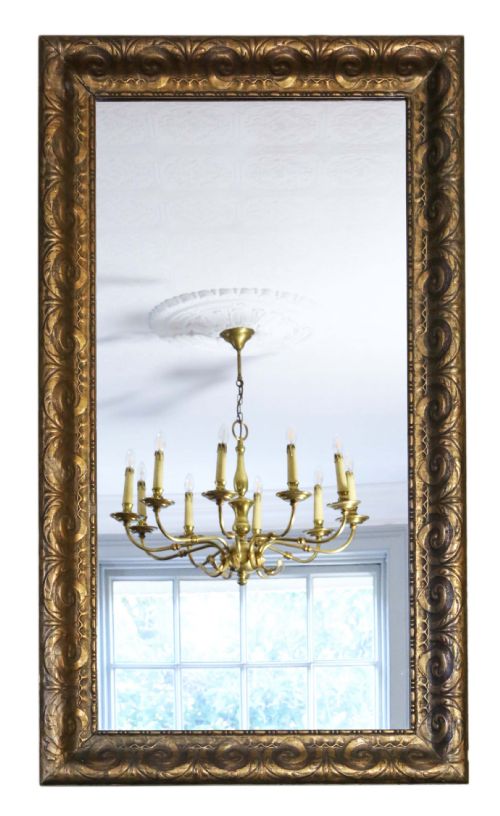
Buyers on this page most frequently meet giltwood and gilt composition examples alongside brass framed variants, spanning oblong, oval, and arched formats. The evidence records pieces dated around eighteen sixty and eighteen seventy, capturing the robust decorative taste of the period.
The form functions primarily as an architectural anchor above a fireplace or along a principal drawing room wall, reflecting light deeply across its bevelled glass surface. Scale ranges from neat, compact wall sizes up to very large overmantel proportions designed to dominate a reception space.
How they were made
Maker construction relies on carved wood and gesso frames built to support heavy mirror glass, finished with applied layers of gold leaf or paint. Giltwood and gilt composition elements provide the characteristic metallic sheen, while alternative frames utilise brass or ebonised timber.
Glass plates feature bevel cuts created by hand polishing the margins to catch and refract light at oblique angles. Structural support behind the cushion profile requires sturdy timber backing to hold the substantial weight of nineteenth century mirror plates.
Listings span nineteenth century periods, featuring materials such as giltwood, gesso, brass, and bevelled glass in wall and overmantel forms.
What varies in quality
Quality rests in the crispness of the carved ornament and the depth of the gilding, where hand worked gesso and gold leaf outshine simpler painted finishes. The integration of the cushion moulding dictates the visual rhythm of the piece, separating standard production from exceptional carved examples.
The integrity of the original mirror glass and the precision of the bevel cut significantly influence the character of the reflection. Substantial frames built from solid wood maintain structural stability better over time than lighter constructions.
The Victorian French Cushion Mirror Glossary
- Cushion mirror
- A looking glass featuring a convex, sloping frame that swells outward toward the outer edge. This distinctive profile creates a deep, architectural frame that catches light from multiple angles.
- Giltwood
- Timber coated with a thin layer of gold leaf over a prepared gesso base. This traditional finish gives nineteenth century frames their warm, metallic brilliance.
- Overmantel mirror
- A large glass piece designed to hang specifically above a fireplace mantelpiece. These frames often match the grand scale of nineteenth century reception rooms.
- Bevelled glass
- Mirror plate with edges ground and polished at an obtuse angle. This technique frames the reflection and refracts light into tiny prismatic colours.
- Louis revival
- A decorative style drawing on seventeenth and eighteenth century French court aesthetics. Makers of this period reinterpreted these opulent motifs for Victorian interiors.
Victorian French Cushion Mirror: Frequently Asked Questions
Where should I hang a cushion mirror?
These pieces sit naturally above a fireplace mantel or anchor a main reception wall where they can reflect natural light across the room.
Ensure the wall construction supports the substantial weight of nineteenth century wood and glass frames.
How do I identify a French cushion mirror?
Look for the characteristic sloped frame profile that curves outward, combined with nineteenth century giltwood, gesso, or brass construction.
French pieces often display revival decorative motifs and substantial proportions typical of chateau interiors.
Are the mirror plates original?
Many pieces retain their period glass, which may show light foxing or age spots from long exposure to the atmosphere.
Original bevel cut plates display hand finished edges that differ sharply from modern machine polished glass.
How do I care for gilt frames?
Dust the carved gesso and gilt surfaces gently with a soft, dry brush to avoid disturbing the delicate gold leaf layer.
Keep these frames away from direct moisture and strong heat sources to preserve the historic finish.
What sizes are available?
The selection includes neat wall formats alongside very large overmantel dimensions suited to high ceilings.
Proportions range from moderate oval shapes to massive rectangular architectural frames.