


Victorian French Console Table
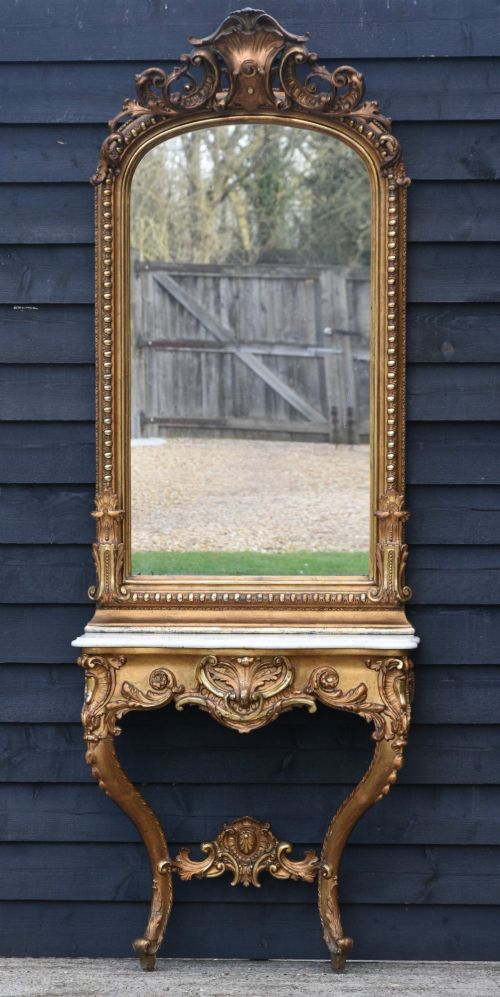
A victorian french console table brings ornate continental flair and heavy marble to a hall or drawing room.
Victorian French Console Table
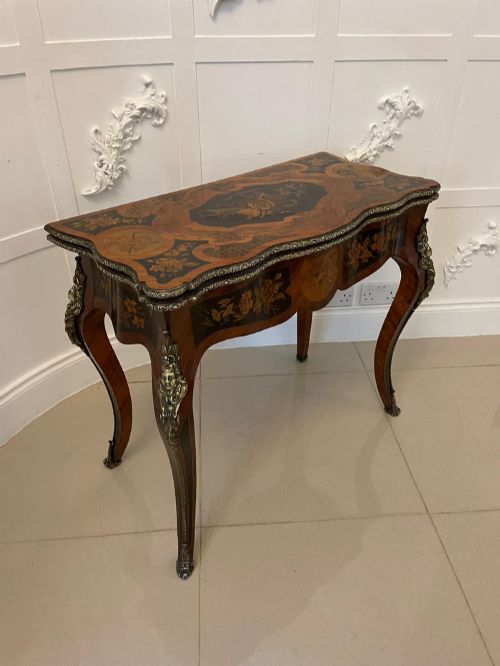
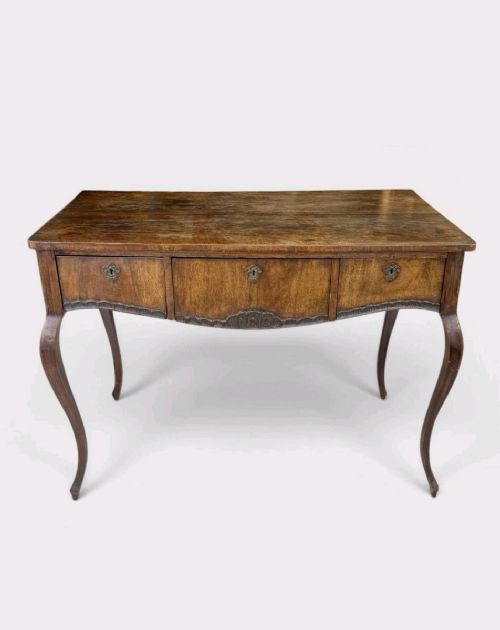
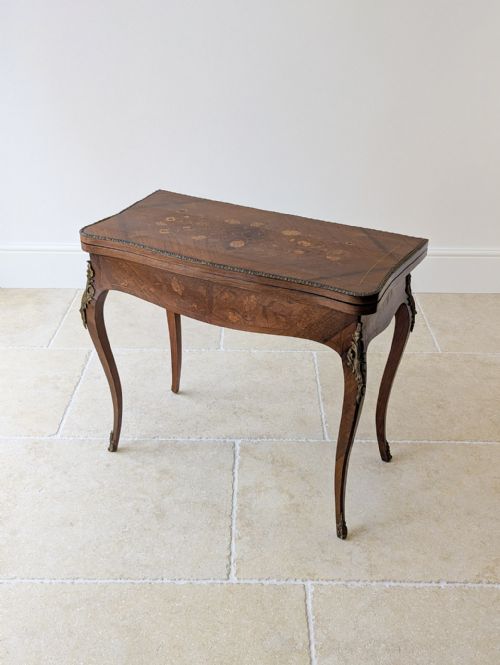
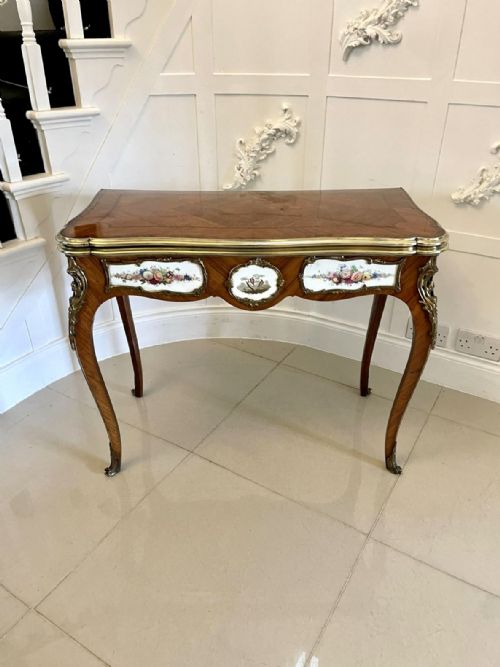
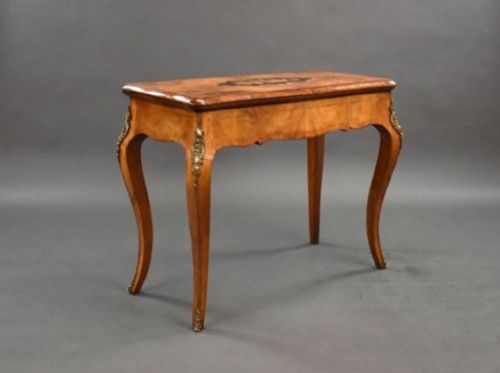
A victorian french console table generally combines nineteenth century British walnut, mahogany, or exotic woods with continental revival styles like Louis XV and Rococo. The selection spans straightforward side tables to elaborate card and games tables featuring fold over tops and marquetry.
Buyers frequently encounter pieces paired with matching pier mirrors, or finished with heavy marble tops supported by carved giltwood or ebonised frames. Variants range from cast iron garden pieces to exhibition quality inlaid furniture stamped by prominent London makers.
Materials and construction
Cabinetmakers utilised dense timbers such as walnut, kingwood, burr walnut, and mahogany as the structural base for intricate marquetry and exotic wood inlay. Surfaces were frequently embellished with cast or gilt ormolu mounts, brass stringing, and mother of pearl detail.
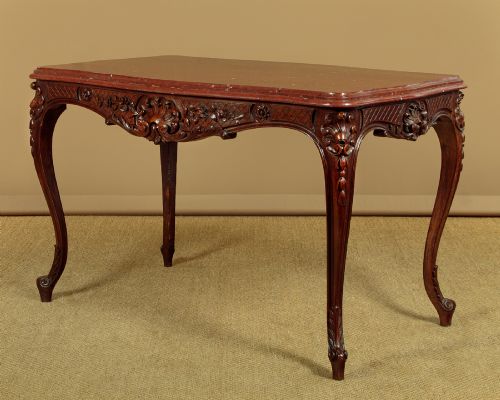
Many heavy tables feature thick slabs of rouge or white marble fitted neatly into carved wooden or cast iron frames. Folding mechanisms on card and games tables relied on precise pivoting wooden hinges and clever internal framing.
Bread prep tables sneak into the mix among the gilded mirrors and marble tops.
Judging the standard
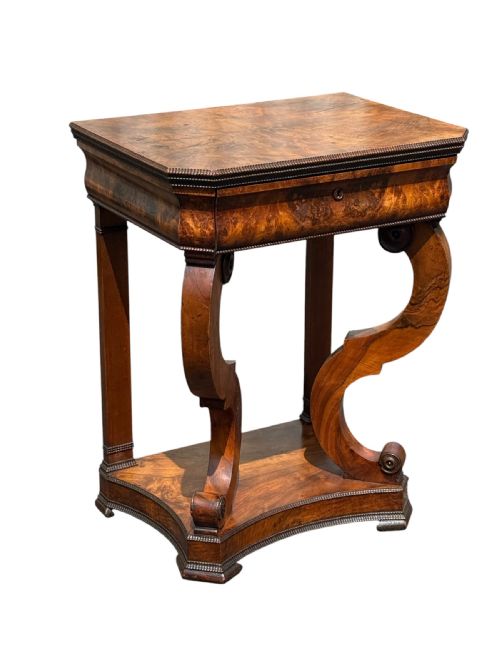
Quality rests heavily on the crispness of the hand carving in the giltwood or fruitwood, and the depth of the marquetry patterns in the burr walnut and kingwood veneers. Finer examples display meticulous matching of timber grains and heavily chased ormolu mounts.
Exhibition grade pieces show superior joinery in the complex curves of the serpentine aprons and stable fitted joints on heavy marble tops. Lesser examples rely on simpler cast iron frames or plainer oak and pine construction without decorative inlay.
Edward s And Robert s·G T Morant·Holland and Son
The Victorian French Console Table Glossary
- Ormolu
- Gilt bronze mounts cast and chased with decorative motifs. These metal details are fixed to the corners and legs of finer tables.
- Marquetry
- Fitted pieces of varied coloured wood veneers forming decorative patterns. Craftsmen utilised this technique on table tops and friezes.
- Demi Lune
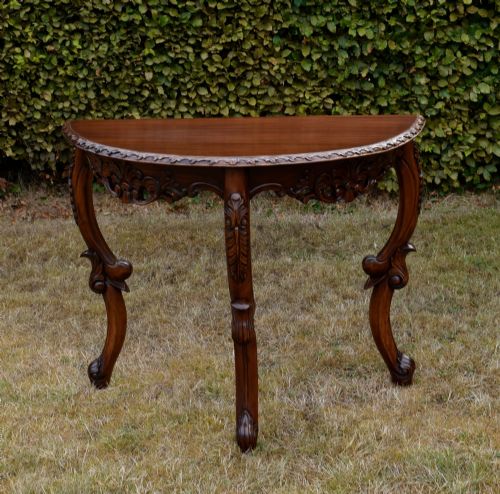
- Half moon shape suitable for placing flat against a wall. This profile defines many classic console and card tables.
- Boulle
- Marquetry technique employing tortoiseshell and brass inlay. Pieces featuring this method reflect elaborate French styling.
- Pier Mirror
- Large wall glass designed to hang directly above a console table. Surviving sets combine the mirror frame with the table below.
Victorian French Console Table: Frequently Asked Questions
How do I use a console table?
These tables fit flush against entrance hall walls or beneath large mirrors to display decorative objects or lamps.
Fold over card tables can also serve as side tables or occasional writing surfaces when closed.
Are marble tops original?
Most heavy marble slabs on nineteenth century pieces were designed as an integral part of the structure, resting securely within carved wooden or cast iron rebates.
Look for consistent weathering and weight that matches the period of the base frame.
How do I clean marble?
Wipe surfaces using a soft cloth dampened with warm water and mild neutral soap, avoiding acidic cleaning solutions.
Dry the stone thoroughly to prevent water marks on polished surfaces.
What is the difference between styles?
Rococo revival pieces display asymmetrical curves, naturalistic scrolling foliage, and heavily carved giltwood frames.
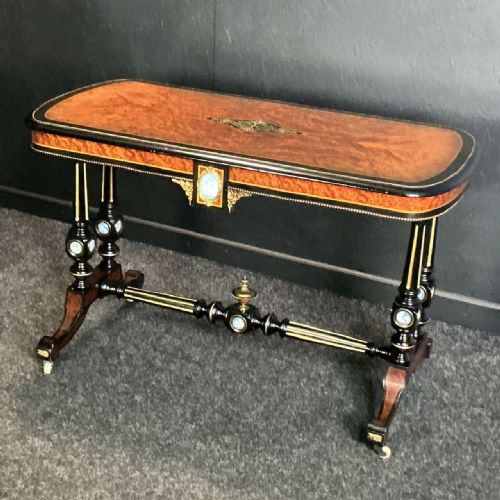
Napoleon III and Louis XV variations often lean towards darker ebonised woods, Boulle inlay, and refined ormolu mounts.