




Victorian Footed Salver
A victorian footed salver is a raised serving dish designed to elevate afternoon tea, and these pieces bring nineteenth-century silver and plate into daily use.
Victorian Footed Salver
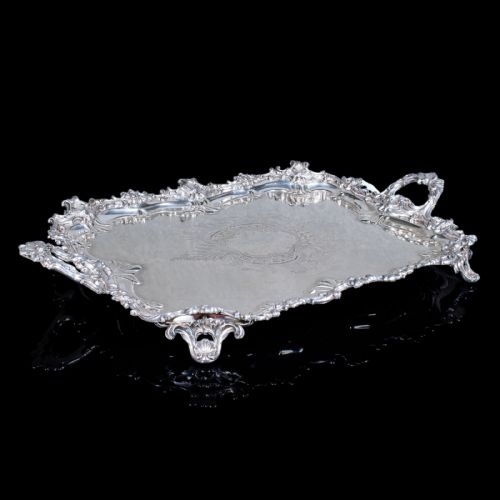
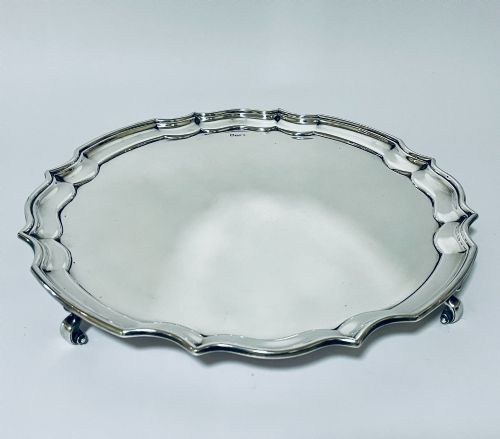
A victorian footed salver is a formal serving tray raised on small feet, designed for presenting small items or serving drinks. The examples found here span the nineteenth century and later periods, capturing the shift from traditional craftsmanship to later production.
You will most frequently meet silver plated versions on this page, alongside sterling silver and nickel silver examples. Forms range from round salvers with engraved surfaces and raised detailed rims to large oval and square presentation trays.
The aesthetic draws heavily on Victorian and Rococo Revival styles, often incorporating Georgian influences and nineteenth-century European design. Trays and salvers dominate the object types, serving as both practical items and decorative centrepieces.
How they were made
Makers utilised solid sterling silver or applied silver plating over base metal, nickel silver, and Sheffield plate techniques. The manufacturing process often involved fusing a thin layer of silver onto a copper or base metal core before the advent of electroplating.
Surface decoration relies heavily on detailed hand engraving across the centre and chased or cast ornamentation along the raised rims. Footed mounts are securely soldered to the underside to elevate the tray plate above the table surface.
Victorian Footed Salver Retail Price Guide 2026
Typical asking prices for victorian footed salver among the pieces listed under this phrase on Sellingantiques today, from the lower quarter to the upper quarter. They describe what is for sale here now, not the wider market.
Some salvers travelled from Hamburg workshops to English dining rooms, proving that afternoon tea had a truly international reach.
What varies in quality
The distinction between ordinary and superior pieces rests in the crispness of the chased rim details and the depth of the hand-engraved surface work. Heavier gauge base metals and thicker silver plating indicate a more substantial object intended for formal presentation.
Proportion and balance define the better examples, where the height of the feet complements the diameter of the tray plate. Maker attribution also plays a role, with documented workshops demonstrating greater refinement in casting and finishing.
John Harrison·Padley Parkin·Peters Hamburg·Fenton Russel·Philip Ashberry & Sons
The Victorian Footed Salver Glossary
- Salver
- A flat tray with feet used for serving food or drink. In this context, it typically refers to a round or oval silver vessel raised on three or four small supports.
- Sheffield Plate
- An early fusing technique where a sheet of silver is melted onto a copper ingot before rolling. This predates standard electroplating methods.
- EPNS
- Electroplated Nickel Silver, a common base metal composition for nineteenth-century serving wares. A layer of pure silver is deposited via electrical current.
- Chasing
- A metalworking technique where the artisan hammers the front of the metal to push details inward and create raised surface patterns. It is frequently seen on elaborate rims.
- Waiter
- A small footed tray historically used by servants to carry glasses or letters. These share the same raised form as larger salvers.
Victorian Footed Salver: Frequently Asked Questions
What is a footed salver?
A footed salver is an elevated serving tray mounted on small legs or feet. It lifts the presentation surface off the table for formal serving.
These pieces typically feature decorative rims and engraved centres, functioning as both tableware and decorative display objects.
How were silver plated trays made?
Early examples utilised Sheffield plate, fusing silver to copper, while later pieces employed electroplating over base metal or nickel silver.
This method coated a less expensive core metal with a thin layer of genuine silver to achieve a polished appearance.
Can I use these for afternoon tea?
These trays were originally designed for serving tea wares, small dishes, and glasses in nineteenth-century drawing rooms. Their sturdy footed construction supports everyday domestic use.
Careful handling ensures the historic silver or plated surface remains protected during regular serving.
How do I identify a Victorian salver?
Victorian examples often display Rococo Revival motifs, heavy cast rims, and intricate hand-engraved surfaces across the metal plate. Period styles draw heavily on nineteenth-century design aesthetics.
Many pieces also bear maker marks or attribution details relating to nineteenth-century workshops and silversmiths.