

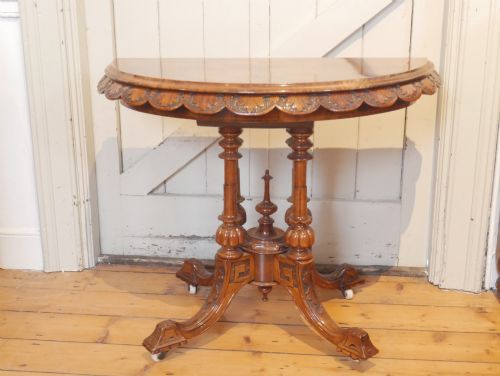
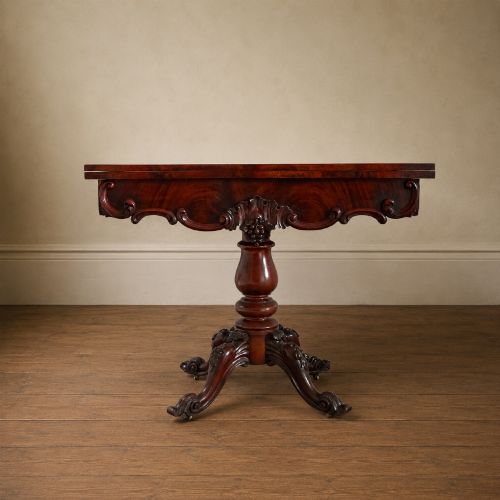
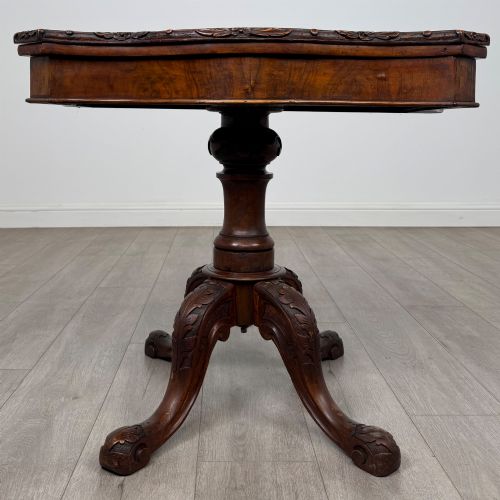
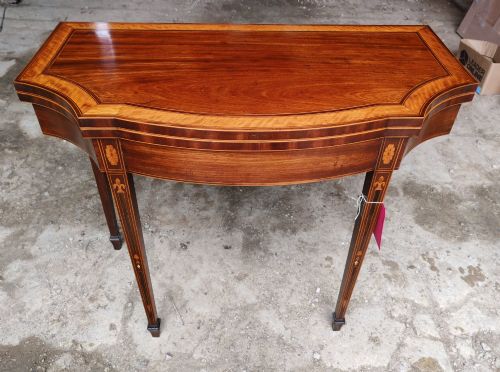
Victorian Folding Top Table
Victorian folding top tables are versatile domestic furnishings designed to transform for social use, combining fine timber surfaces with ingenious mechanisms.
Victorian Folding Top Table
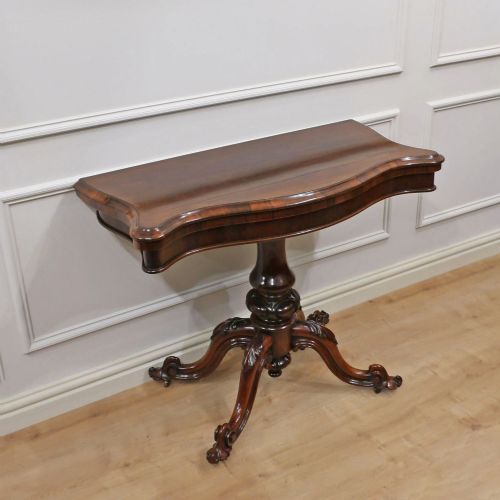
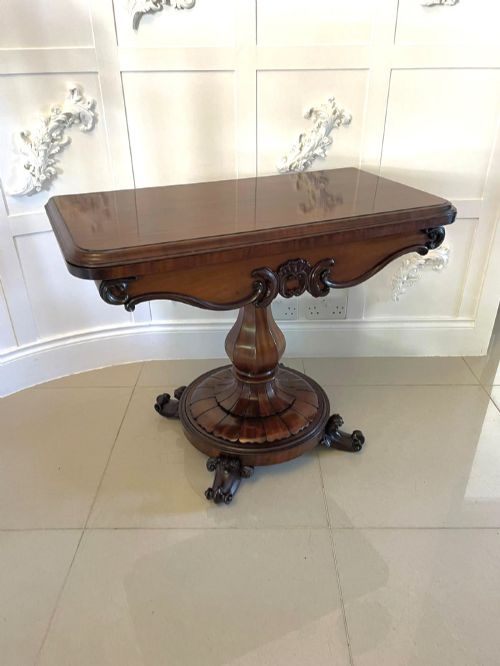
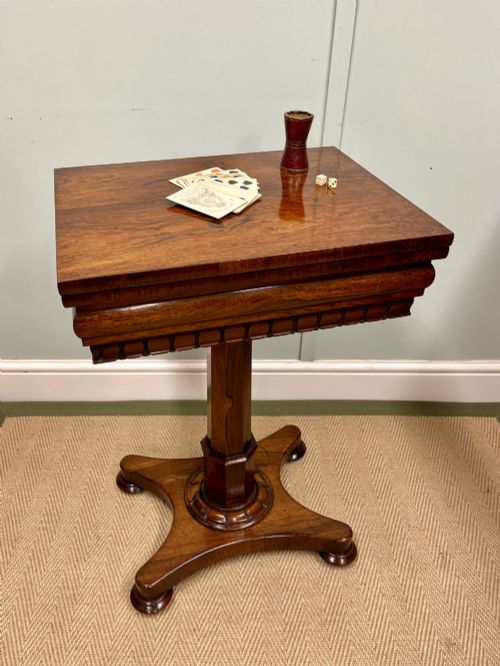
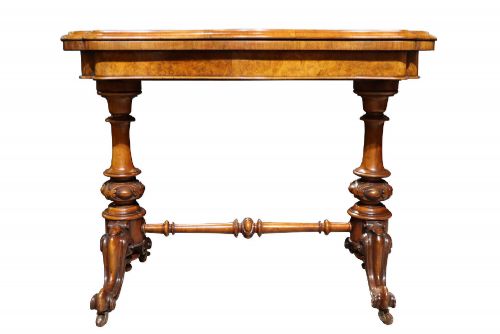
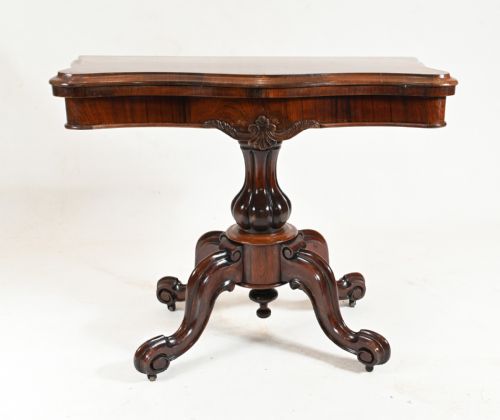
A victorian folding top table typically takes the form of a card table, games table, or tea table, operating through a swivel, fold-over, or turn-over mechanism.
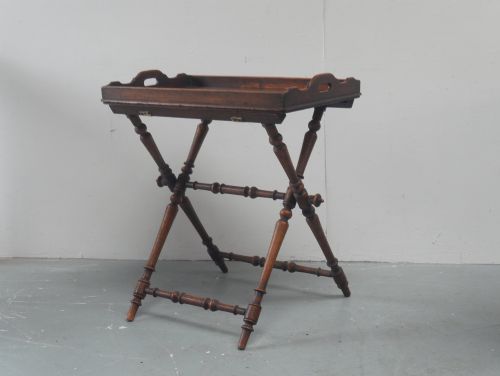
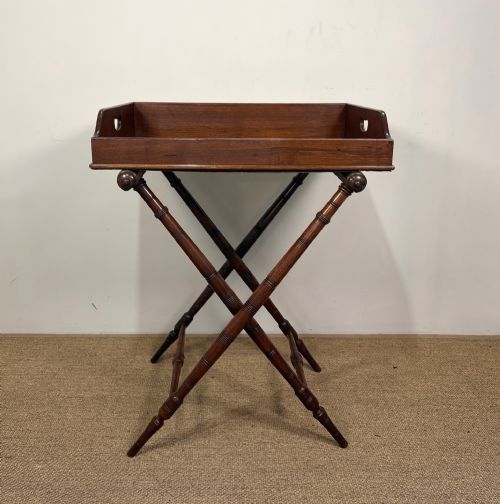
The selections on this page span the Victorian period alongside nineteenth-century pieces, reaching into Edwardian and later variations such as oak butlers trays and stands.
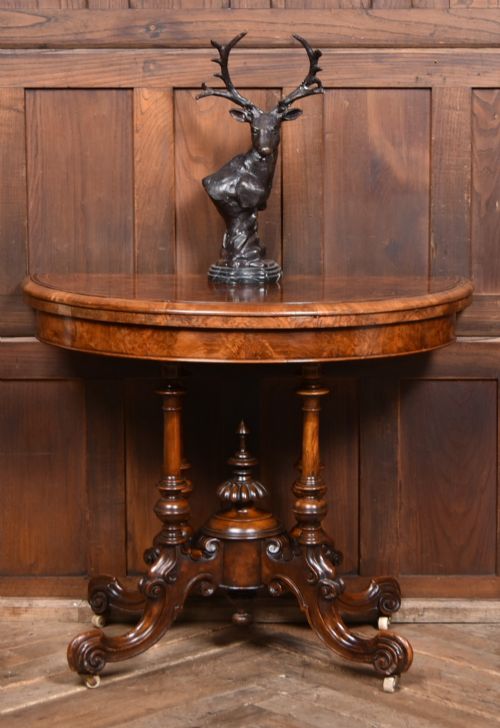
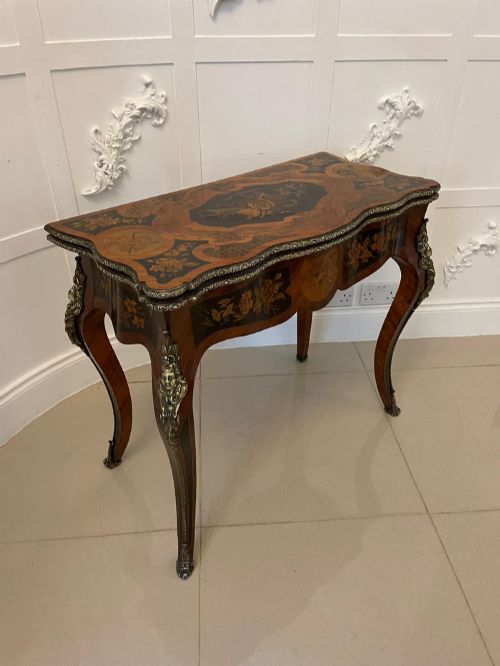
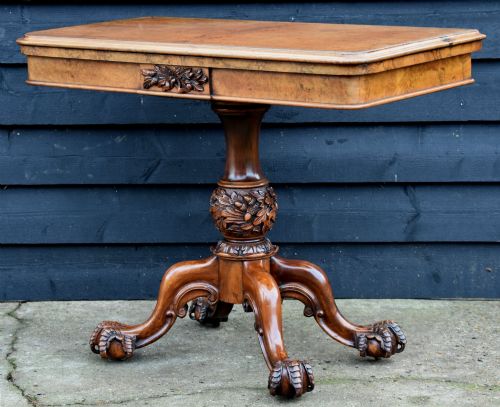
Makers and craftsmen utilised walnut, burr walnut, mahogany, and rosewood, frequently incorporating decorative elements like marquetry inlay, wood inlay, and brass fittings.
Materials and Construction
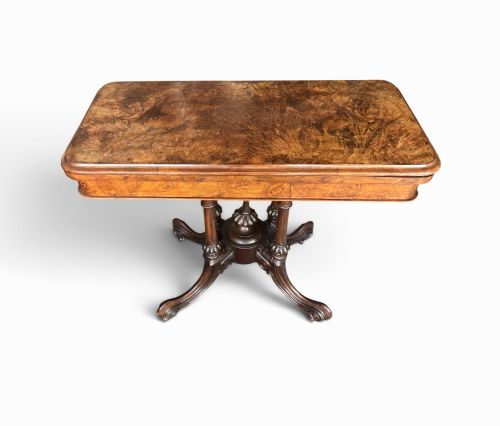
Cabinetmakers constructed these tables using solid timber frames paired with figured veneers like burr walnut and mahogany to create richly patterned surfaces on the folding tops.
Complex pivoting, folding, and swivelling hinges allow the top leaf to rotate and open out, often revealing concealed storage compartments or lined gaming wells beneath.
Some tables hide secret wells beneath the folding top, quietly waiting to store forgotten bridge hands and counters.
Distinctions in Execution
The standard of a piece rests upon the crispness of its carved supports, the precision of its marquetry or wood inlay, and the stability of its folding mechanism.
Superior examples exhibit tightly matched timber grains across the fold, smooth operation in the swivel joints, and robust structural joinery in the legs and underframe.
Edwards & Roberts
The Victorian Folding Top Table Glossary
- Fold-Over Table
- A table with a hinged top that doubles the surface area when opened out flat. This design allowed compact furniture to expand for dining or card games.
- Marquetry Inlay
- Decorative patterns formed by fitted pieces of various woods applied to a surface. Craftsmen used this technique to create elaborate floral and geometric motifs on the top.
- Card Table
- A specialised table designed for evening entertainment, usually featuring a baize-lined interior surface. Many incorporate hidden wells for storing counters and cards.
- Swivel Top
- A table top configuration that pivots on a central pivot pin before opening out. This mechanism supports the unfolded leaf securely during use.
- Campaign Table
- Portable furniture constructed for travel and military use during the nineteenth century. These pieces often feature folding stands and detachable trays.
Victorian Folding Top Table: Frequently Asked Questions
What were victorian folding top tables used for?
These tables served multiple functions in the nineteenth-century parlour, acting as side tables or console tables during the day and opening up for card games, tea, or writing in the evening.
The clever folding and swivelling mechanisms allowed households to maximise living space without sacrificing surface area when guests arrived.
How do I operate the folding top mechanism?
Most variants rely on a swivel joint where the upper leaf rotates ninety degrees before resting flat upon the swing leg or framework. Some designs use hinges that lift and turn like a book.
Care should be taken to support the weight evenly during rotation to protect the internal pivot and wooden framing.
How do I identify different wood types on these tables?
Mahogany and rosewood provide deep, uniform grain patterns often associated with mid-nineteenth-century examples. Burr walnut exhibits a highly figured, swirling grain pattern created from tree growths.
Inlays in satinwood, ebony, and lighter fruitwoods add contrast to the darker primary timbers on decorative surfaces.
Where should I place a folding top table at home?
These pieces sit comfortably against a hallway wall or drawing-room perimeter when closed, functioning as a console or side table. Placing them away from direct heat sources protects the timber and veneer.
Opening the top requires adequate clearance around the piece to allow guests to gather for games or tea.