

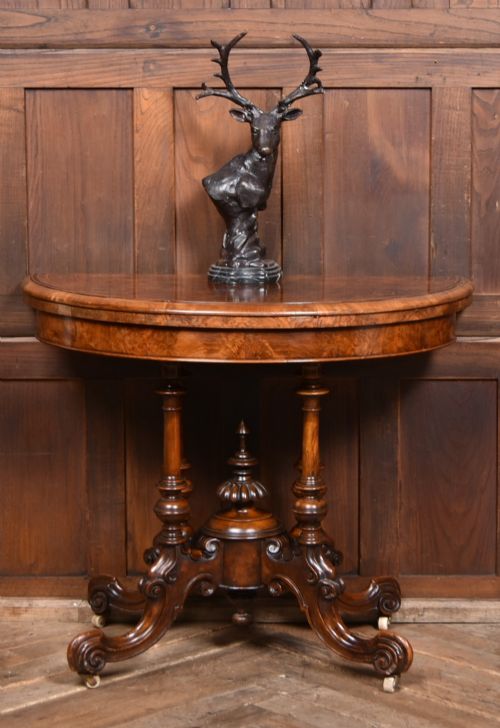
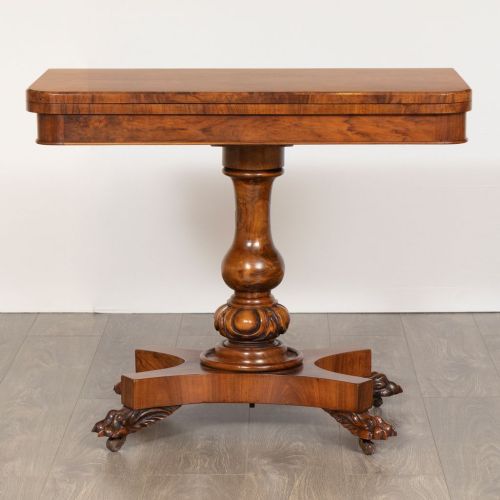
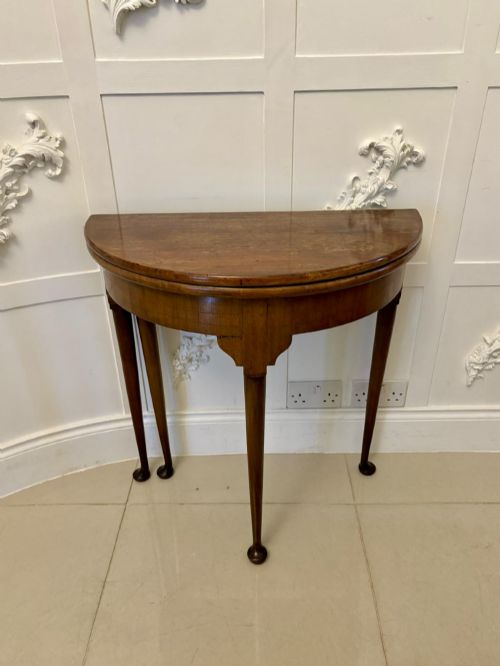
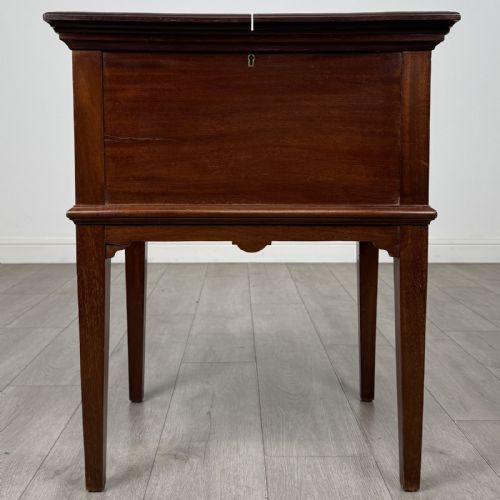
Victorian Folding Game Table
A victorian folding game table provides a clever surface for cards and board entertainment, designed to hide its secondary purpose until evening falls.
Victorian Folding Game Table
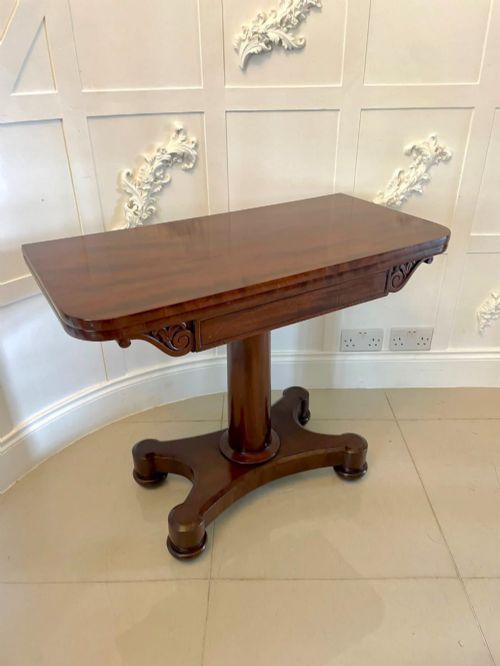
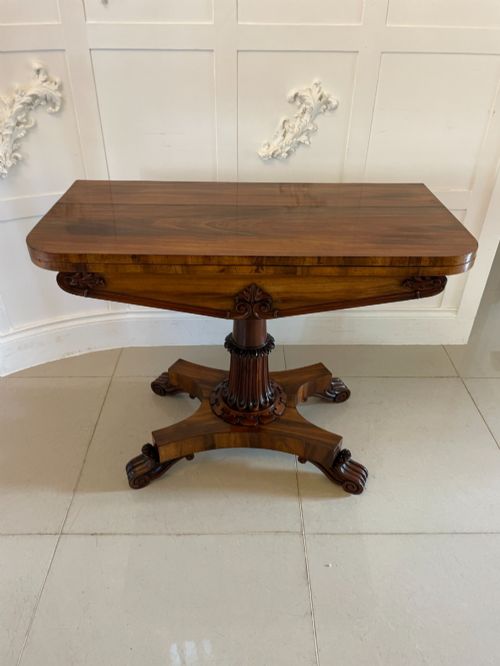
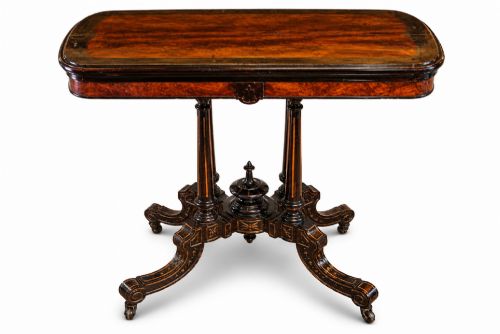
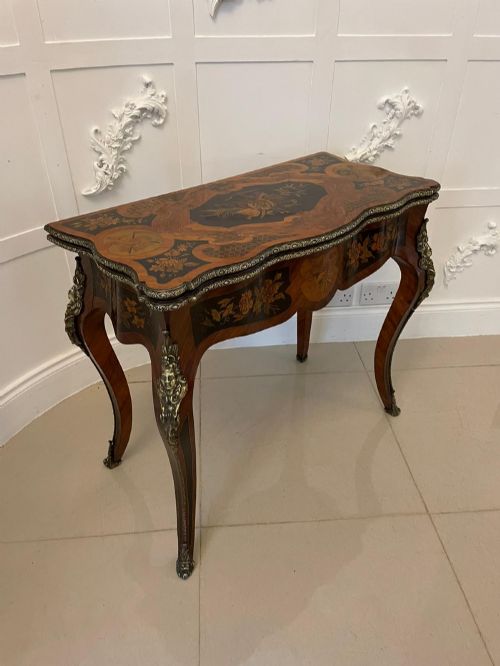
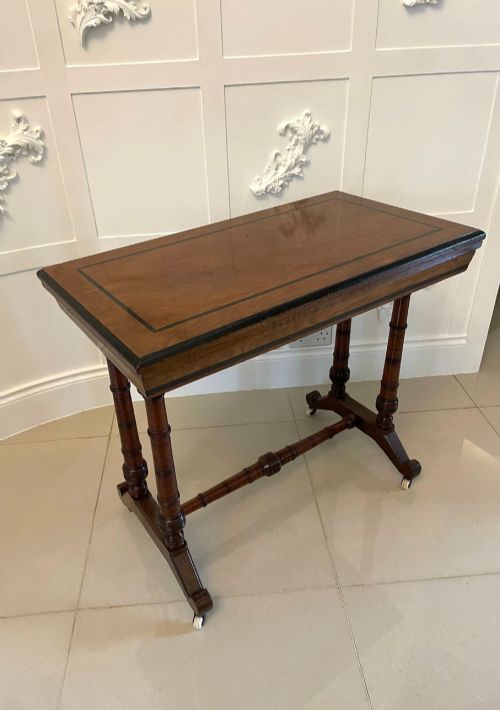
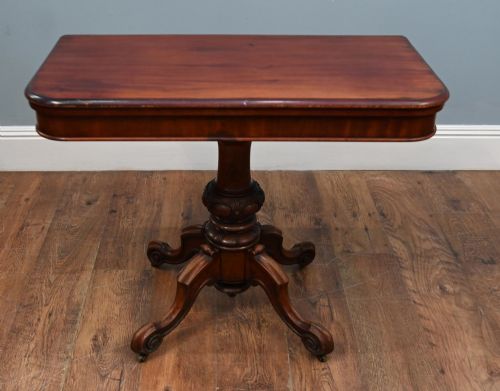
A victorian folding game table serves as a dual-purpose item, functioning as a console or side piece during the day before opening to reveal a playing surface. These objects emerge from nineteenth-century workshops in forms that include card tables, games tables, and occasional variants.
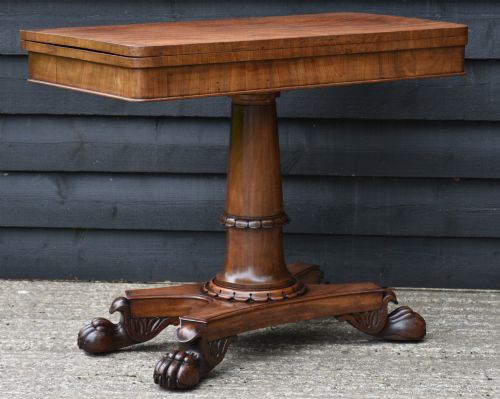
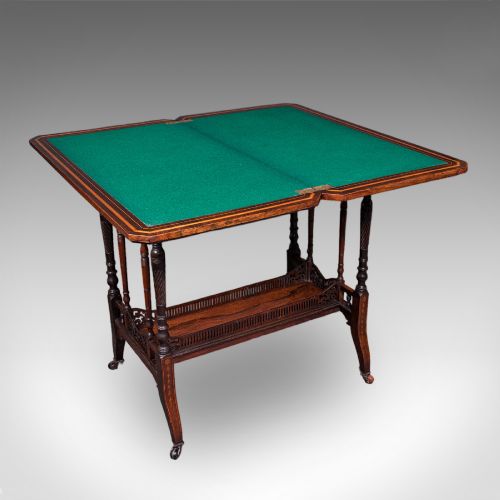
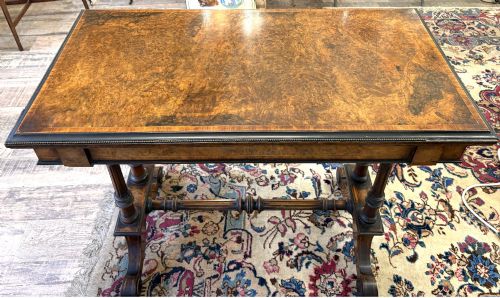
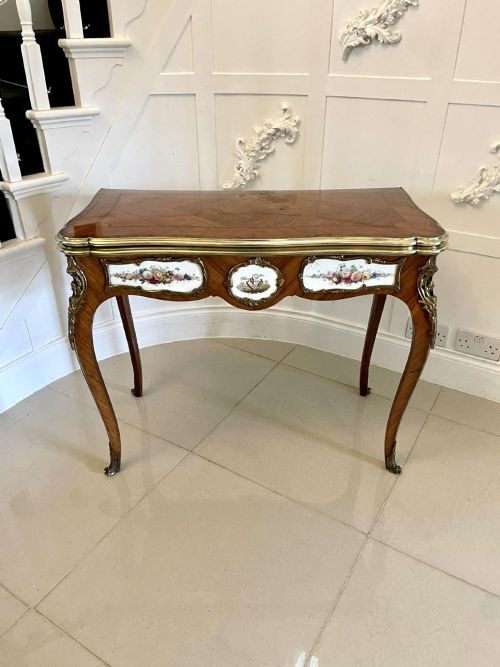
The material palette draws heavily on rich timbers like burr walnut, mahogany, and rosewood, often enhanced by marquetry inlay or ormolu mounts. Makers construct these pieces to adapt quickly to domestic parlour life, utilising swivel tops, fold-over leaves, and hidden compartments.
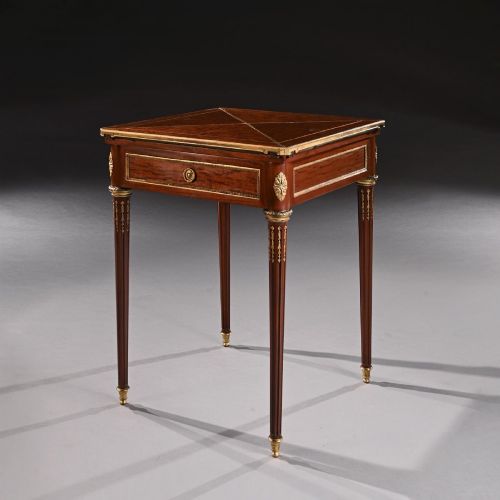
Most examples date across the Victorian era, spanning from the mid-nineteenth century towards the nineteen hundreds. Styles range from straightforward mahogany designs to elaborate French Louis XV revival pieces and Aesthetic Movement creations.
Materials and construction
Cabinetmakers select figured hardwoods such as burr walnut and rosewood for their striking grain patterns, frequently pairing them with contrasting inlay or brass details. The timber undergoes careful seasoning to prevent warping when the hinged leaves open and close.
Complex pivoting mechanisms and hidden internal compartments rely on precise joinery and brass hardware. Ormolu mounts and porcelain plaques decorate select models, fixed firmly to the wooden chassis to accent the French revival styles.
Victorian Folding Game Table Retail Price Guide 2026
Typical asking prices for victorian folding game table among the pieces listed under this phrase on Sellingantiques today, from the lower quarter to the upper quarter. They describe what is for sale here now, not the wider market.
Listings feature walnut, mahogany, rosewood, and satinwood, spanning the Victorian era from eighteen fifty to nineteen hundred.
Factors of distinction
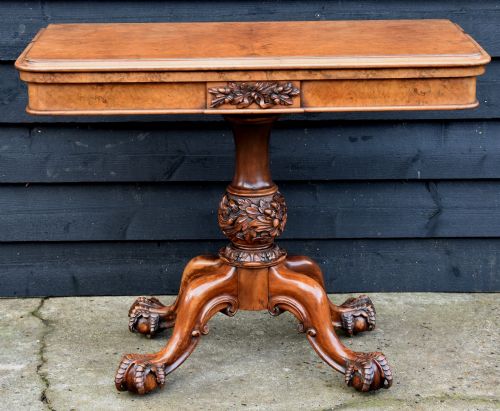
The selection of timber veneer dictates much of the initial visual appeal, with dense burr walnut and detailed marquetry setting finer examples apart from plain mahogany. Carved wooden supports, such as basket bases, indicate greater workshop labour input.
Smooth operation of the folding or swivel mechanism demonstrates the underlying joinery skill. The presence of integrated storage for chess, backgammon, or cards adds functional complexity that elevates the piece.
G T Morant·Gillow & Co·James Shoolbred & Co·Maple & Co
The Victorian Folding Game Table Glossary
- Burr walnut
- A prized timber harvested from walnut tree growths, showing intricate swirling grain patterns. It forms the primary visual finish on many high-end parlour tables.
- Ormolu
- Gilt bronze mounted onto furniture framework for decorative effect. This technique appears frequently on pieces influenced by French design styles.
- Marquetry
- Fitted pieces of wood veneer assembled to create pictorial patterns on a tabletop surface. Artisans utilise contrasting timbers to achieve depth and shade.
- Demi-lune
- A half-moon shape used for table designs that sit flat against a wall before opening out. This profile saves floor space in smaller Victorian rooms.
- Swivel top
- A mechanism allowing the table surface to rotate ninety degrees before opening. This movement uncovers a concealed compartment housed within the frieze.
Victorian Folding Game Table: Frequently Asked Questions
How do these tables open?
The top section typically swivels on a pivot before folding flat to double the surface area for play. Internal wooden framing swings out to support the newly exposed leaf.
Some designs utilise hinged leaves that lift and rest upon concertina frames or sliding wooden brackets.
What games were played on them?
Card games dominated parlour entertainment, requiring a baize or leather-lined surface to prevent slips. Specialised models also incorporated boards for chess and backgammon.
Compartments beneath the folding top stored the necessary pieces, dice, and counters close to hand.
How do I date a table?
Cabinetmaking trends offer strong clues, shifting from solid mahogany styles towards figured burr walnut and marquetry inlay as the nineteenth century progressed. Maker stamps, where present, provide direct attribution to firms operating in specific decades.
Stylistic shifts like Aesthetic Movement straight lines or Louis XV curves also help narrow the manufacturing window.
Where were they placed?
These items stood against drawing room walls as console or side tables when closed. Their dual nature allowed them to function as display surfaces for lamps and ornaments during daytime hours.
When evening arrived, occupants moved the furniture into the room centre for social gaming.