
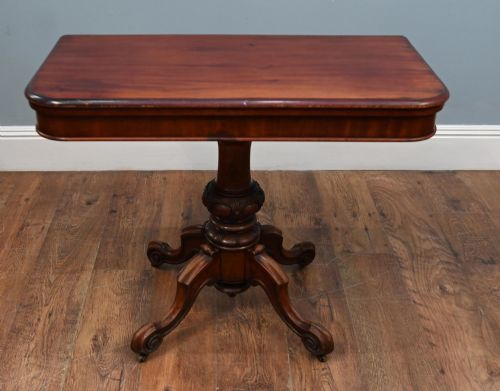
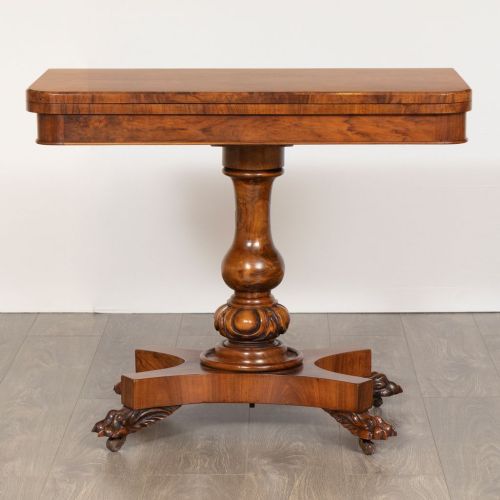
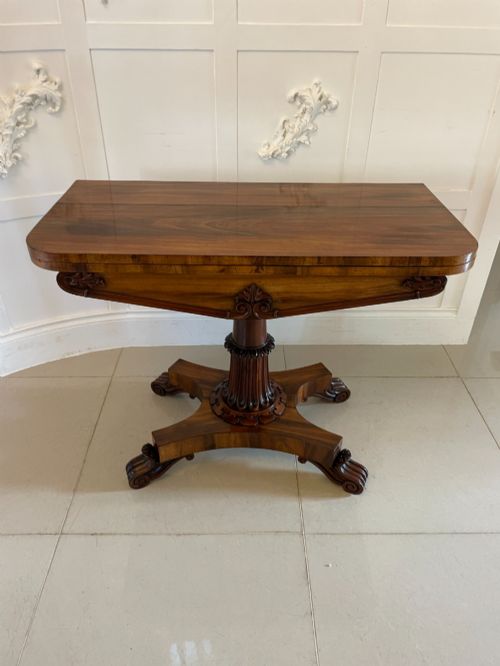
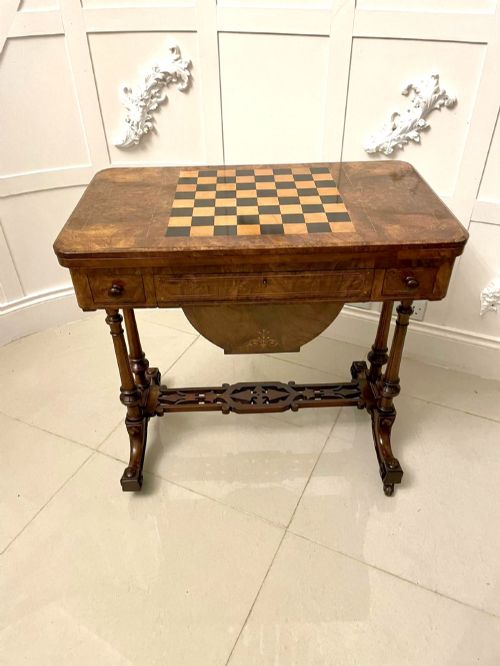
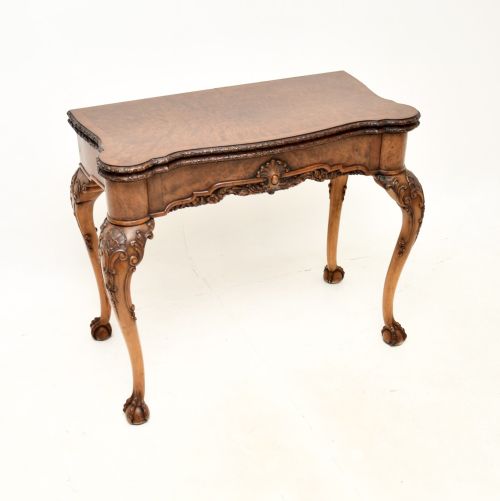
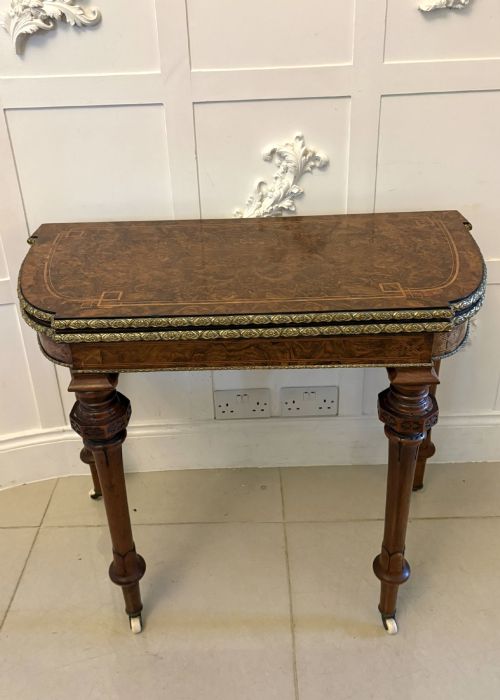
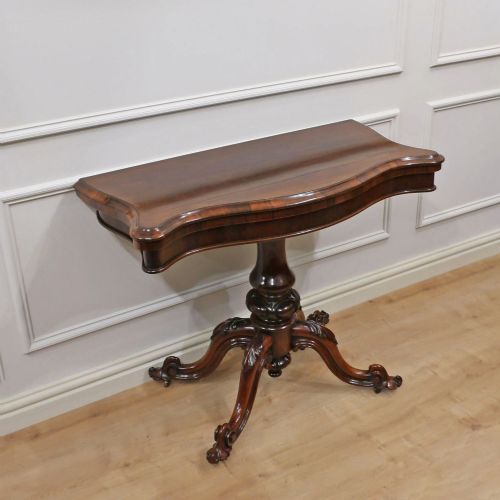
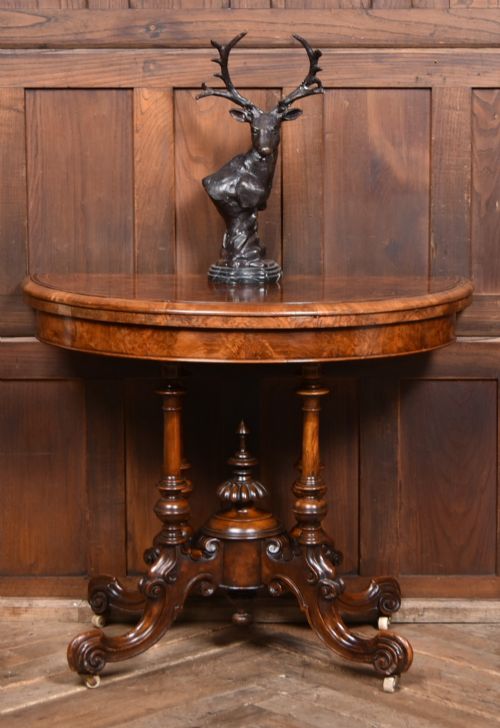
Victorian Folded Card Table
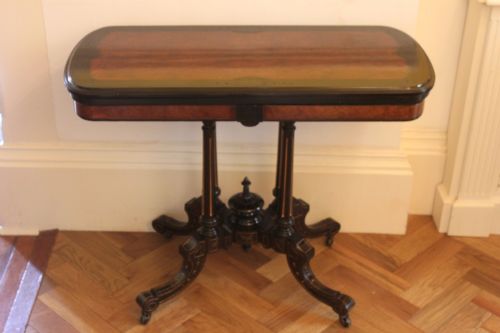
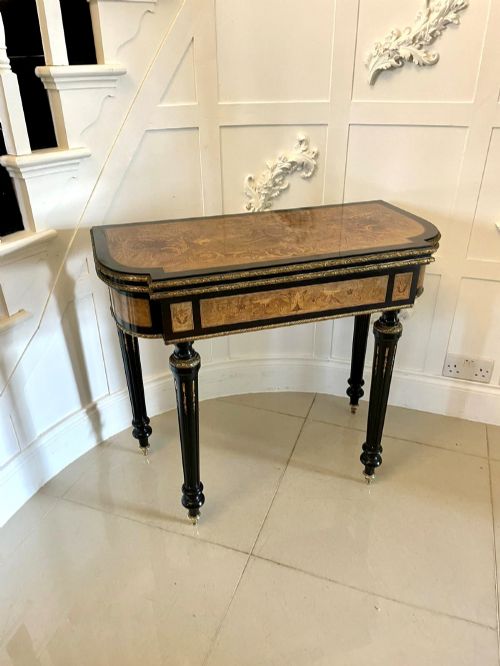
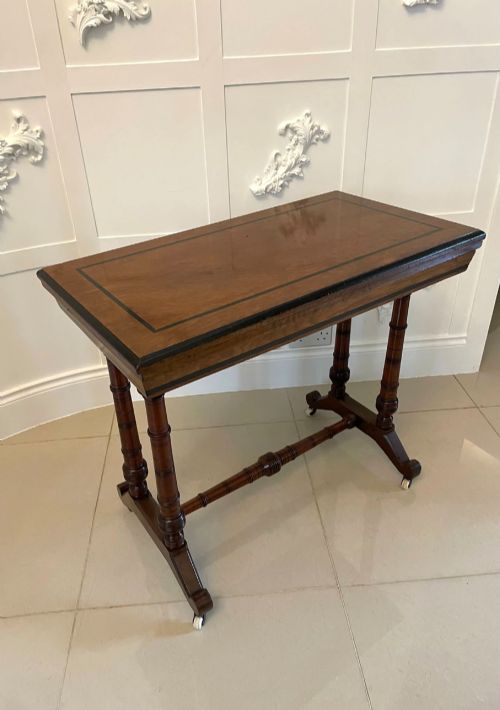
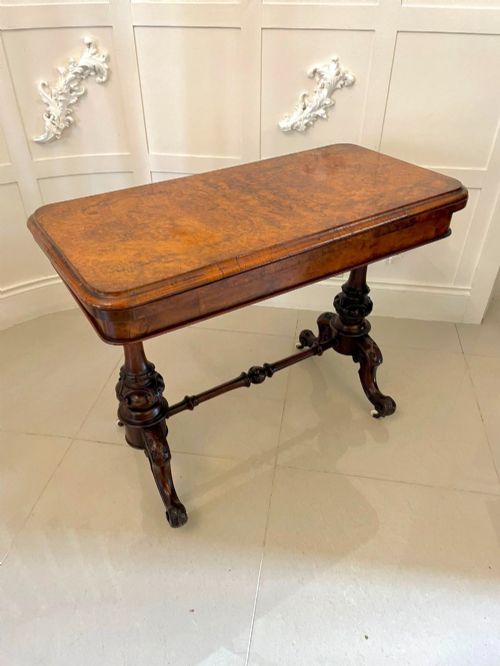
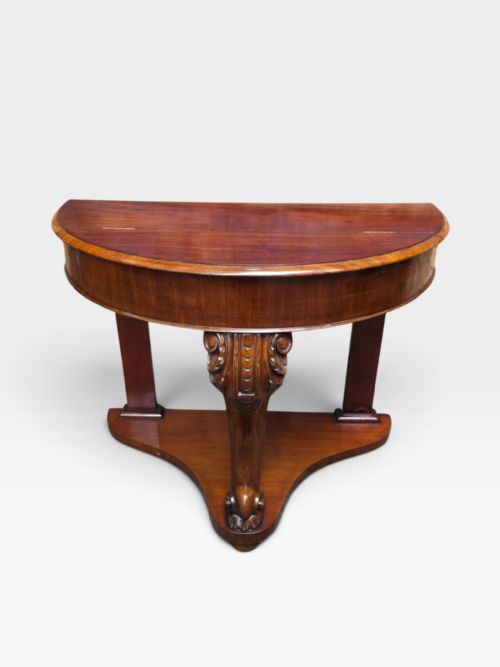
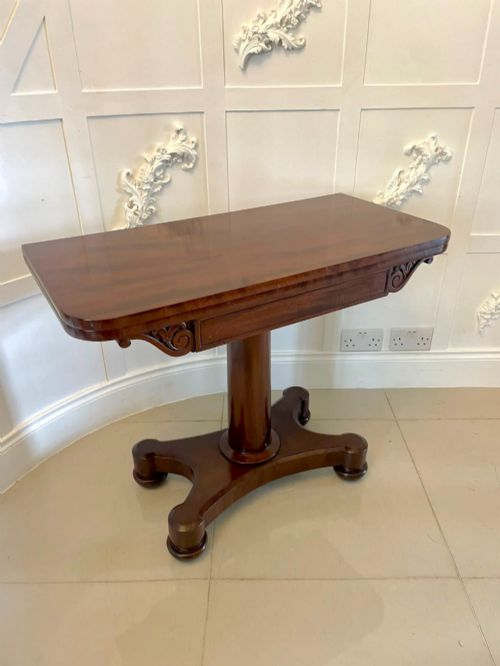
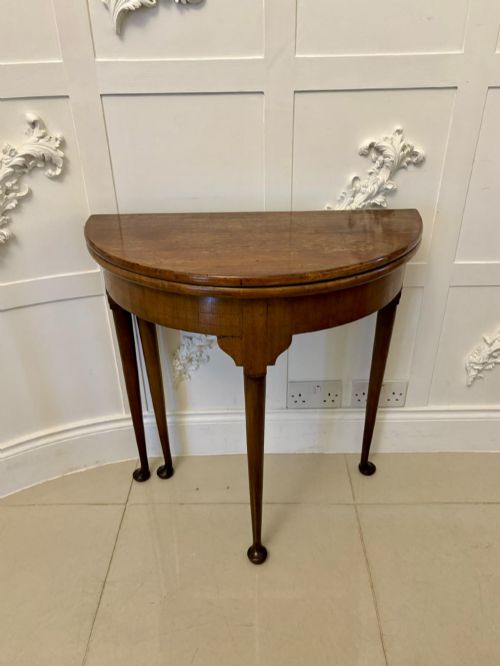
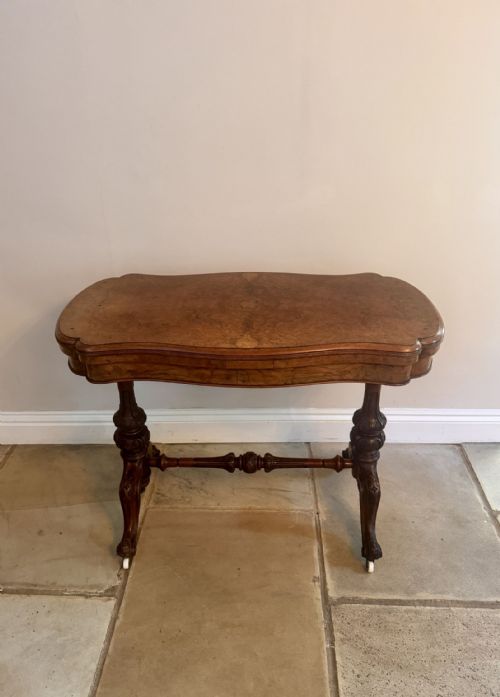
These Victorian folded card tables combine ingenious pivoting mechanisms with rich timbers like burr walnut and rosewood for period entertaining.
Materials and Construction Techniques
Cabinetmakers utilised solid timbers and decorative veneers, notably burr walnut, kingwood and figured mahogany, applied to sturdy carcases with precise wood inlay and floral marquetry.
Metal components such as brass hinges, ormolu mounts and porcelain plaques provide structural support and decorative enrichment to the swivel tops and carved pedestal bases.
Complex pivoting joints and folding leaves allow the tables to transform smoothly from a compact console format into a stable surface for card games.
Judging Quality in Nineteenth-Century Tables
Quality rests upon the selection of timber veneers, where richly figured burr walnut or masterclass marquetry inlay elevates the visual weight of the piece far above plain surfaces.
The precision of the folding and swivelling mechanism dictates mechanical success, ensuring the top locks square and true without wobble whether closed as a console or open for play.
Carved wooden supports, detailed pedestal bases and integrated ormolu mounts demonstrate the hand of a skilled workshop rather than standard production methods.
Some tables hide compartments so deep that generations of card counters remain safely lost inside.
James Shoolbred & Co.·G T Morant·Maple & Co.·Edwards & Roberts
The Victorian Folded Card Table Glossary
- Turnover top
- A table top hinged to fold out and double the surface area when opened, frequently revealing a felt-lined playing space underneath.
- Marquetry
- Decorative patterns created by fitting together thin slices of wood veneer and other materials onto a structural surface.
- Ormolu
- Gilded bronze ornamentation applied to furniture for decorative accent during the nineteenth century.
- Burr walnut
- Timber taken from a walnut tree growth, producing intricate and swirling grain patterns prized by cabinetmakers.
- Console table
- A table designed to stand against a wall, often secured to it with brackets if the structure requires additional support.
Victorian Folded Card Table: Frequently Asked Questions
How do you open a Victorian folded card table?
Most models feature a swivel top that rotates ninety degrees before folding flat onto supporting rails, or a turnover leaf hinged at the rear edge.
Lifting the upper leaf gently reveals the hidden compartment inside the frieze where cards and gaming pieces traditionally rested.
Were these tables only used for playing cards?
While designed specifically for card games, chess and backgammon, their versatile tops made them equally suitable for serving tea or acting as side tables.
When folded closed against a parlour wall, they functioned as decorative console tables holding lamps and ornaments.
How do I identify an Aesthetic Movement card table?
Aesthetic Movement examples often incorporate ebonised wood details, simpler geometric lines and contrasting timbers such as oak and ebony.
They reflect a shift away from heavy floral carvings towards cleaner, more stylised nineteenth-century forms.
What is inside the compartment under the top?
Many folded card tables contain a shallow storage well built into the apron beneath the pivoting surface.
This compartment was used to store playing cards, bone counters, dice and score markers out of sight.