

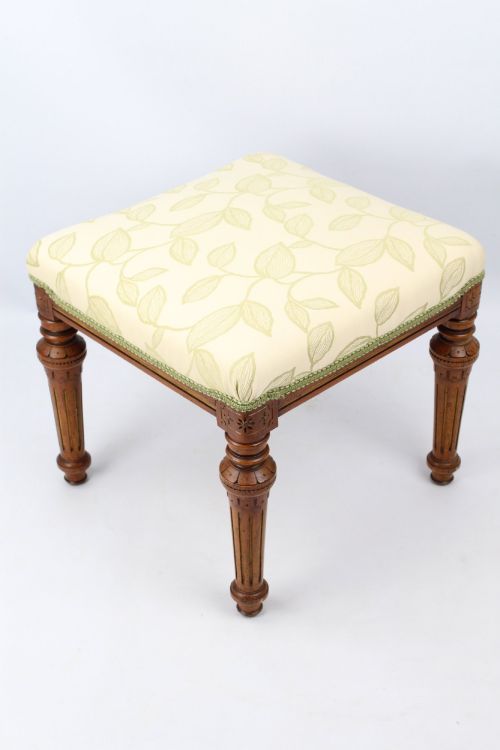


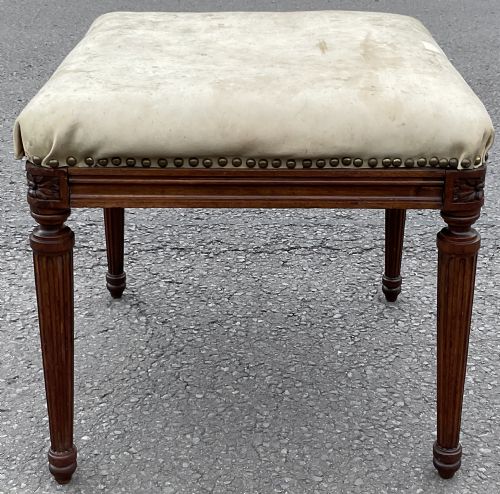


Victorian Fluted Leg Stool
These victorian fluted leg stool examples bring practical seating and period character to any room, combining robust nineteenth-century timber frames with classic upholstered tops.
Victorian Fluted Leg Stool
When searching for a victorian fluted leg stool, collectors encounter an array of nineteenth-century seating forms designed for dressing rooms, halls, and music rooms. These pieces originate across the nineteenth century, including specific dates such as 1880 and 1890, alongside Edwardian examples.
The selections available range from piano stools and dressing stools to large centre stools, benches, and ottomans. Mahogany, walnut, teak, and gilt oak provide the primary timber structures for these varied seating forms.
Makers such as Charles Nosotti and Jas Shoolbred occasionally appear alongside pieces reflecting English Country House and Neoclassical Revival styles. Upholstery finishes vary from modern beige linen and buttoned leather to woven rattan and traditional fabric.
Materials and construction
Makers utilised dense hardwoods including mahogany, walnut, and teak to construct durable frames capable of supporting daily use. Giltwood and parcel gilt finishes also appear on decorative dressing table stools.
Turned and carved woodworking techniques created the distinctive fluted legs characteristic of the neoclassical revival and late Victorian periods. Artisans finished these frames with leather, woven rattan, and various fabric covers including buttoned leather and linen.
Victorian Fluted Leg Stool Retail Price Guide 2026
Typical asking prices for victorian fluted leg stool among the pieces listed under this phrase on Sellingantiques today, from the lower quarter to the upper quarter. They describe what is for sale here now, not the wider market.
Upholstery materials recorded on these pieces include beige linen, buttoned leather, woven rattan, and various traditional fabrics.
Assessing quality and craftsmanship
The distinction between standard production and finer pieces rests upon the precision of the timber turning and the crispness of the fluted leg detailing. Superior examples demonstrate thoughtful integration between the carved wooden frame and the choice of primary hardwood.
Finer items often bear attribution to notable makers or showcase exceptional material combinations such as gilt oak or rosewood. The integrity of the original timber frame alongside sympathetic reupholstery defines the upper tier of these pieces.
Charles Nosotti·Jas Shoolbred
The Victorian Fluted Leg Stool Glossary
- Fluted leg
- A vertical column decorated with parallel shallow grooves, characteristic of neoclassical revival furniture design. This decorative carving appears frequently on nineteenth-century seating supports.
- Giltwood
- Timber coated with a thin layer of gold leaf or gilt paint for decorative effect. This finish enhances formal dressing table stools from the period.
- Centre stool
- A large freestanding seating piece designed to sit in the middle of a room rather than against a wall. These items often feature buttoned leather upholstery.
- Piano stool
- A seat specifically constructed for use at a keyboard instrument, sometimes incorporating swivel mechanisms or adjustable heights. These functional forms date across the nineteenth and early twentieth centuries.
- Parcel gilt
- Woodwork that is partially gilded to highlight specific carved details while leaving the natural grain of the underlying timber visible. This technique accentuates structural mouldings on period frames.
Victorian Fluted Leg Stool: Frequently Asked Questions
Where were these stools used in the home?
These seating pieces served practical functions in specific rooms throughout the nineteenth-century interior, including dressing tables, hallways, and music rooms. Piano stools supported musicians, while dressing stools accompanied bedroom furniture.
Larger variants such as centre stools and hall benches provided communal seating in grander settings like country houses. Their compact forms allowed them to move easily between rooms as household needs shifted.
How do I identify a Neoclassical Revival style?
Neoclassical Revival pieces draw direct inspiration from classical Greek and Roman architecture and decorative arts, reinterpreted by nineteenth-century cabinet makers. The presence of fluted legs serves as a primary visual indicator of this design influence.
These designs prioritise symmetry, proportion, and restrained ornamentation over the heavier carvings seen in other Victorian aesthetics. Timber frames in mahogany and walnut frequently showcase these refined architectural details.
What is the difference between an ottoman and a stool?
Ottomans typically provide fully upholstered seating surfaces designed for relaxation or resting feet, often built on a larger scale than standard footstools. Stools incorporate visible wooden frames, such as fluted mahogany or walnut legs, supporting the upholstered top.
While both categories offer auxiliary seating, stools emphasise structural woodwork alongside upholstery. Ottomans lean toward heavy fabric or leather covering that obscures much of the internal framework.
How should I care for antique wood and leather?
Maintain nineteenth-century timber frames by dusting regularly with a soft, dry cloth and avoiding harsh chemical polishes. Keep wooden pieces away from direct heat sources and strong sunlight to prevent the finish from drying out.
Leather upholstery benefits from occasional specialist conditioning to retain its suppleness without blocking the natural breathability of the hide. Treat fabric and linen coverings according to their specific textile requirements.