




Victorian Flower Cluster Ring
A victorian flower cluster ring combines the rich sentiment of nineteenth-century jewellery with the sparkling geometry of central gemstones.
Victorian Flower Cluster Ring
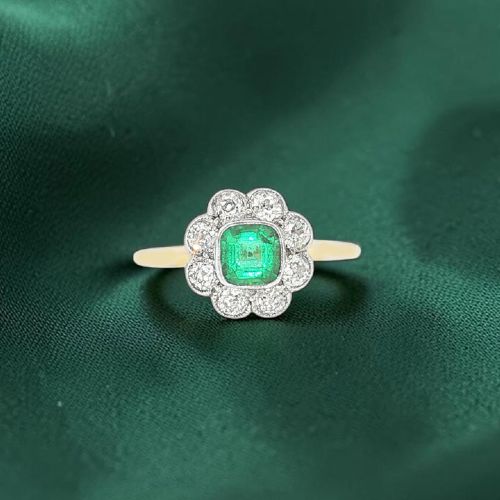
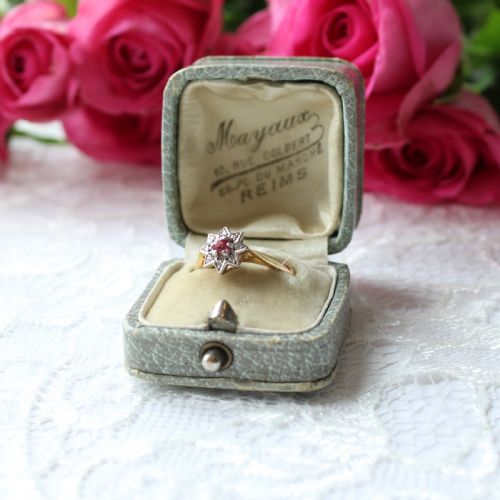
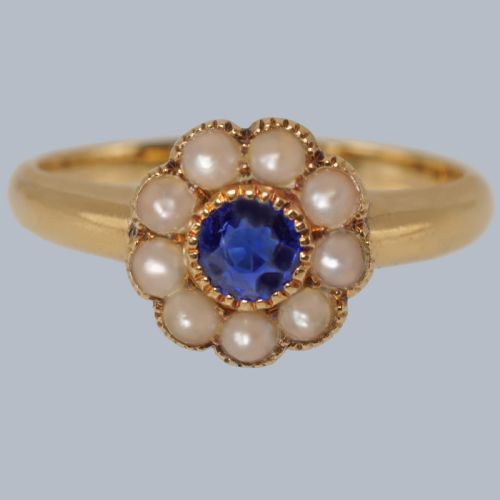
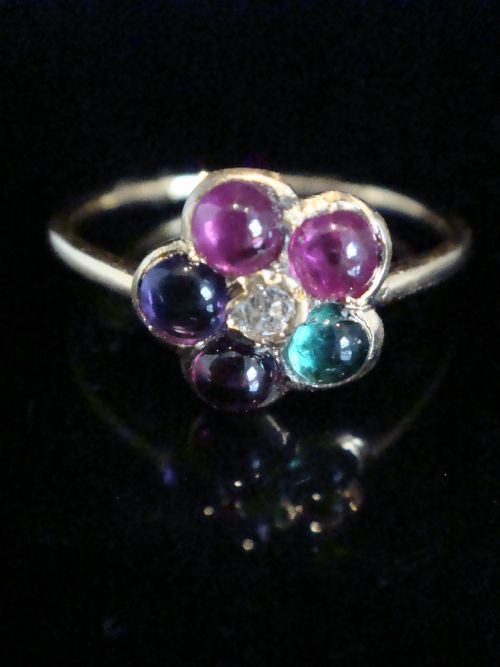
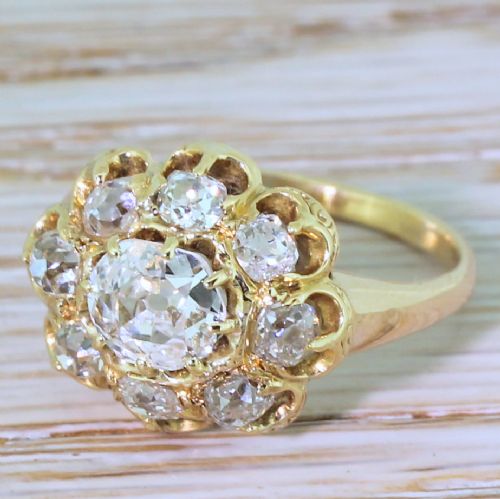
A victorian flower cluster ring gathers precious stones into a floral arrangement, typically featuring a central gem surrounded by a border of smaller sparkling stones. These pieces range from authentic nineteenth-century creations to Edwardian interpretations and mid-century revivals.
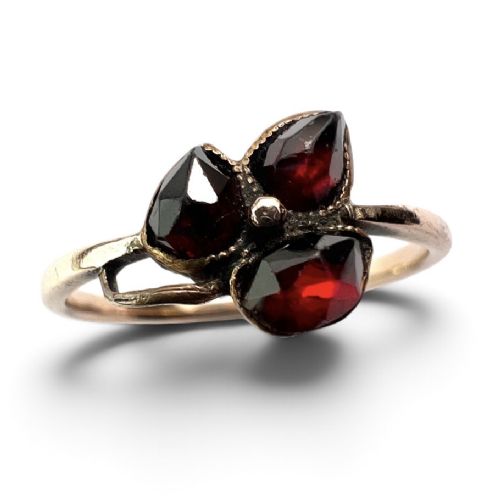
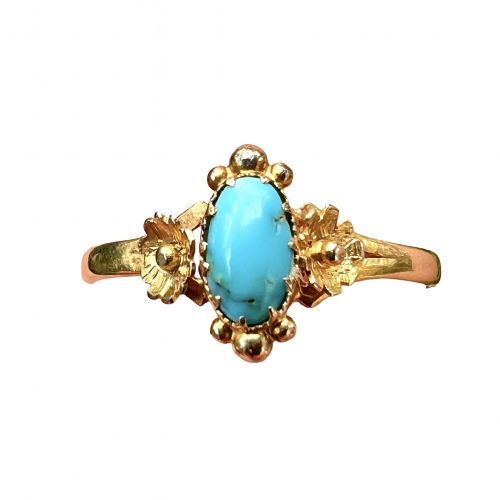
The materials span glowing garnets, vibrant rubies, deep emeralds, and bright turquoise alongside pearls and diamonds. Gold is the dominant metal, appearing in nine-carat and eighteen-carat yellow variations.
Most examples take the form of traditional floral clusters, often mimicking daisies or organic posies. Buyers encounter these rings in distinct periods including the Victorian era, Edwardian period, and later twentieth-century decades.
How They Were Made
Goldsmiths shaped mounts in yellow gold, utilising weights of nine, fifteen, and eighteen carats to secure the stones. Stones are set using traditional claw or bezel techniques suited to the floral designs.
Gemstones include old mine cut diamonds, rose-cut diamonds, garnets, rubies, and sapphires. Pearls and turquoise cabochons also feature prominently within the central clusters and surrounding petals.
Listings span Victorian, Edwardian, and mid-century periods, utilising gold, platinum, diamonds, rubies, garnets, emeralds, turquoise, and sapphires.
What Varies in Quality
The calibre of the central gemstone dictates much of the visual impact, alongside the matching uniformity of the surrounding stones. Fine examples demonstrate careful stone selection where colour and cut harmonize within the floral motif.
The weight and purity of the gold mount also differentiate the pieces, with higher carat gold and substantial metalwork indicating superior manufacture. Overall structural integrity and the crispness of the cluster setting determine the standing of each ring.
The Victorian Flower Cluster Ring Glossary
- Cluster ring
- A ring featuring a central stone encircled by a border of smaller gems. This arrangement maximises sparkle and creates a bold silhouette on the hand.
- Old cut diamond
- A hand-faceted diamond shape common in nineteenth-century jewellery. These stones exhibit smaller tables and distinct culets compared to modern brilliants.
- Rose-cut diamond
- A gemstone cut characterised by a flat base and a domed crown covered in triangular facets. This historic cut produces a subtle, soft gleam.
- Cabochon
- A gemstone shaped and polished with a smooth, rounded surface rather than faceted. Turquoise and certain garnets appear frequently in this form.
Victorian Flower Cluster Ring: Frequently Asked Questions
How do I wear a flower ring?
These rings suit daily wear on the hand when given appropriate care, particularly given their compact cluster profiles.
Their distinctive floral shapes allow them to function independently as standalone statement pieces or alongside plain bands.
Are these rings authentic Victorian?
The selection includes genuine nineteenth-century pieces alongside Edwardian interpretations and later twentieth-century revivals.
Checking the listed periods and materials helps determine the exact era of manufacture for each individual ring.
What stones are used?
Gems span diamonds, rubies, emeralds, sapphires, garnets, and turquoise, often accompanied by pearls.
These materials appear set within yellow gold mounts of varying carats.
How do I clean my ring?
Gentle cleaning with warm soapy water and a soft brush maintains the polish of the gold and stones.
Harsh chemical dips should be avoided, especially for softer gems like turquoise and pearls.