


Gemstone Flower Cluster Ring
A gemstone flower cluster ring brings together vibrant central stones and diamond petals for an expressive, botanical statement.
Gemstone Flower Cluster Ring
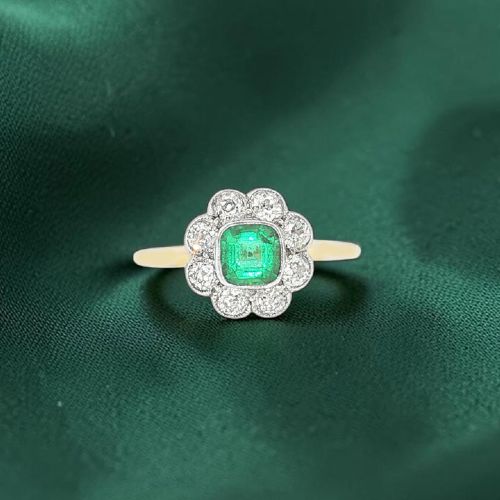
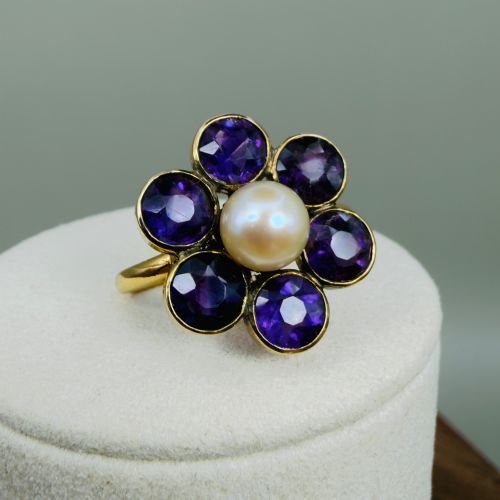
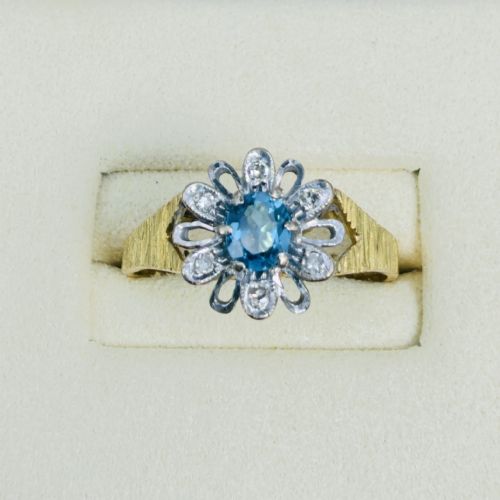
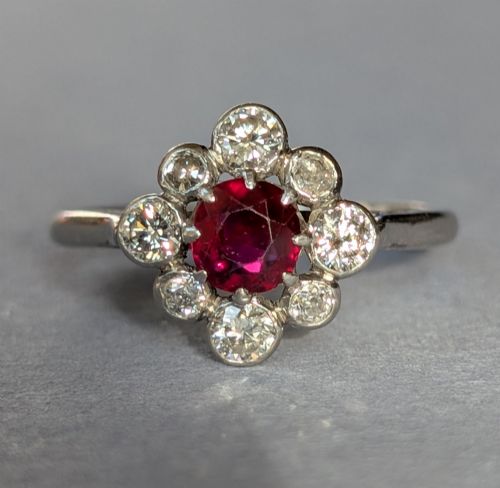
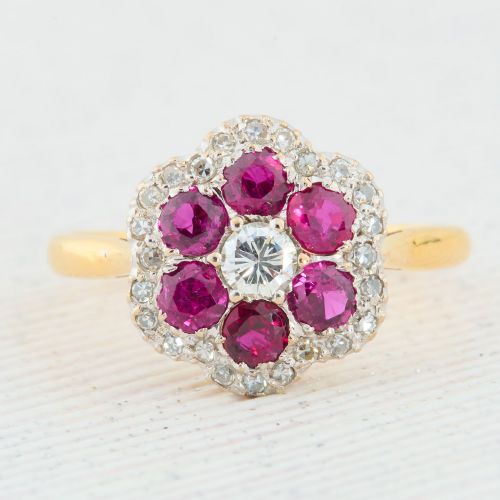
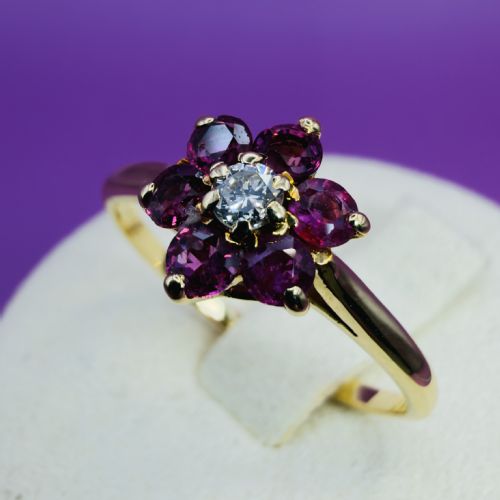
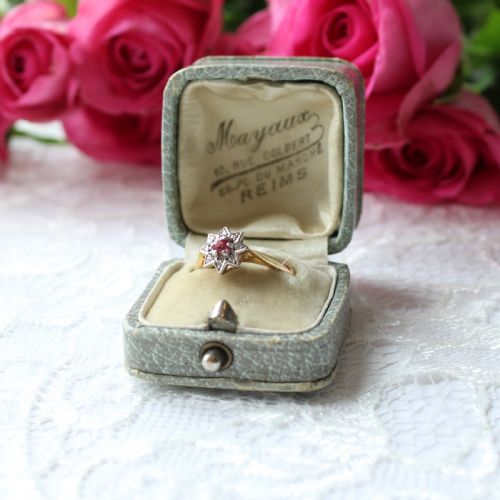
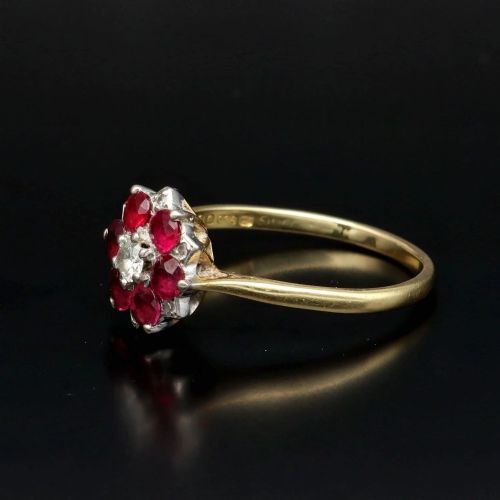
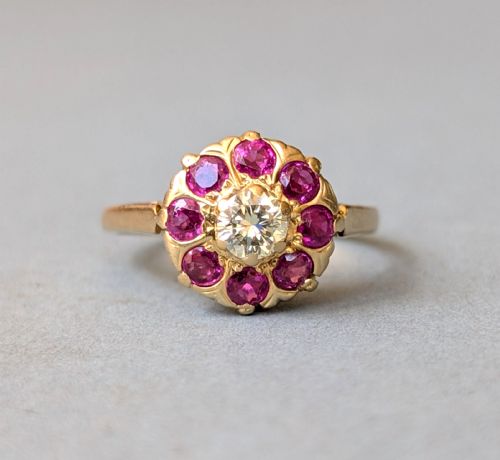
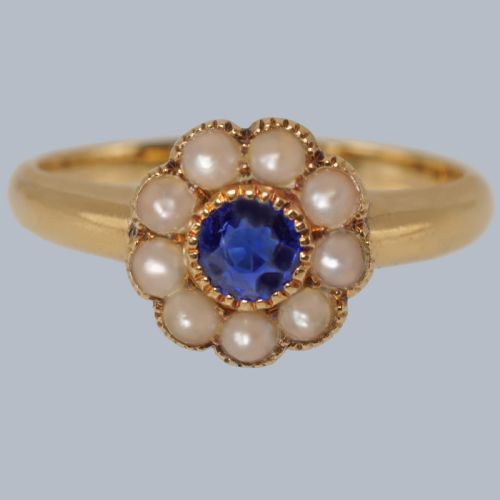
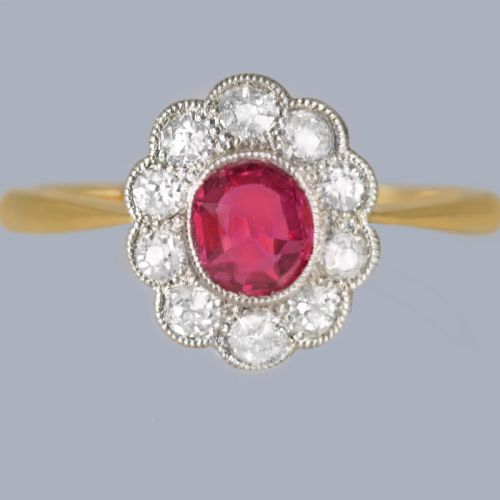
A gemstone flower cluster ring presents a central gem surrounded by a perimeter of smaller stones, forming a floral or daisy motif that sits prominently on the hand. These pieces draw the eye through their distinct concentric design, echoing natural blooms in precious metals.
Configuration varies from tight daisy formations to three-leaf clover arrangements and larger multi-stone clusters. The central stone takes priority, whilst surrounding gems define the petal structure and overall silhouette.
Materials and construction
Jewellers typically utilised 18ct gold, 9ct gold, and platinum to fabricate the structural mounts and settings for these floral designs. Yellow gold provides a warm backdrop for cooler sapphires and emeralds, whilst platinum and white gold enhance the brilliance of diamonds.
Clustering techniques involve securing a central coloured stone, such as a ruby, sapphire, or opal, with a ring of smaller accent diamonds or pearls. Goldsmiths shaped the precious metal to follow the contours of the stones, creating cohesive petal layouts using claw, bezel, or grain settings.
Materials documented across the inventory include 18ct yellow gold, 18ct white gold, 9ct gold, platinum, diamonds, rubies, sapphires, emeralds, opals, and garnets.
Factors that define quality
Quality rests on the saturation and matching of the stones, particularly the central gem and its surrounding petal stones. Finer examples display balanced proportions where the central gemstone possesses strong natural colour and clarity, complemented evenly by well-matched accent stones.
The precision of the metalwork influences the overall finesse, as superior mountings display clean lines and secure stone placement without excessive solder. Heavier gauge gold or platinum provides greater durability, ensuring the delicate flower head remains firmly attached to the band.
The Gemstone Flower Cluster Ring Glossary
- Cluster ring
- A ring design featuring a central stone encircled by a group of smaller gems. This layout maximises visual impact and light reflection.
- Daisy ring
- A specific type of cluster ring where a round central stone is surrounded by oval or round white stones, resembling a daisy flower. These typically date from the Edwardian and vintage periods.
- Cabochon
- A gemstone shaped and polished with a smooth, convex surface rather than faceted. This cut is commonly seen on opals and garnets within these listings.
- Old rose cut
- An antique diamond cut featuring a flat base and a domed crown faceted with triangles. This cut yields a soft, subtle sparkle distinct from modern brilliant cuts.
Gemstone Flower Cluster Ring: Frequently Asked Questions
How do I wear a gemstone flower cluster ring?
These rings work well as standalone statement pieces on the hand due to their broad floral headers. Their detailed symmetry draws attention on its own without needing supplementary band stacking.
When pairing with other bands, consider low-profile wedding rings that sit flush against the cluster gallery without damaging the surrounding stones or prongs.
What periods do these rings come from?
The available selection spans several distinct eras, stretching from Georgian and Victorian pieces through Edwardian, Art Deco, and mid-century modern designs. Each period brings specific metal choices and stone-cutting characteristics.
Victorian and Edwardian examples often showcase yellow gold and platinum combinations with softer stones, whilst mid-century pieces frequently embrace bolder colour contrasts and white gold mounts.
Are these rings suitable for daily wear?
Durability depends on the central stone and the era of manufacture, as harder gems like sapphires, rubies, and diamonds withstand daily friction well. Softer materials like opals require greater care to avoid impact and scratching.
Vintage and antique settings benefit from occasional professional inspection by a jeweller to ensure the prongs holding the cluster stones remain secure.
How can I tell an Edwardian cluster ring apart?
Edwardian pieces frequently utilise platinum-topped yellow gold settings to highlight fine diamonds against a lighter backdrop. The metalwork often incorporates delicate millegrain detailing around the edges.
Floral motifs from this period tend to display light, airy proportions with a distinct emphasis on lace-like openwork beneath the gemstone cluster.