

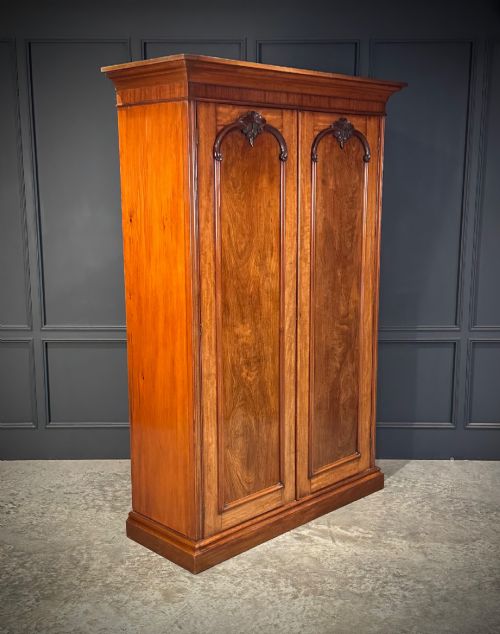
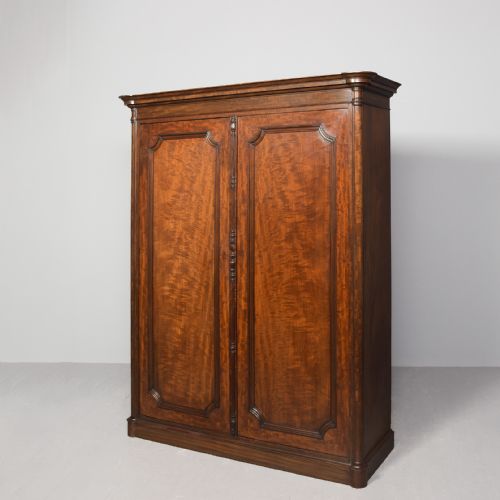
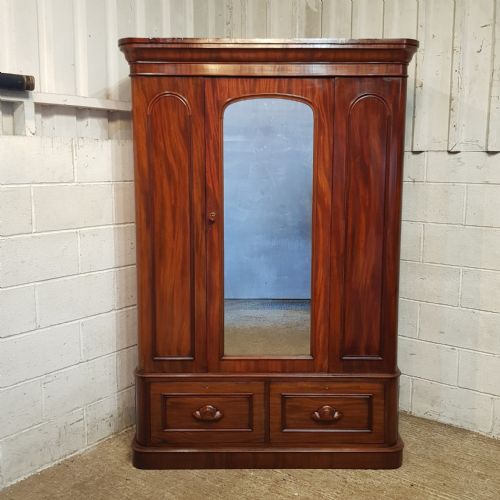

Victorian Flame Mahogany Press
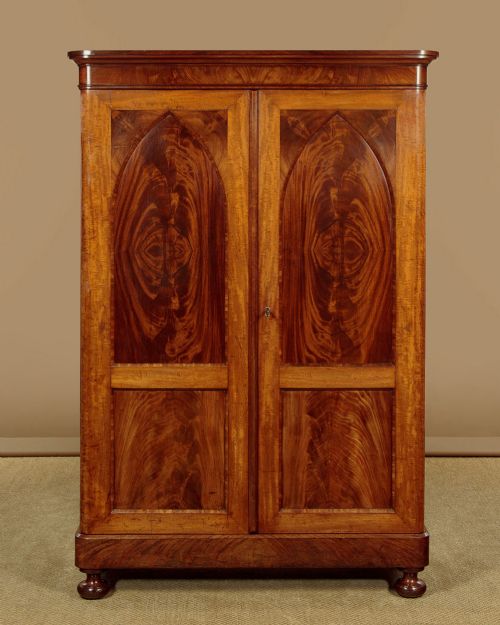
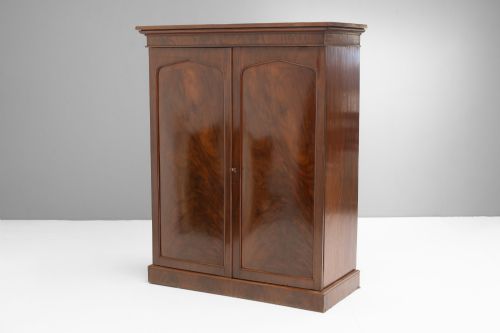
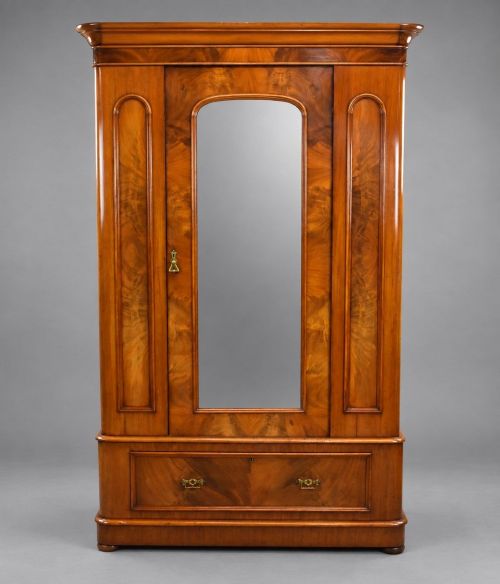
A victorian flame mahogany press combines deep, rippling timber figures with practical storage, offering grand presence to a period bedroom.
Victorian Flame Mahogany Press
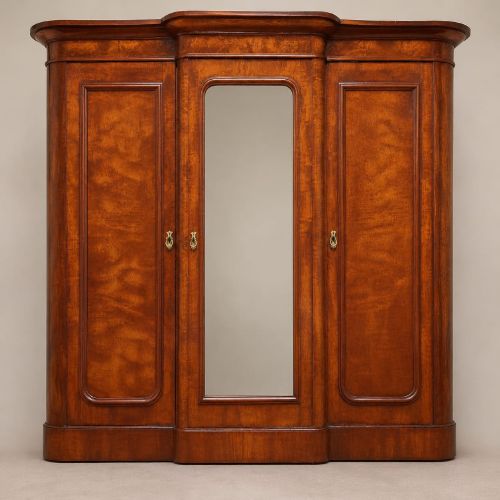
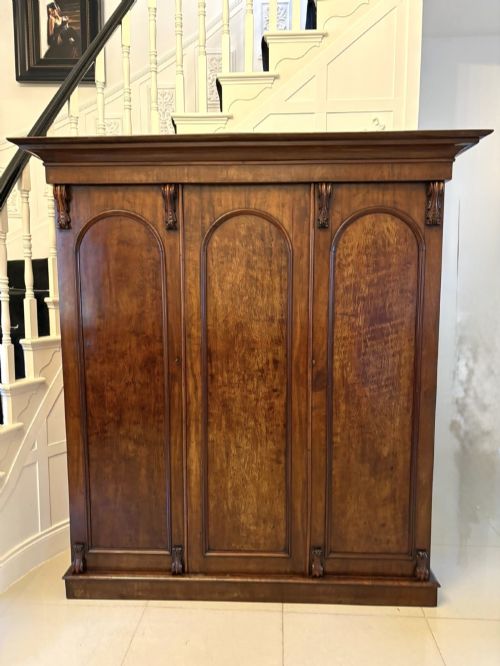
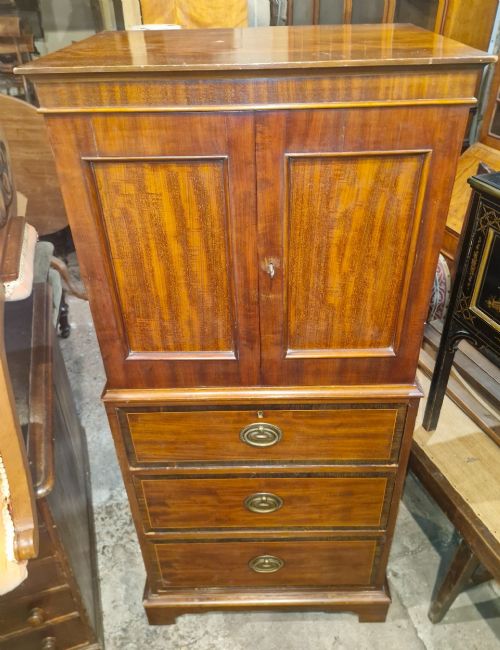
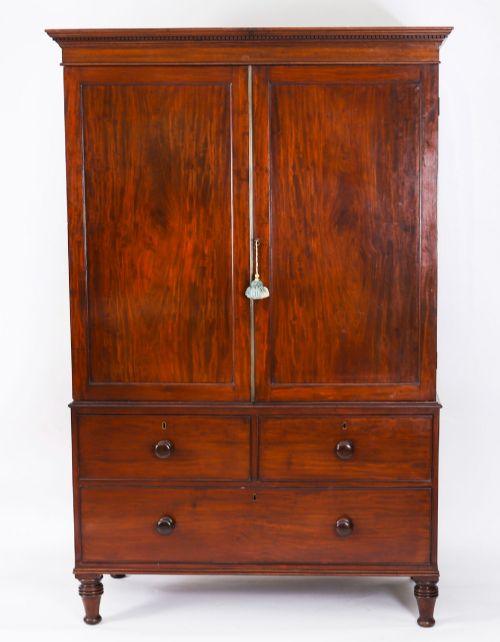
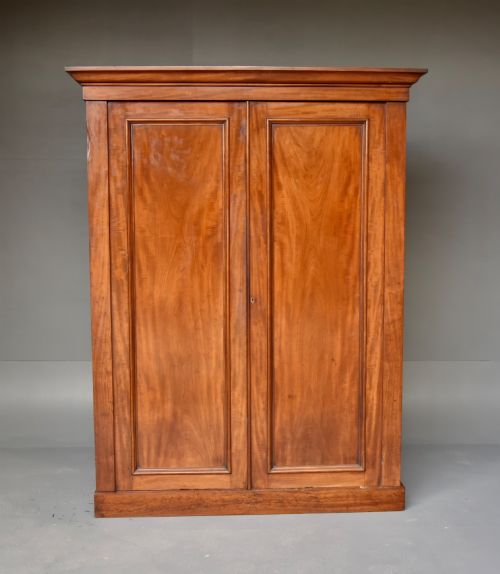
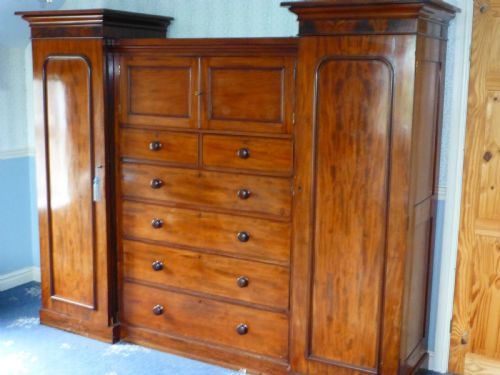
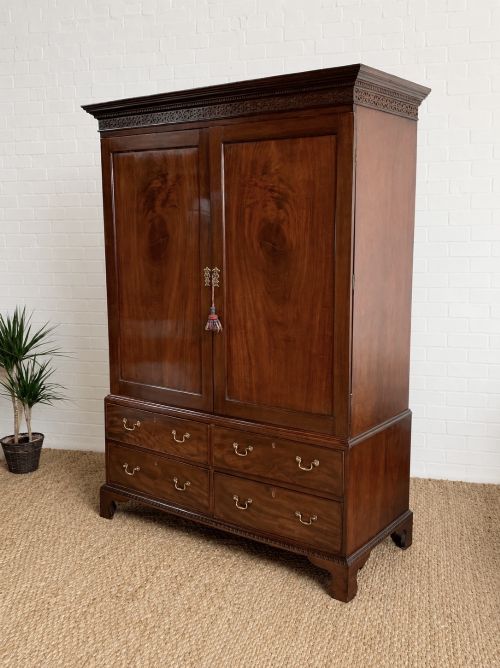
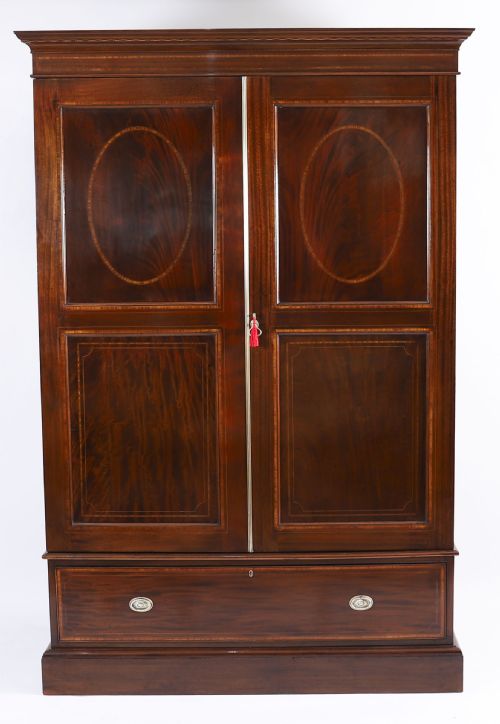
A victorian flame mahogany press is a substantial bedroom storage piece, most commonly encountered here in Victorian, William IV and wider nineteenth-century forms. These large items function as wardrobes, linen presses and combination compactums, housing hanging space alongside interior sliding trays or drawers.
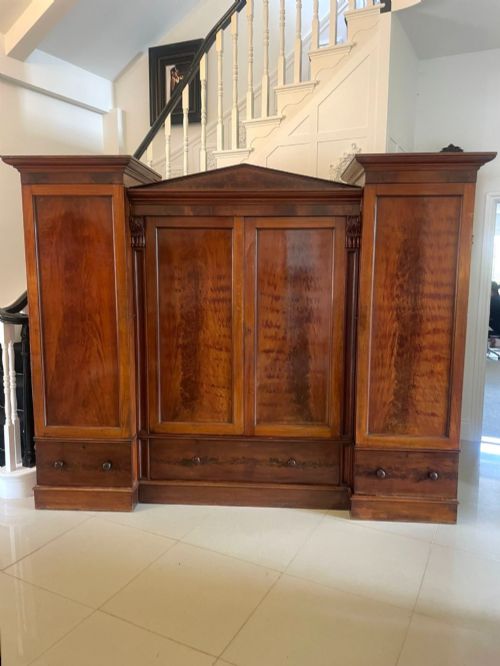
The pieces on this page span double, triple and four-door configurations, including breakfront designs and Scottish variations. Makers and workshops from London to Dublin produced these grand cupboards, utilising dense timber cores faced with dramatic grain patterns.
How they were made
Cabinet makers constructed these presses using solid timber carcases of mahogany and pine, applying highly figured flame mahogany and figured veneers across the principal exterior surfaces. The dramatic grain patterns result from cutting timber near the fork of the tree, creating fiery, rippling visual effects.
Structural integrity relied on sturdy secondary timbers like pine, whilst brass hardware secured internal fittings and doors. Cornices often incorporated decorative elements such as blind fretwork, matched with panelled doors and fitted drawers.
Victorian Flame Mahogany Press Retail Price Guide 2026
Typical asking prices for victorian flame mahogany press among the pieces listed under this phrase on Sellingantiques today, from the lower quarter to the upper quarter. They describe what is for sale here now, not the wider market.
What varies in quality
Quality rests upon the selection and matching of the veneer, where symmetrical grain alignment across large double or breakfront doors distinguishes superior workshops from standard production. The depth of the timber's natural patina and the crispness of applied mouldings or cornices separate utilitarian cupboards from exceptional pieces.
Internal configuration also drives distinction, with complex compactum arrangements and well-fitted linen sliding trays indicating higher original commissions. Maker attribution, through stamps or established workshop provenance, further elevates the standing of individual presses.
Wilkinson & Son·Gillows·S & H Jewell·Heals·Robert Strahan of Dublin
The Victorian Flame Mahogany Press Glossary
- Flame mahogany veneer
- A decorative wood slicing taken from the branch junction of the tree, producing a distinctive, flickering flame-like pattern across large surfaces. This dramatic veneer defines the visual appeal of these wardrobe doors.
- Compactum
- A fitted multi-section wardrobe combining hanging space, drawers and linen slides within a single unified cabinet. These intelligent designs maximise bedroom storage efficiently.
- Linen press
- A traditional tall cupboard featuring upper sliding trays designed for folded textiles above a base of practical drawers. Early examples date from the Georgian era through to the Victorian period.
- Breakfront
- A cabinet design where the central section projects forward from the flanking wings, creating strong architectural rhythm. This format appears frequently on larger nineteenth-century wardrobes.
- Blind fretwork
- Carved decorative patterning applied to a solid background without piercing right through the timber. It provides subtle surface enrichment along cornices and friezes.
Victorian Flame Mahogany Press: Frequently Asked Questions
What is the difference between a press and a wardrobe?
A traditional press contains internal sliding trays or shelves for folded textiles, usually positioned above a chest of drawers base. Wardrobes focus primarily on vertical hanging space for garments.
Many nineteenth-century pieces combine both functions into larger compactum formats, offering flexible bedroom storage.
How do I care for flame mahogany veneer?
Keep these timber surfaces away from direct sunlight and strong heat sources to prevent the veneers from drying or splitting. Regular dusting with a soft, dry cloth preserves the natural lustre of the polish.
Apply high-quality beeswax sparingly when the wood appears dry, buffing gently to maintain the deep grain contrast.
Can these large presses be dismantled for moving?
Most nineteenth-century presses and wardrobes were constructed to break down into manageable modular sections, including the cornice, base, doors and central carcase sides. This modularity was essential for delivering heavy furniture into period bedroom spaces.
Check the internal construction joints and screw fittings carefully before attempting any relocation.