

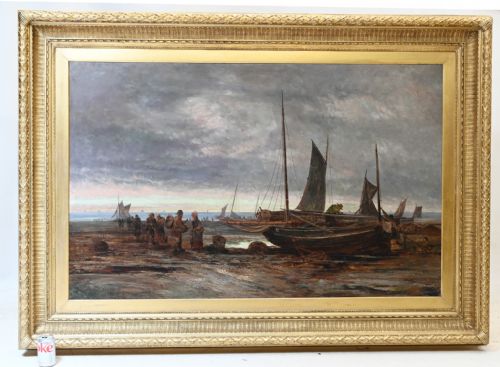


Victorian Fishing Scene Painting
A victorian fishing scene painting captures coastal life and riverbanks through the eyes of nineteenth-century artists.
Victorian Fishing Scene Painting
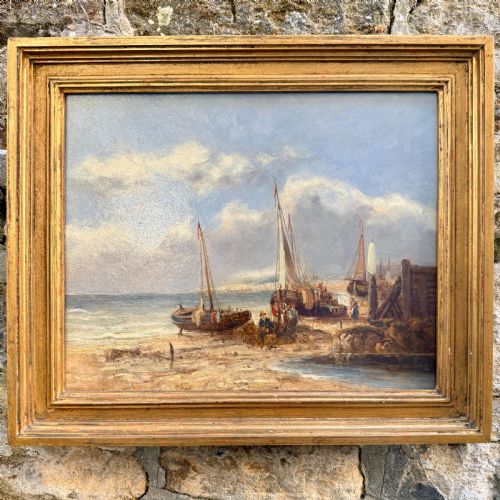
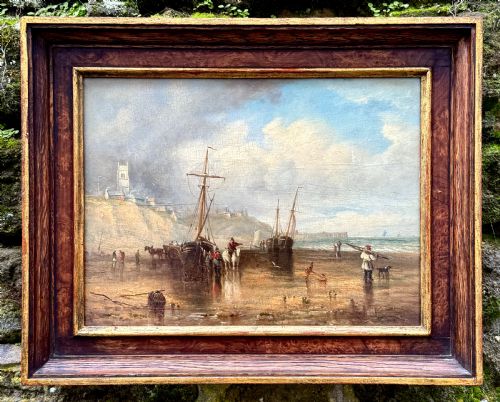
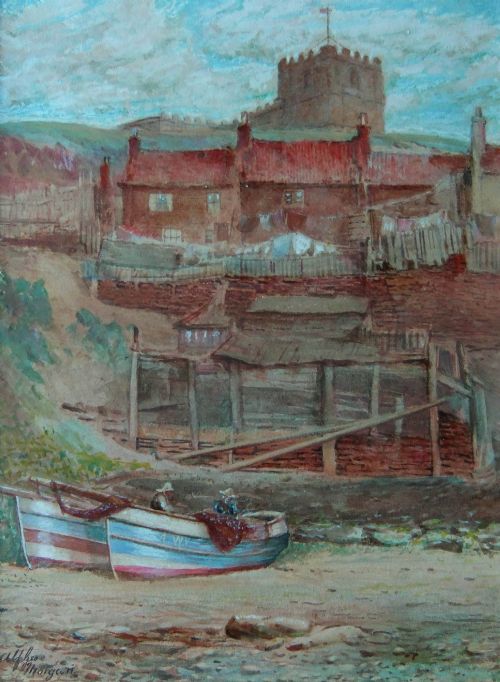
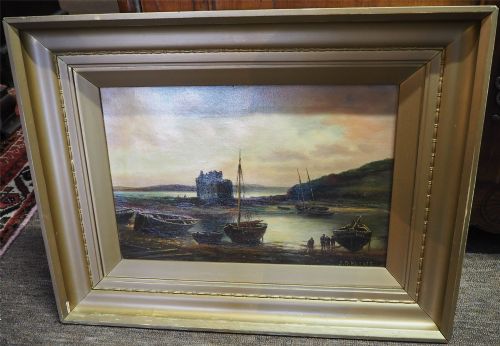
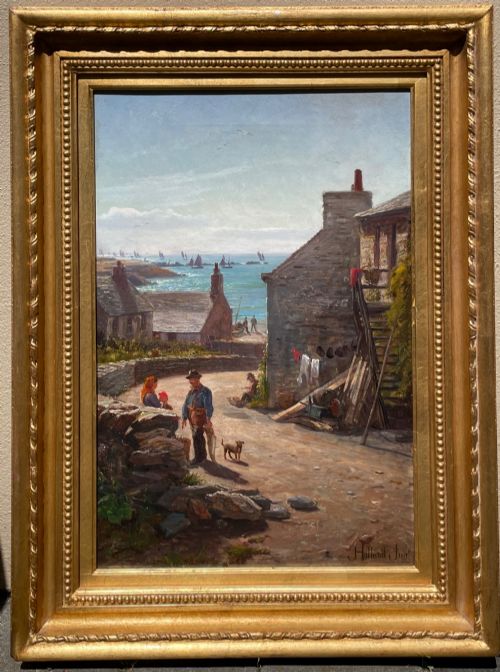
A victorian fishing scene painting usually depicts coastal shores, harbour activities, or quiet riverbanks with anglers and vessels. The pieces on this page span the nineteenth century and extend into the early twentieth century, reflecting a strong maritime and rural interest.
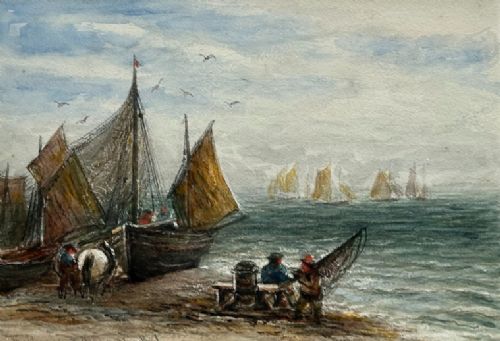
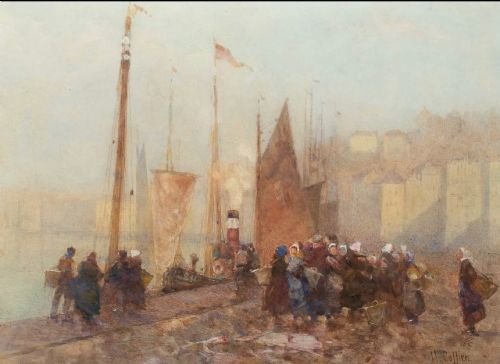
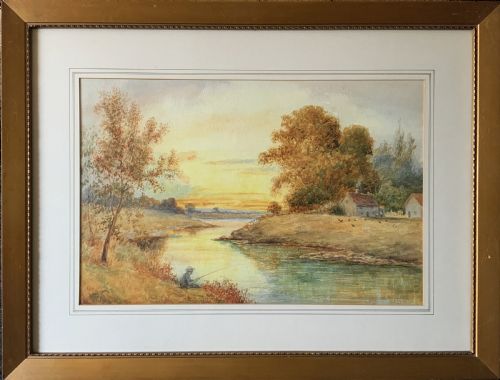
Watercolours on paper and oil paintings on canvas dominate the selection, often framed in gilt or giltwood. Subjects range from large maritime seascapes with fishing boats to intimate watercolours of children fishing by streams.
Most examples originate from British artists working in regional locations such as Whitby, Brighton, and various Scottish and Welsh coastal spots. Buyers encounter both expansive canvases depicting stormy seas and delicate watercolours recording daily labour.
Materials and methods
Artists relied primarily on oil paint applied to canvas, panel, or card, and watercolours painted on paper. These mediums allowed painters to capture changing light on water, stormy skies, and the texture of wooden fishing boats.
Canvases were stretched over wooden frames and frequently housed in gilt or giltwood frames that enhanced the depth of the composition. Watercolours were worked on absorbent paper sheets, sometimes utilising gum arabic to enrich the tones of the pigment.
Victorian Fishing Scene Painting Retail Price Guide 2026
Typical asking prices for victorian fishing scene painting among the pieces listed under this phrase on Sellingantiques today, from the lower quarter to the upper quarter. They describe what is for sale here now, not the wider market.
Several watercolours show children lingering by streams with rudimentary fishing rods, hoping for a bite at dusk.
Judgement of quality
Quality rests in the handling of light, atmosphere, and the movement of water. Skilled artists render the turbulent motion of waves or the calm reflection of a river with precise brushwork and balanced composition.
The sophistication of the draughtsmanship in the figures and boats distinguishes finer works from standard topographical views. Original signatures and well-preserved framing further elevate the standing of a piece.
James Orrock·Thomas Creswick·Gustave De Bréanski·Thomas Bush Hardy·William Edward Webb
The Victorian Fishing Scene Painting Glossary
- Watercolour
- A painting method where fine pigment is suspended in a water-based solution on paper. It allows for translucent washes and delicate detail.
- Giltwood
- Wood that has been covered with a thin layer of gold leaf or gilt powder. It is commonly found on traditional nineteenth-century picture frames.
- Seascape
- A work of art depicting the sea, coastal views, beaches, and marine vessels. These compositions frequently feature fishing boats and harbours.
- Genre painting
- The pictorial representation of scenes from everyday life, including people at work or leisure by the water.
Victorian Fishing Scene Painting: Frequently Asked Questions
How do I identify a Victorian fishing painting?
Look for nineteenth-century costume in the figures, traditional sailing vessels, and atmospheric coastal or river settings. Details like canvas types and period framing often provide additional clues.
Signatures, artist records, and regional subjects such as Whitby or Penzance help narrow down the specific decade of creation.
Were these paintings made as studies or finished works?
Most examples are finished pieces intended for exhibition or domestic display, housed in contemporary gilt frames. Artists produced both small watercolours and large oil paintings for the nineteenth-century art market.
Some watercolours retain fresh, vibrant pigments due to being protected behind glass away from direct sunlight.
What subjects are most common in these scenes?
Common subjects include beached fishing boats, harbours with returning fleets, and figures launching vessels from the shore. Inland views feature anglers by rivers, lakes, and castle ruins.
Coastal scenes often highlight the hard labour of gathering the catch, while inland views lean towards tranquil rural pastimes.
How should I care for an antique oil painting?
Keep oil paintings away from direct sunlight and dramatic fluctuations in temperature and humidity. Dust the canvas and frame gently with a soft, dry brush.
Avoid using water or chemical cleaners on the paint surface or the giltwood frame to preserve the original materials.