

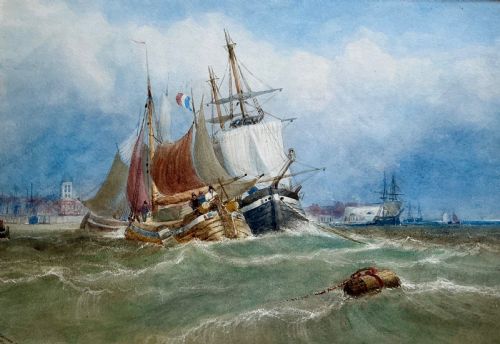


Victorian Fishing Boat Painting
A victorian fishing boat painting brings the salt air and rugged industry of the nineteenth-century coast straight into a room.
Victorian Fishing Boat Painting
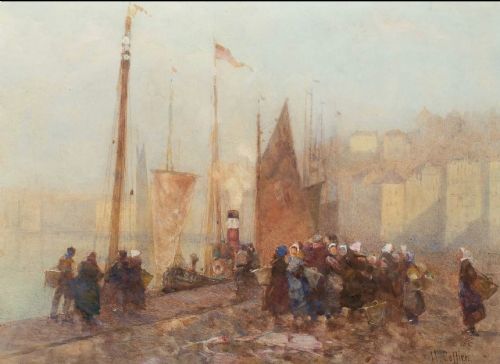
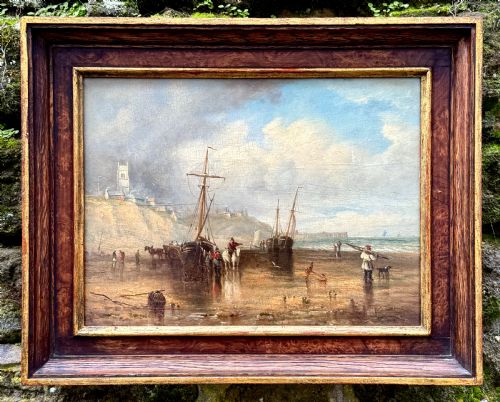
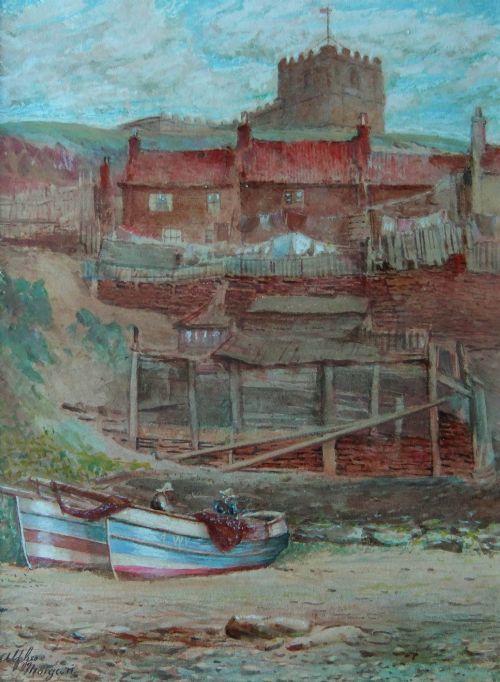
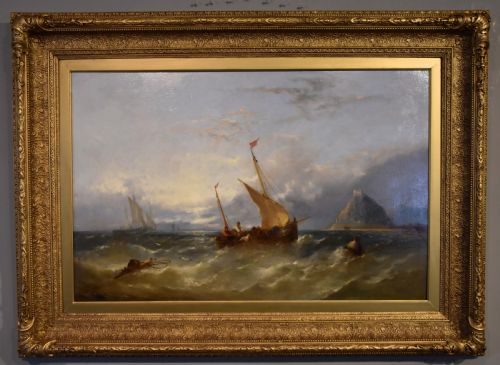
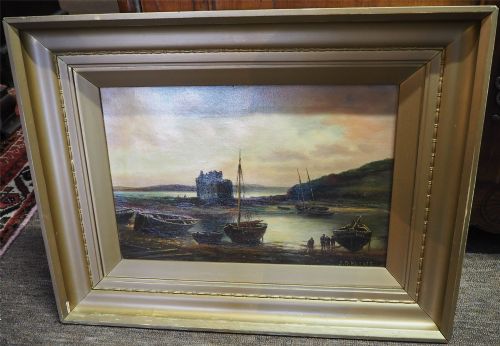
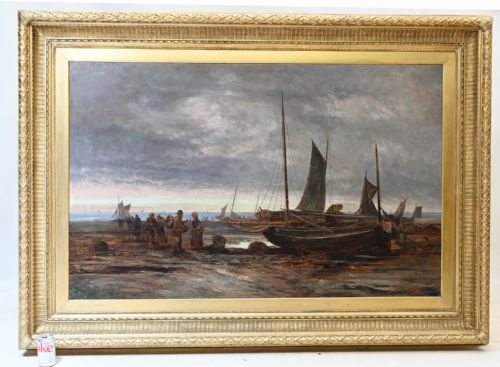
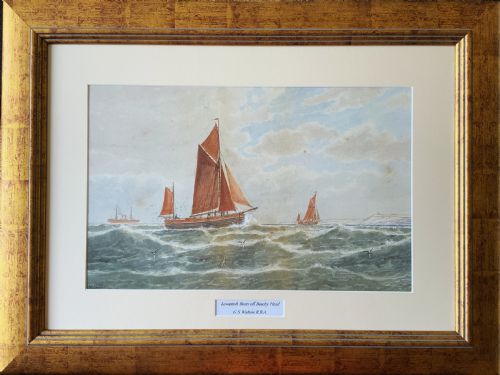
A victorian fishing boat painting depicts the maritime labour, coastal harbours and stormy seas of the nineteenth century. These works capture specific locations such as Whitby, Scarborough, and the Dutch shore, recording working vessels in their element.
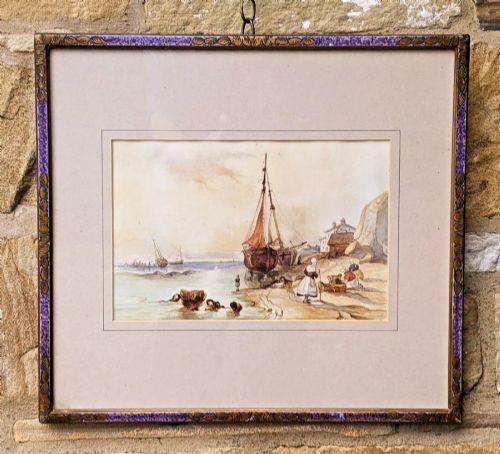
The pieces on this page appear primarily as watercolours on paper or oil paintings on canvas and wood panel. Buyers encounter atmospheric watercolours alongside large-scale oils, reflecting the diverse output of British, Scottish, and Dutch marine artists active between eighteen fifty and nineteen ten.
How they were made
Artists utilised oil paint on canvas, card, or wood panel to build rich, textured maritime scenes. Others applied watercolour pigment onto paper, sometimes finished with gilt framing, capturing the translucent qualities of sea and sky.
Makers employed traditional brushes and palette knives to render the movement of water and the heavy timber of fishing craft. Pigments were layered carefully to convey shifting coastal light and weather conditions.
The selection spans watercolours and oil paintings created between eighteen fifty and nineteen ten.
What varies in quality
The distinction between standard works and exceptional pieces lies in the artist's command of atmosphere and maritime architecture. Superior examples demonstrate a precise understanding of rigging, hull construction, and the turbulent interaction between vessel and tide.
Handling of light separates finer compositions from routine topographical records. Stronger paintings convey the weight of heavy seas and the specific quality of northern coastal light without relying on formulaic brushwork.
Thomas Bush Hardy·Gustave De Bréanski·George Stanfield Walters·Henry Barlow Carter·William Henry Williamson
The Victorian Fishing Boat Painting Glossary
- Seascape
- A work of fine art depicting the sea, coastal views, and maritime activity. These pieces focus on the open water or shore rather than land-based subjects.
- Marine Art
- Artistic representation of ships, boats, and maritime life. This category encompasses both calm harbour scenes and dramatic accounts of vessels in stormy weather.
- Watercolour
- A painting method where water-soluble pigments are suspended in a water-based solution. Artists apply these washes to paper to achieve luminous, transparent effects.
- Wood Panel
- A rigid flat support made from timber, utilised by painters before canvas became universal. These panels provide a smooth ground for detailed brushwork.
- Gilt
- A thin layer of gold applied to wood or other materials to decorate frames. This finish protects the perimeter and enhances the visual weight of the artwork.
Victorian Fishing Boat Painting: Frequently Asked Questions
Where were these painted?
Artists travelled along the British and European coasts to record active fishing ports and coastal communities. Common locations include Yorkshire harbours, Norfolk beaches, and Dutch shorelines.
Porter and painter alike observed the daily departure and return of fishing fleets, capturing recognisable landmarks such as cliffs, castles, and harbour walls.
How do I care for watercolour?
Watercolour paintings require protection from direct sunlight to prevent the pigments from fading over time. Glazing with conservation glass helps shield the paper from environmental moisture.
Hang these works on interior walls away from direct heat sources and damp atmospheres to preserve the integrity of the paper support.
Are these works signed?
Many nineteenth-century marine paintings carry the signature or monogram of the artist, often placed in a lower corner. Some pieces remain unsigned or attributed to a broader regional school based on style and technique.
Documentation on the reverse or family provenance sometimes confirms the authorship when a direct signature is absent.
What frames are appropriate?
Period frames often feature moulded plaster and gilt finishes designed to complement the heavy tones of oil paint. Simple washes suit lighter watercolour works on paper.
Selecting a frame from the correct era ensures the presentation matches the aesthetic standards of the nineteenth century.