
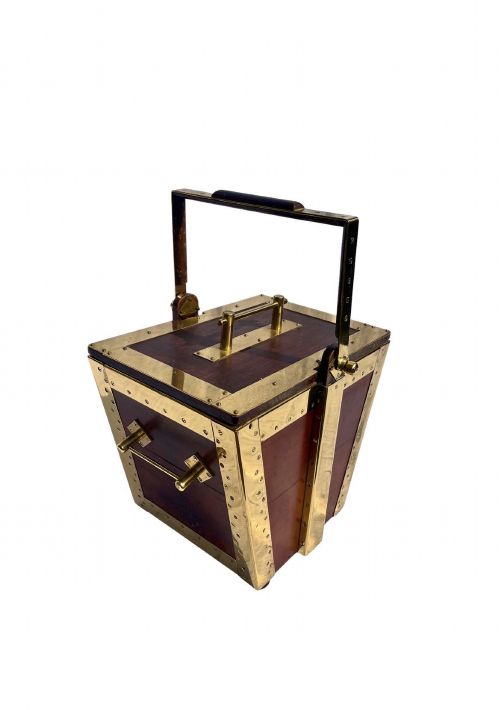


Victorian Fireside Storage Bucket
These victorian fireside storage buckets keep fuel close to the hearth in metal and timber.
Victorian Fireside Storage Bucket
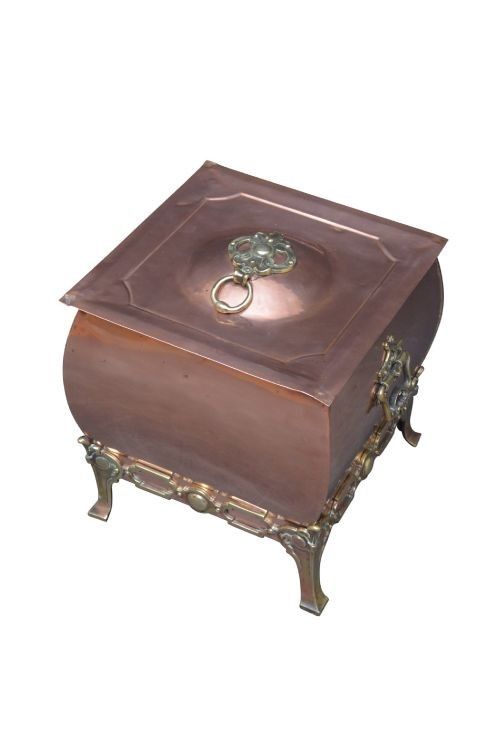
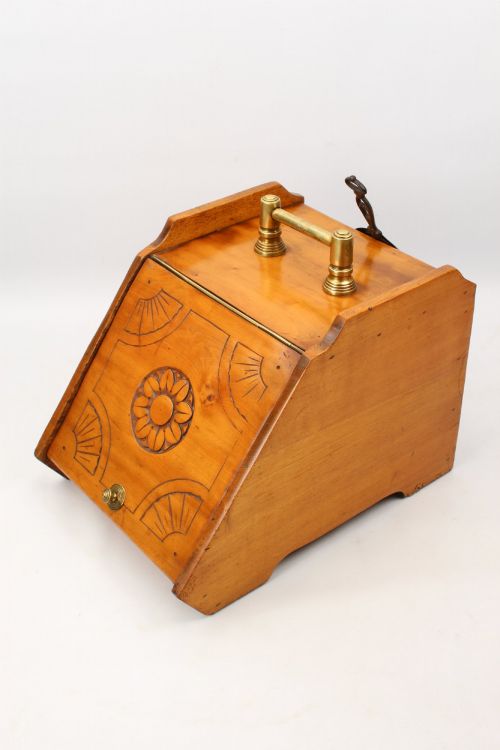
A victorian fireside storage bucket gathers coal, logs, and peat beside the hearth, taking the form of helmets, bins, boxes, and purdoniums. These domestic containers range from simple utilitarian iron vessels to decorative brass and copper receptacles intended to sit in the best rooms of the house.
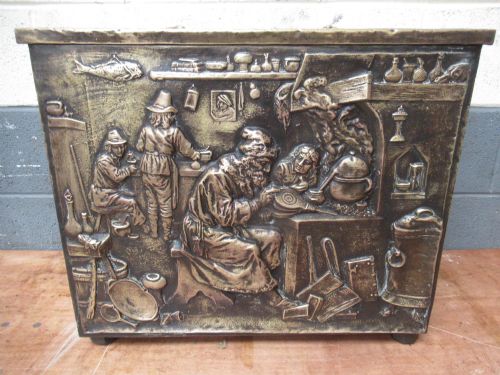
The materials span bright metals and substantial timbers, including polished brass, hammered copper, oak, mahogany, and walnut. Many pieces combine a wooden box with brass handles and hinges, or pair a sheet iron body with decorative embossing and applied bands.
Most examples hail from the Victorian and Edwardian eras, with occasional variations stretching into the early twentieth century. Makers of the period drew on Arts and Crafts ideals and Art Nouveau motifs to turn a utilitarian fuel store into an ornament.
Materials and construction
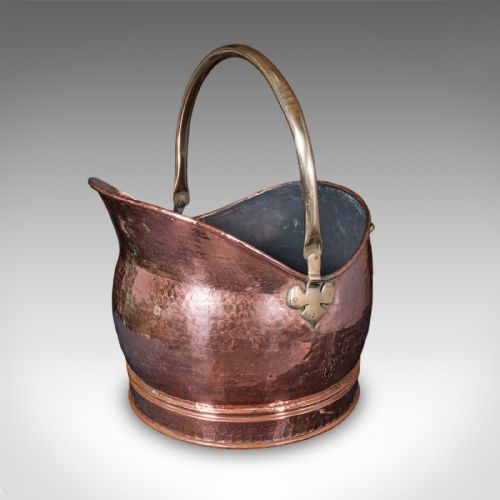
Metal vessels rely on sheet brass and copper, shaped by hand or machine, often joined with rivets and finished with swing handles and embossed panels. Coppersmiths and braziers hammered or stamped the metal to create helmets, scuttles, and bins that could withstand daily hauling of heavy coal.
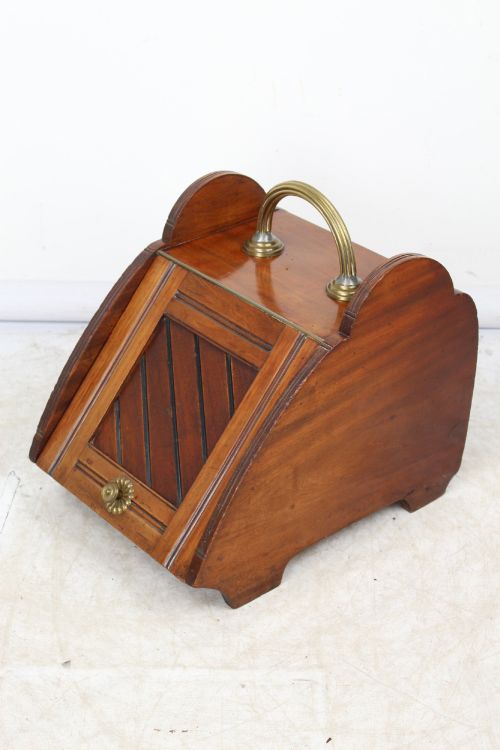
Timber boxes utilise solid oak, mahogany, and walnut, frequently featuring carved fronts, inlaid lids, or dropped panels to conceal an inner metal liner. Blacksmiths also forged iron wagons and simple buckets for rugged service, marrying utility with durable construction.
Forms on this page range from simple helmet scuttles and coal boxes to triangular bins and decorated plant pots.
Judging the range
Quality reveals itself in the weight of the metal and the joinery of the timber, where heavier gauge brass and substantial hardwood bodies outlast thin sheet constructions. Fine examples display crisp hand-finishing, such as neatly dovetailed boxes, secure riveted seams, and well-cast handles that bear the strain of heavy loads.
Design ambition separates basic utility from finer parlor pieces, as seen in embossed motifs, galleon designs, and Arts and Crafts hammered surfaces. The presence of matching shovels, original ceramic or wooden liners, and intact drop-front mechanisms indicates a higher grade of manufacture.
The Victorian Fireside Storage Bucket Glossary
- Purdonium
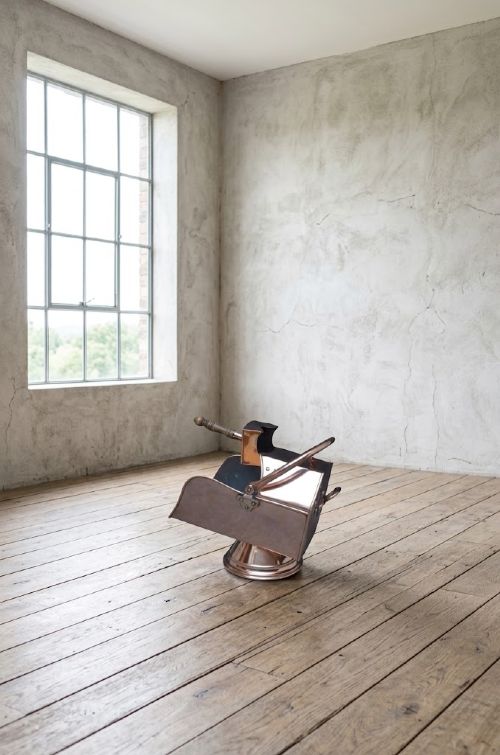
- A specialised coal box featuring a sloping drop-front door designed to tip fuel forward smoothly. This enclosed cabinet style kept coal dust contained inside the living room.
- Coal scuttle
- A bucket or helmet-shaped vessel with a wide mouth and a pivoting handle for carrying fuel to the grate. Early versions often include a matching shovel held in side brackets.
- Tole ware
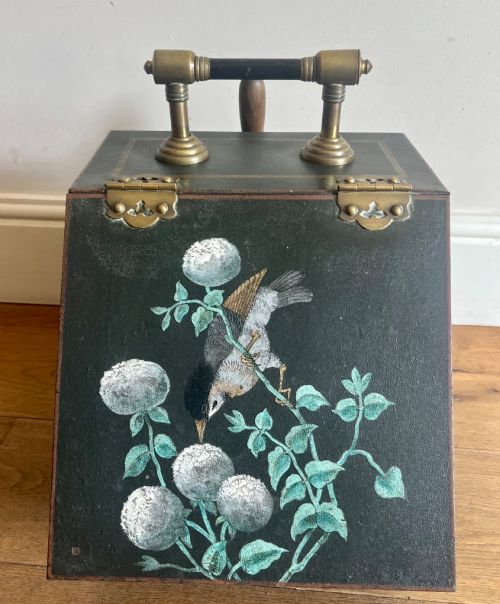
- Enamelled and painted sheet metal used for decorative domestic items. These containers bring colour and pattern to the hearthside.
- Log bin
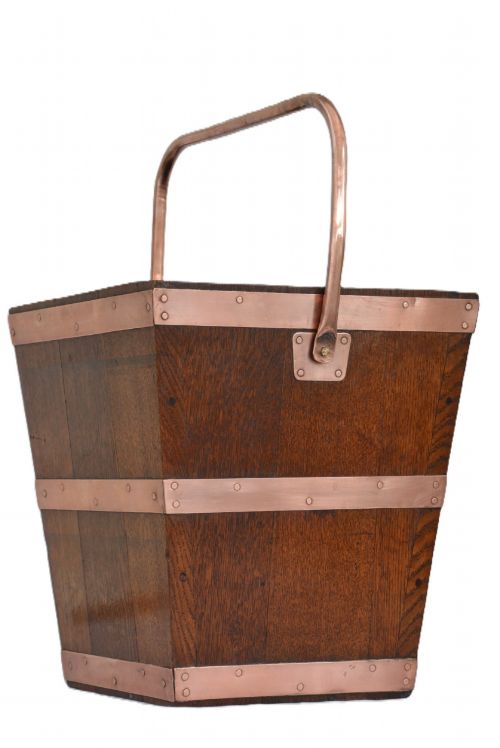
- A deep container proportioned to hold firewood rather than loose coal. They appear in circular or triangular forms utilising heavy copper or timber staves.
Victorian Fireside Storage Bucket: Frequently Asked Questions
How were these buckets used?
These vessels transported and stored solid fuel such as coal, logs, and peat for open hearths. Servants filled them in the cellar or coal hole and brought them up to warm the main rooms.
During quieter hours, the lidded boxes and bins kept the fuel out of sight and prevented soot from drifting onto nearby carpets and upholstery.
Are liners usually included?
Many coal boxes and purdoniums retain their original metal or zinc liners, which lifted out for easy cleaning and emptying. Some survive without liners due to heavy wear over decades of daily fireside service.
A missing liner does not detract from the exterior appearance of a timber or brass bin, though buyers often check the interior condition.
How do I care for brass and copper?
Polished metal vessels benefit from occasional dusting and light cleaning to maintain their surface lustre. Many owners prefer to leave a natural aged patina rather than applying harsh chemical polishes.
Keeping the metal dry and away from excessive damp prevents corrosion and preserves the historical character of the sheet brass and copper.