



Victorian Firescreen
A victorian firescreen keeps the fierce blaze of an open hearth at bay while adding texture and warmth to a room.
Victorian Firescreen
A victorian firescreen is a moveable household furnishing designed to shield people from the intense heat of an open fireplace. These screens stand on supportive feet or heavy stands, positioning a barrier directly between the hearth and the seated inhabitants.
Most examples found here date from the nineteenth century, ranging across distinct revival styles such as Gothic and Rococo alongside simpler Arts and Crafts interpretations. Forms vary from simple standing panels to clever folding leaves and adjustable screens.
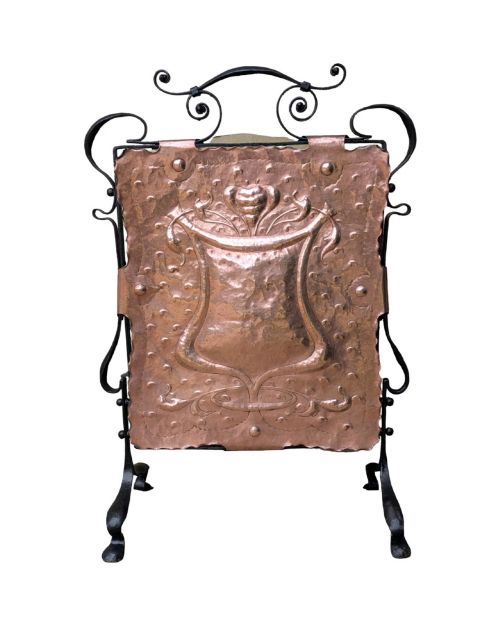
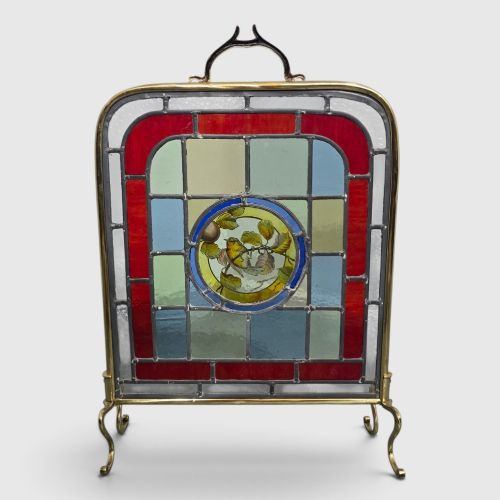
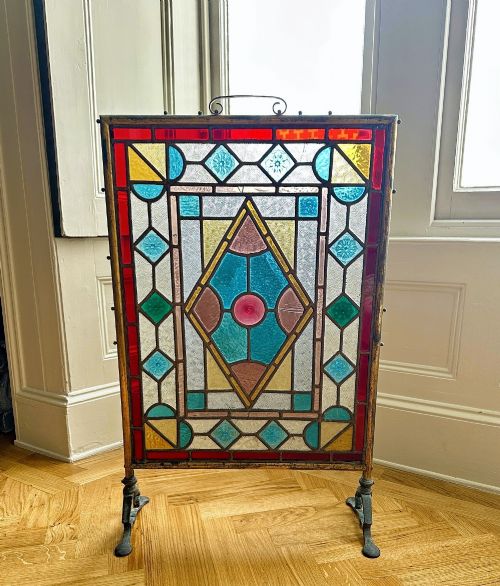
Wooden frames frequently house decorative panels made from needlework, tapestry, or painted glass, whilst metal versions rely entirely on brass, copper, and wrought iron. The piece serves both a practical shielding purpose and a decorative role within the nineteenth-century parlour.
Materials and construction
Frames rely heavily on solid timbers such as mahogany, carved oak, and wrought iron or brass for metallic structures. Timber sections are joined to hold central panels securely, whilst metal frames utilise heavy bases to prevent tipping near the hearth.
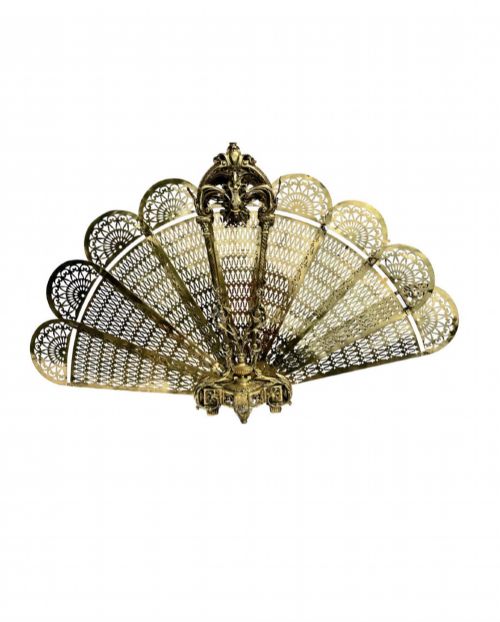
Panels demand specialist textile or glazing skills, incorporating wool needlework samplers, figural tapestry, canvas, and stained glass. Copper and brass sheets are beaten, pierced, or engraved to create reflective surfaces that catch the flickering light of the fire.
Victorian Firescreen Retail Price Guide 2026
Typical asking prices for victorian firescreen among the pieces listed under this phrase on Sellingantiques today, from the lower quarter to the upper quarter. They describe what is for sale here now, not the wider market.
The design styles represented across the inventory include Arts and Crafts, Gothic Revival, Rococo Revival, and William IV.
Judging quality and craftsmanship
Quality rests upon the weight of the materials used and the firmness of the frame construction, separating flimsy items from robust household furnishings. Metal screens of higher standing utilise heavier gauge brass and substantial wrought iron bases that maintain stability on uneven floors.
The artistry of the central panel dictates the overall standing of the piece, distinguishing finely worked needlework and detailed stained glass from simpler designs. Carved wooden frames display crisper moulding details and more considered joinery throughout the structure.
The Victorian Firescreen Glossary
- Firescreen
- A moveable guard placed in front of a fireplace to block excessive radiant heat.
- Needlework
- Decorative sewing executed with a needle on canvas or fabric, frequently mounted within wooden frames as a picture panel.
- Stained glass
- Coloured glass pieces joined together with lead cording to form decorative translucent panels.
- Rococo Revival
- A nineteenth-century design style mimicking the ornate, asymmetrical curves and shell motifs of the eighteenth century.
- Arts and Crafts
- A movement prioritising traditional handcraftsmanship, simple construction, and visible structural materials.
Victorian Firescreen: Frequently Asked Questions
What is a victorian firescreen used for?
These furnishings were positioned before open hearths to protect the faces of people seated nearby from the fierce heat of coal or wood fires. They also served to hide an unlit fireplace during the warmer summer months.
Beyond their original practical function, they acted as prominent decorative items in nineteenth-century reception rooms, displaying needlework skills or metalwork artistry.
How do I live with a firescreen?
Place your screen close to an unlit hearth or position it against a living room wall to showcase the textile panel or metalwork. Because they are generally moveable, you can easily shift them to different corners of the room.
Keep wooden frames and textiles away from direct, harsh sunlight to prevent fading of the wool or mahogany over time. Metal stands require occasional gentle dusting to maintain their finish without stripping historical patina.
How do I tell periods apart?
Nineteenth-century pieces often reflect historical revival movements, incorporating Gothic pointed arches or ornate Rococo scrolls alongside earlier Georgian proportions. Pieces tagged as Regency or William IV typically display cleaner, classical lines derived from earlier design vocabularies.
Arts and Crafts examples turn away from heavy historical ornamentation in favour of honest construction using copper, wrought iron, and stained glass.
Are all firescreens adjustable?
Not all screens feature movement, as many are fixed standing panels supported by sturdy feet or heavy iron bases. Some nineteenth-century examples include pull-out leaves or sliding mechanisms to alter the width or height of the protective barrier.
Adjustable designs offered homeowners greater control over the amount of heat blocked or floor space occupied in the room.