


Victorian Fire Set
A victorian fire set brings together the functional pokers, tongs, and shovels needed for coal grates with the polished brass or iron display that anchors a hearth.
Victorian Fire Set
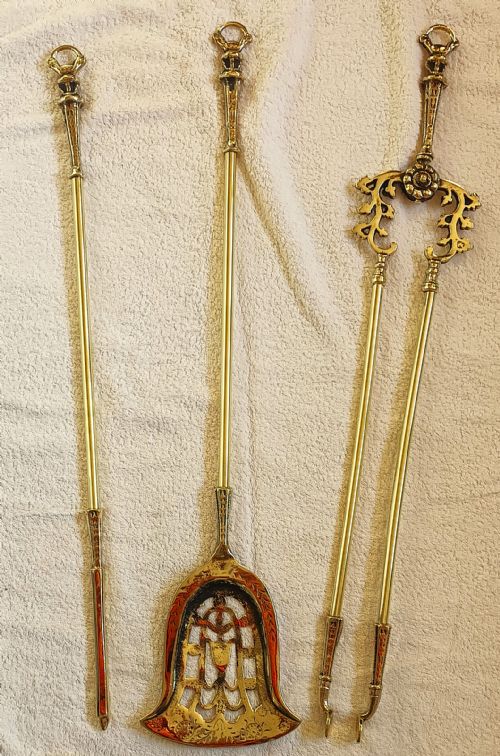
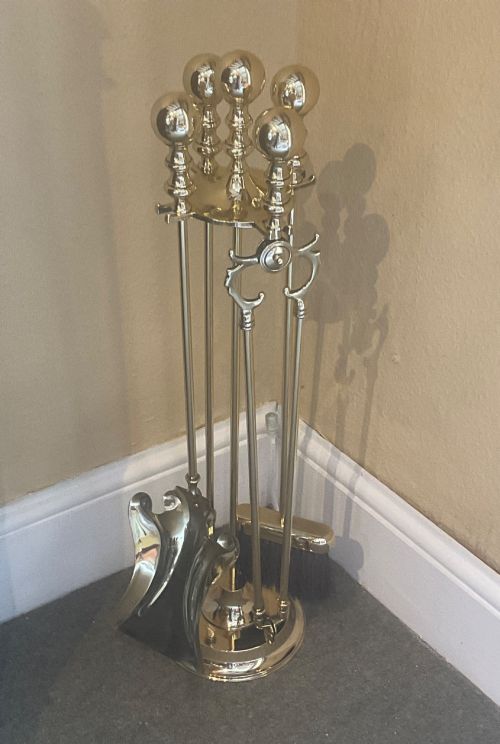
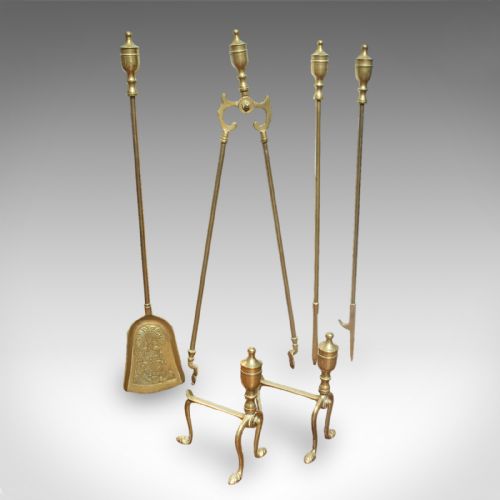
A buyer examining a victorian fire set encounters collections of fireplace tools such as pokers, tongs, and shovels, often gathered alongside companion stands, fire dogs, and grates. These groups reflect the domestic habits of nineteenth-century households, where managing a coal or wood fire required specialised ironmongery kept ready beside the hearth.
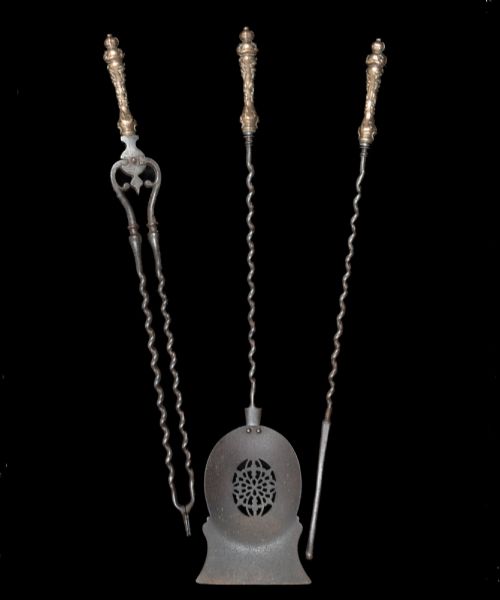
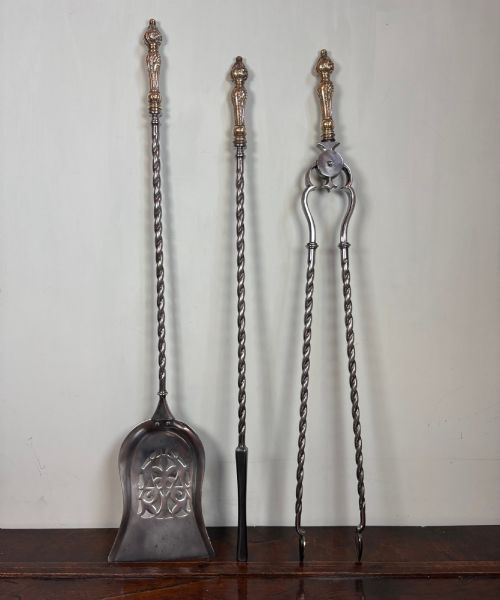
The versions most commonly met on this page combine bright brass shafts with steel business ends, sometimes expanding into larger inglenook arrangements or matching fender sets. Pieces range from austere steel-only tools to ornate assemblies incorporating Gothic Revival, Arts and Crafts, or Rococo decorative motifs.
Judging Quality and Execution
Quality reveals itself in the weight of the metal and the precision of the assembly, distinguishing heavy, solid brass and forged steel from lighter, mass-produced alternatives. Thicker gauge metals and substantial companion stands indicate longevity and superior initial manufacture.
Finer examples display careful hand-finishing, such as crisp casting detail on handles and well-proportioned rope twists. The alignment of companion stands and the balance of individual fire irons further separate standard utilitarian sets from those commissioned for formal reception rooms.
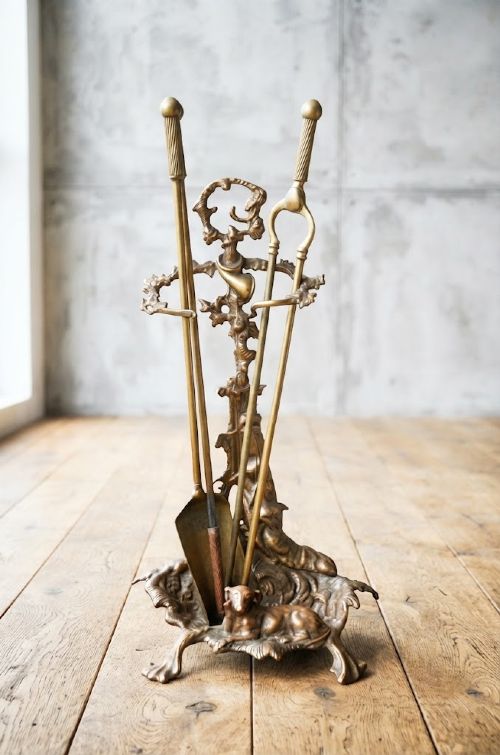
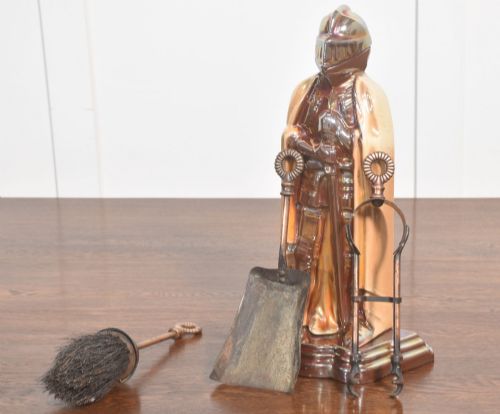
Hunting dogs and knight figures occasionally guard the hearth, watching over the coals from cast metal companion stands.
The Victorian Fire Set Glossary
- Companion set
- A matched collection of fireplace tools, usually comprising a poker, tongs, and shovel, suspended from a dedicated stand or resting on a hearth base.
- Fire dogs
- Andirons placed on either side of a hearth to support logs within a fire basket or grate. They often coordinate stylistically with the surrounding fire irons.
- Fire basket
- An open metal container designed to hold coal or wood above the hearth floor, allowing air to circulate beneath the fuel.
- Rope twist
- A decorative spiral pattern chased or cast into metal handles, frequently seen on nineteenth-century brass fire tools.
- Inglenook
- A deep recess surrounding a fireplace, traditionally furnished with larger sets of heavy tools designed for substantial country house hearths.
Victorian Fire Set: Frequently Asked Questions
What tools belong in a set?
A standard hearth assembly typically includes a poker for stirring embers, tongs for repositioning fuel, and a shovel for clearing ash.
Many configurations add a companion stand to hold these implements upright, and some incorporate fire dogs or baskets.
How do brass and steel differ?
Brass components provided decorative brightness and resistance to surface corrosion around the Victorian fireplace, making them ideal for handles and stands.
Steel and iron provided the heavy structural strength and heat resistance required for the working ends of pokers and shovels.
Where were these placed?
Sets stood directly on the hearth floor or within dedicated inglenook recesses, positioned immediately beside the fire grate for daily access.
Companion stands kept the ironmongery upright and organised against the chimney breast when not in use.
How do I identify periods?
Nineteenth-century pieces often display distinct design movements, such as Gothic Revival pointed arches, Arts and Crafts hand-hammering, or Rococo scrolls.
Materials also offer clues, as early examples favoured heavy wrought iron and polished steel before brass casting became widespread.