





Victorian Figurative Landscape Art
Victorian figurative landscape art brings human figures into natural settings, blending portraiture and scenery to capture 19th-century life.
Victorian Figurative Landscape Art
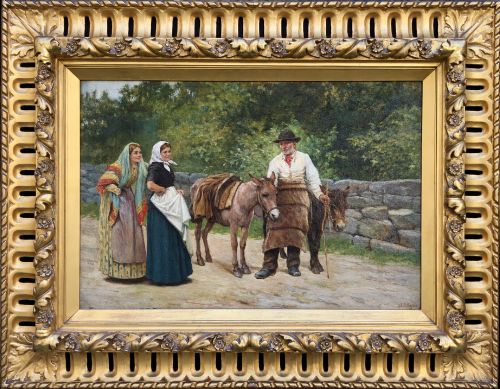
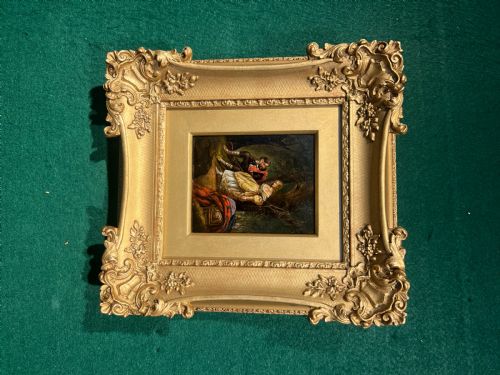
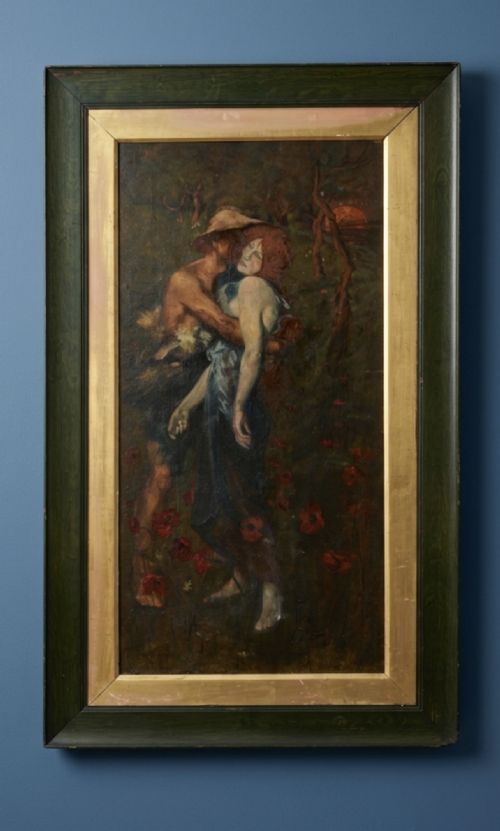
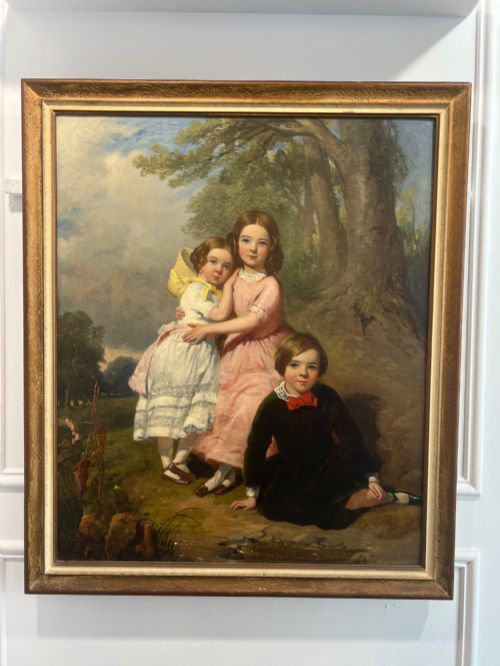
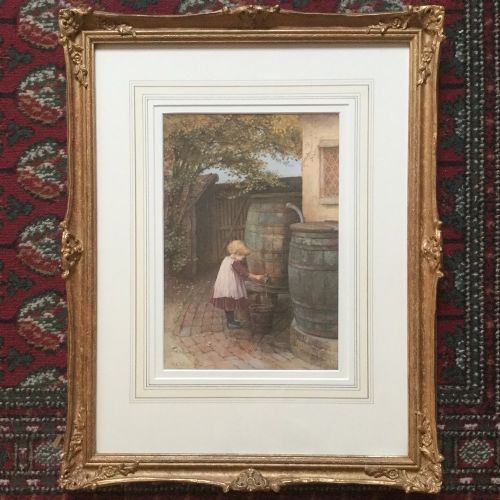
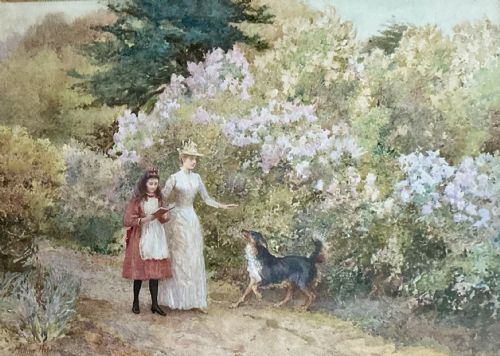
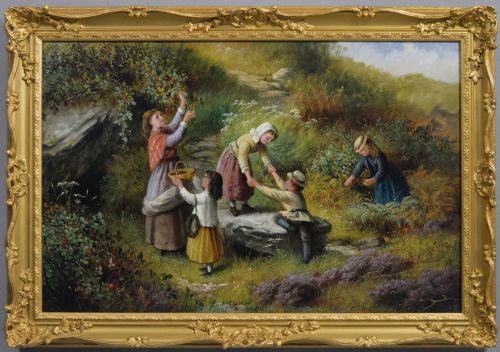
Victorian figurative landscape art combines outdoor settings with human subjects, ranging from pastoral gatherings of maidens to rural workers and courting couples. These works appear primarily as oil paintings on canvas or panel and framed watercolour paintings on paper.
The pieces on this page span the 19th century and the Victorian era, alongside related works from adjacent periods like the Georgian era and the early 20th century. Forms include genre painting, portrait landscapes, and pastoral scenes framed in wood and gilt wood.
How They Were Made
Artists painted primarily with oil paint on canvas or panel, or applied watercolour pigment onto paper, often finishing the pieces with wood or gilt wood frames. Lithographs and woodblock prints also appear as reproductive mediums or graphic works from the period.
The technical execution relies on traditional nineteenth-century studio practices, balancing the rendering of landscape details with the fine linework or brushwork required for human figures.
Listings feature works in oil, watercolour, and print from the nineteenth and twentieth centuries.
What Varies in Quality
Quality separates through the artist's command of anatomy, expression, and the integration of the figure within the surrounding landscape. Stronger works handle light and shadow cohesively across both the human subject and the natural backdrop.
Material preservation also sets works apart, including the stability of the oil paint or watercolour pigment and the integrity of the original frame materials such as wood and gilt.
Charles Edward Wilson·Philip Richard Morris·William Arthur Breakspeare·Henry E Hobson·Arthur Hopkins·Frank Hyde·Augustus Jules Bouvier·Jane Maria Bowkett·George Kilburne·Sydney Kendrick·David Woodlock·Linnie Watt·Thomas Rose Miles·William Powell Frith·John Ritchie·Ebenezer Wake Cook·Karel Frans Philippeau·Fred Morgan·Albert Ernest Brockbank·Edward J Cobbett·Henry John Yeed King·John F Pasmore·Charles Lewis
The Victorian Figurative Landscape Art Glossary
- Genre painting
- A style of art depicting scenes from everyday life, typically involving ordinary people engaged in common activities. These works often show domestic interiors, rural labour, or social gatherings.
- Watercolour pigment
- A colourant suspended in a water-soluble vehicle, used on paper to create translucent layers of colour. It forms the basis of many finished works and preliminary studies from the period.
- Oil on canvas
- A painting medium consisting of pigments suspended in a drying oil, applied to a stretched fabric support. This combination offers rich colour depth and durability.
- Gilt wood
- Wood that has been coated with a thin layer of gold leaf or metallic powder. It frequently surrounds Victorian paintings to complement the tones within the composition.
Victorian Figurative Landscape Art: Frequently Asked Questions
What is victorian figurative landscape art?
Victorian figurative landscape art consists of paintings and works on paper that place human subjects within outdoor or rural settings. These pieces combine portraiture and genre scenes with natural backdrops.
Subjects range from agricultural workers and milkmaids to families and courting couples in parks or near cottages.
How were these paintings displayed?
These artworks were typically housed in wood or gilt wood frames designed to complement the domestic interiors of nineteenth-century homes. Framing protected the paper or canvas while enhancing the visual depth of the scene.
Many retain their original framing style, reflecting the aesthetic preferences of the period.
How do I identify the period?
Identifying the period involves examining the clothing, hairstyles, and overall artistic style, such as Victorian realism or romanticism. Signatures, dates, and framing materials also help narrow down the creation date.
Works span the nineteenth century, with specific pieces dated through artist records and historical documentation.
What mediums were used?
Artists used oil paint on canvas or panel, watercolour pigment on paper, and occasionally lithography or woodblock printing. Each medium yields a distinct texture and visual finish.
Watercolours offer translucent delicacy, while oils provide heavier texture and richer colour saturation.