



Victorian Figural Statue
A victorian figural statue brings narrative and character into a room, rendered in bronze, porcelain or marble through the 19th and early 20th centuries.
Victorian Figural Statue
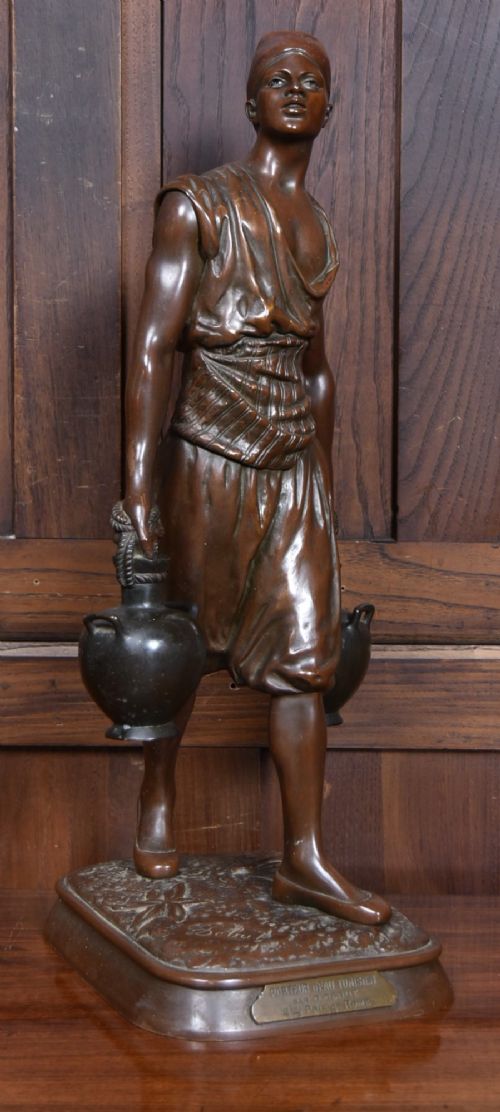
A victorian figural statue takes the form of human figures, children, soldiers, allegorical characters and mythological groups set upon bases or integrated into functional objects such as lamps, clocks and candlesticks. These pieces emerge from 19th century workshops across Britain and continental Europe, spanning styles from Neoclassical and Rococo Revival to Orientalist and Art Nouveau.
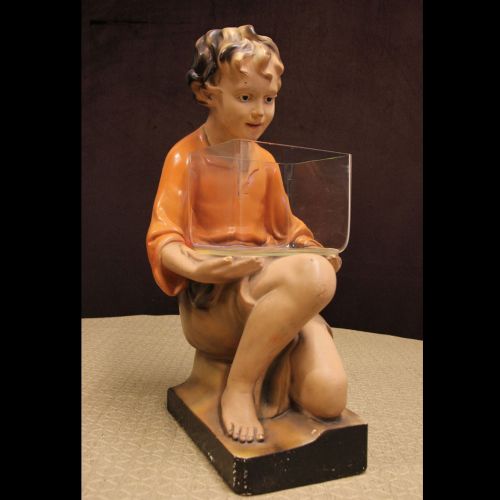
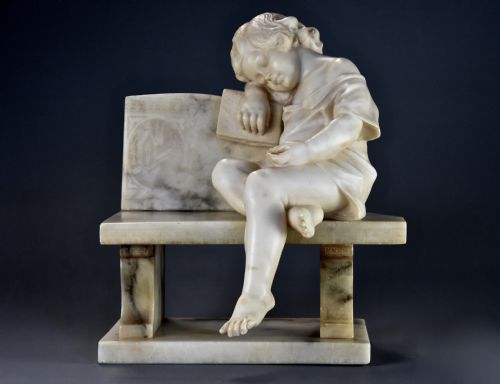
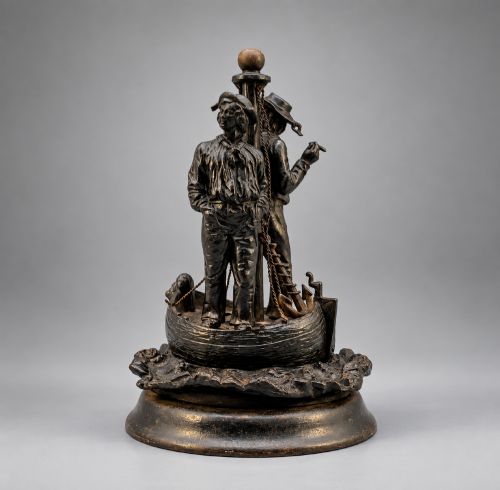
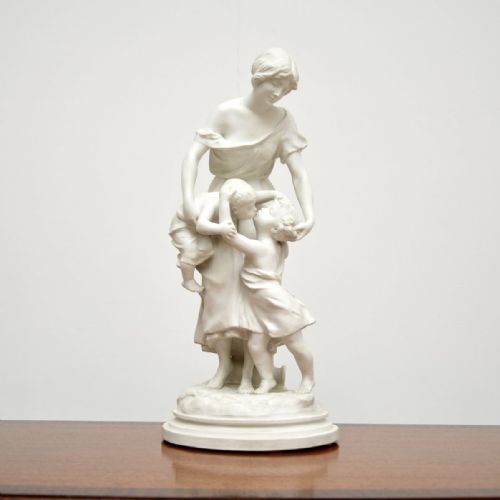
The most common examples encountered in this selection include cast metal groupings, bisque porcelain figurines and carved marble studies produced during the late 19th century. Figures range from single subjects like young boys and maidens to complex multichrome groups of putti, cavaliers and allegorical representations of peace and fortune.
Materials and methods
Foundries and studios utilised bronze casting using the lost wax method alongside spelter casting for more accessible sculptural work, applying patination to achieve varied surface tones. Porcelain and ceramic pieces underwent high temperature firing, often incorporating hand-painted enamel details and bisque finishes that left the material unglazed to mimic carved marble.
Carved works employed natural materials such as white marble, alabaster and timber, particularly Black Forest carvings, shaping form through hand chiselling and polishing. Metal components were frequently mounted on marble plinths and incorporated gilt elements or hand-painted clock dials.
Victorian Figural Statue Retail Price Guide 2026
Typical asking prices for victorian figural statue among the pieces listed under this phrase on Sellingantiques today, from the lower quarter to the upper quarter. They describe what is for sale here now, not the wider market.
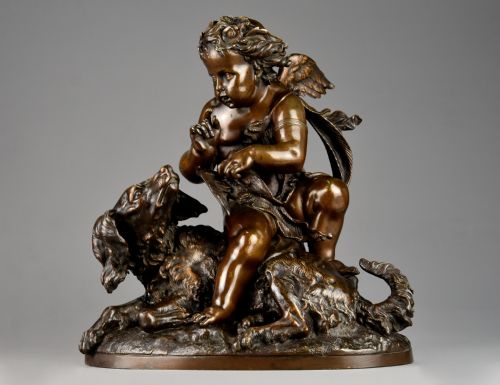
Several pieces capture unexpected moments, including putti tangling with grapes, a snake charmer at work, and a bronze sphinx keeping watch.
Assessing quality in sculpture
Signatures of known sculptors and marks from established potteries or foundries elevate a piece, indicating professional studio production rather than anonymous commercial output. The integration of the figure with its base or functional element, such as a lamp or clock mechanism, demonstrates the cohesion intended by the original maker.
P E Fiaschi·Luca Madrassi·Bernard Bloch·Emile Picault·Jean-Jules Cambos·Eugene Clauss·H Moreau·Vion et Baury·Royal Dux Bohemia·P Della Vedova·Carl Kauba·Pietro Calvi·Adrien Gaudez·Emile Victor Blavier
The Victorian Figural Statue Glossary
- Spelter
- A zinc alloy utilised as an economical alternative to bronze in the 19th century, frequently given a bronze-like patination. It is softer than bronze and allows for intricate decorative casting.
- Bisque
- Unglazed white porcelain that presents a matte texture resembling marble. This finish was favoured for capturing delicate facial expressions and soft drapery.
- Patination
- The surface coloration and chemical treatment applied to bronze and other metals over time or during manufacture. A rich patina enhances the perceived depth of the sculptural form.
- Putto
- A representation of a plump, naked male child, often winged, appearing frequently in Rococo Revival and Neoclassical sculpture. They are commonly depicted playing with instruments, grapes or animals.
- Alabaster
- A fine-grained mineral stone used for carving statues and figures. Its translucent quality allows light to penetrate the surface gently.
Victorian Figural Statue: Frequently Asked Questions
What is a figural lamp?
A figural lamp incorporates a sculptural human or allegorical figure as the primary central column or base supporting the lighting fixture. These pieces combine decorative bronze or spelter statuary with functional illumination.
They often depict classical maidens, water carriers or allegorical figures holding torches or lamp fittings, produced widely across the 19th century in French and continental studios.
How do I clean bronze statues?
Bronze statues require gentle dusting with a soft, dry brush to prevent the accumulation of grit within the crevices of the casting. Avoid abrasive cloths, chemical cleaners or water, which can strip the historic patination.
Applying a microcrystalline wax very sparingly can protect the surface metal, though many collectors prefer to leave the original surface untouched.
What is the difference between bronze and spelter?
Bronze is a copper and tin alloy known for its durability, heavy weight and capacity to hold sharp details through casting and chasing. Spelter is a zinc-based alloy that is significantly lighter and softer.
Spelter figures were produced as a cost-effective alternative to bronze and are often identified by a magnetic response or lighter weight when handled.
Where were these figures made?
The majority of these sculptural works originated in France, particularly Paris, as well as Germany, Austria and Britain during the Victorian era. Foundries, porcelain manufactories and independent sculptors produced pieces for domestic display and export.
Major artistic centres drove the development of distinct styles including Neoclassical, Orientalist and Art Nouveau interpretations.