

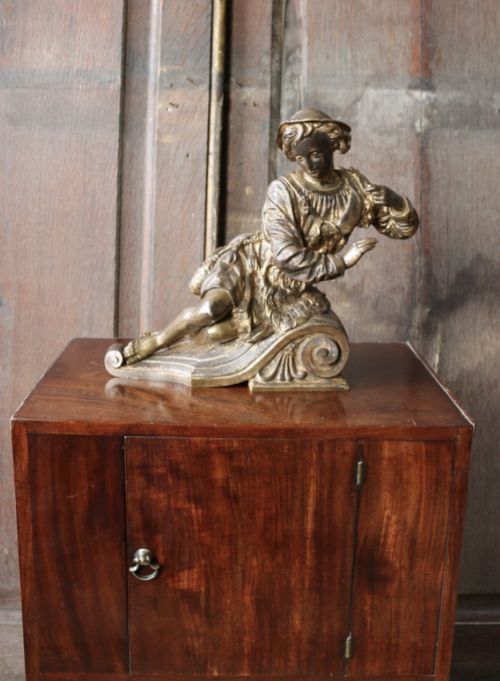


Continental Figural Sculpture
Continental figural sculpture brings character and human form to a room, ranging from grand bronze andirons to painted porcelain groups.
Continental Figural Sculpture
Continental figural sculpture encompasses human and animal forms originating from European makers across several centuries, appearing as standalone figures, lamp bases, and candlesticks. These pieces range from eighteenth-century groups to later twentieth-century works in various decorative contexts.
Objects on this page extend from functional lighting elements, such as table lamps and figural candlesticks, to purely decorative porcelain figures and sculptural groups. Each piece demonstrates the distinct decorative tastes of its period of origin.
Materials and construction methods
Makers utilised traditional media such as porcelain, bisque, terracotta, and majolica, often applying hand-painted details and gold leaf accents. Metal elements typically involve cast bronze, gilt metal, or spelter which received cold painted finishes.
Continental Figural Sculpture Retail Price Guide 2026
Typical asking prices for continental figural sculpture among the pieces listed under this phrase on Sellingantiques today, from the lower quarter to the upper quarter. They describe what is for sale here now, not the wider market.
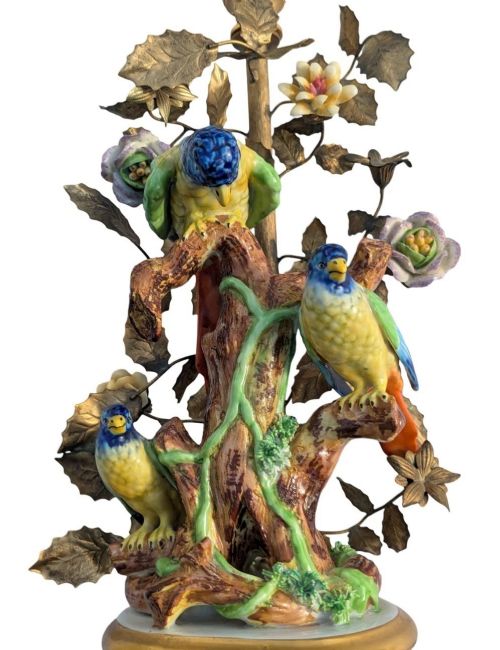
A porcelain parrot lamp stands ready to illuminate the room with avian brightness.
Judgements of quality
Quality rests upon the crispness of the modelling in the clay, bronze, or spelter, where finer casting and carving preserve facial expression and anatomical detail. Painted surfaces demonstrate skill through precise brushwork rather than flat application.
The integrity of the material, whether porcelain, terracotta, or metal, dictates the longevity and visual sharpness of the object. Superior examples maintain their original polychrome or gilded surfaces without heavy overpainting.
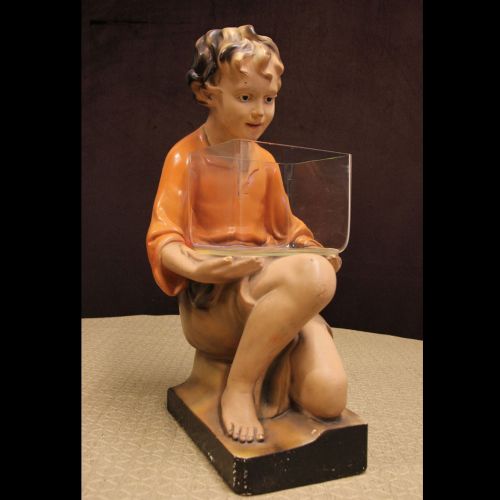
Eugene Clauss
The Continental Figural Sculpture Glossary
- Spelter
- A zinc alloy commonly utilised as a less expensive alternative to bronze for nineteenth-century figures and candlesticks. It is frequently given a bronze-like or cold-painted finish.
- Bisque
- Unglazed porcelain that has been fired once, offering a matte, marble-like texture favoured for detailed figural groups. This surface absorbs light differently than glazed ceramics.
- Socle base
- A short rounded plinth or pedestal supporting a sculpture, candlestick, or lamp. It provides both physical stability and visual elevation to the figure above.
- Cold painted
- A technique where paint is applied to metal objects after casting, without subsequent firing. This finish is delicate and requires careful handling to preserve the original pigments.
- Majolica
- Tin-glazed earthenware decorated with brightly coloured metal oxide paints on an opaque white background. It produces vibrant, glossy decorative surfaces popular in nineteenth-century figural works.
Continental Figural Sculpture: Frequently Asked Questions
What is continental figural sculpture?
Continental figural sculpture refers to three-dimensional human or animal representations produced in mainland Europe across various centuries. These works include decorative objects, lighting components, and porcelain groups.
They reflect the artistic styles of their respective periods, from eighteenth-century rococo pieces to twentieth-century art deco designs.
How were figural candlesticks used?
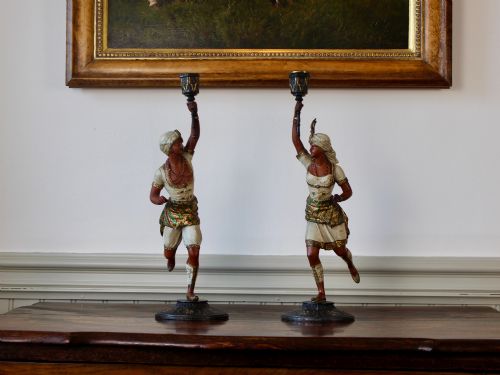
Figural candlesticks served both practical lighting functions and decorative purposes in European homes. Figures of humans or animals held sockets for wax candles while adding sculptural interest to a mantelpiece or table.
Over time, many of these metal and wooden pieces were adapted to hold electrical fittings for table lamps.
How do I care for painted spelter?
Painted spelter requires gentle treatment to protect the cold-painted surface from moisture and abrasion. Dusting with a soft, dry cloth is sufficient for routine maintenance.
Harsh cleaning products will strip the delicate paint layers applied after the metal casting process.
How do I identify porcelain groups?
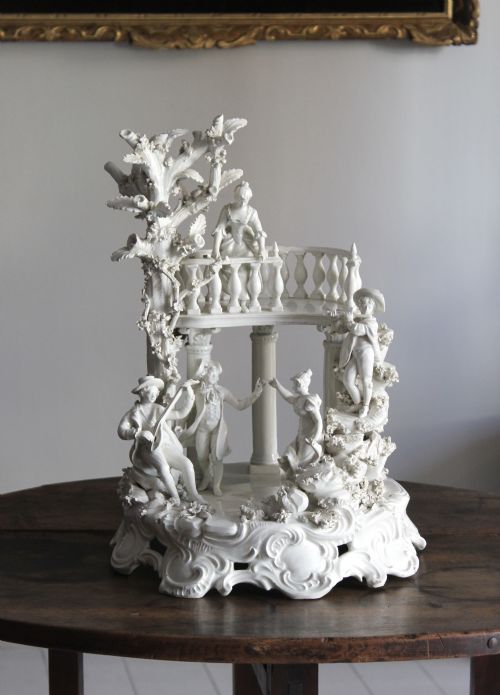
Porcelain groups are identified by their ceramic composition, glaze type, and modelled figural arrangements. Pieces may feature glazed finishes or matte bisque surfaces depicting multiple interacting figures.
Examining the base often reveals manufacturer marks or stylistic clues pointing to specific European kilns.