

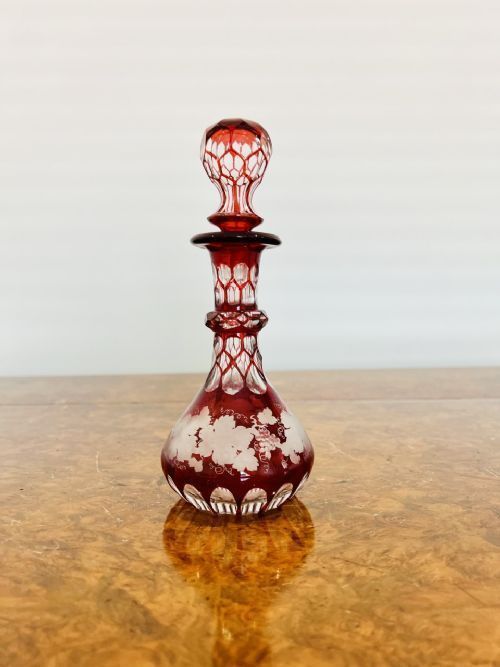

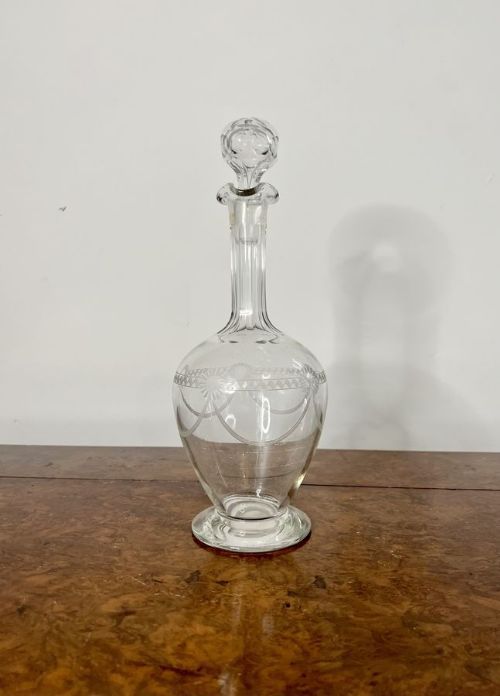
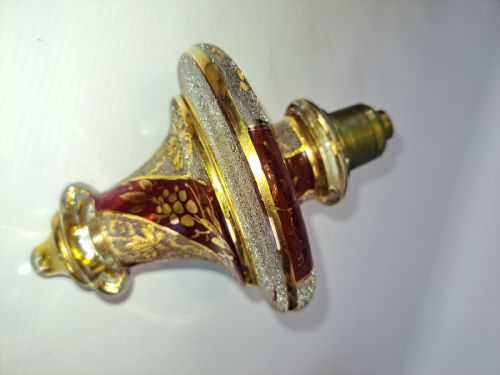


Victorian Etched Glass Decanter
A victorian etched glass decanter combines clear or coloured crystal with delicate wheel or acid engraving, serving wine and spirits with nineteenth-century elegance.
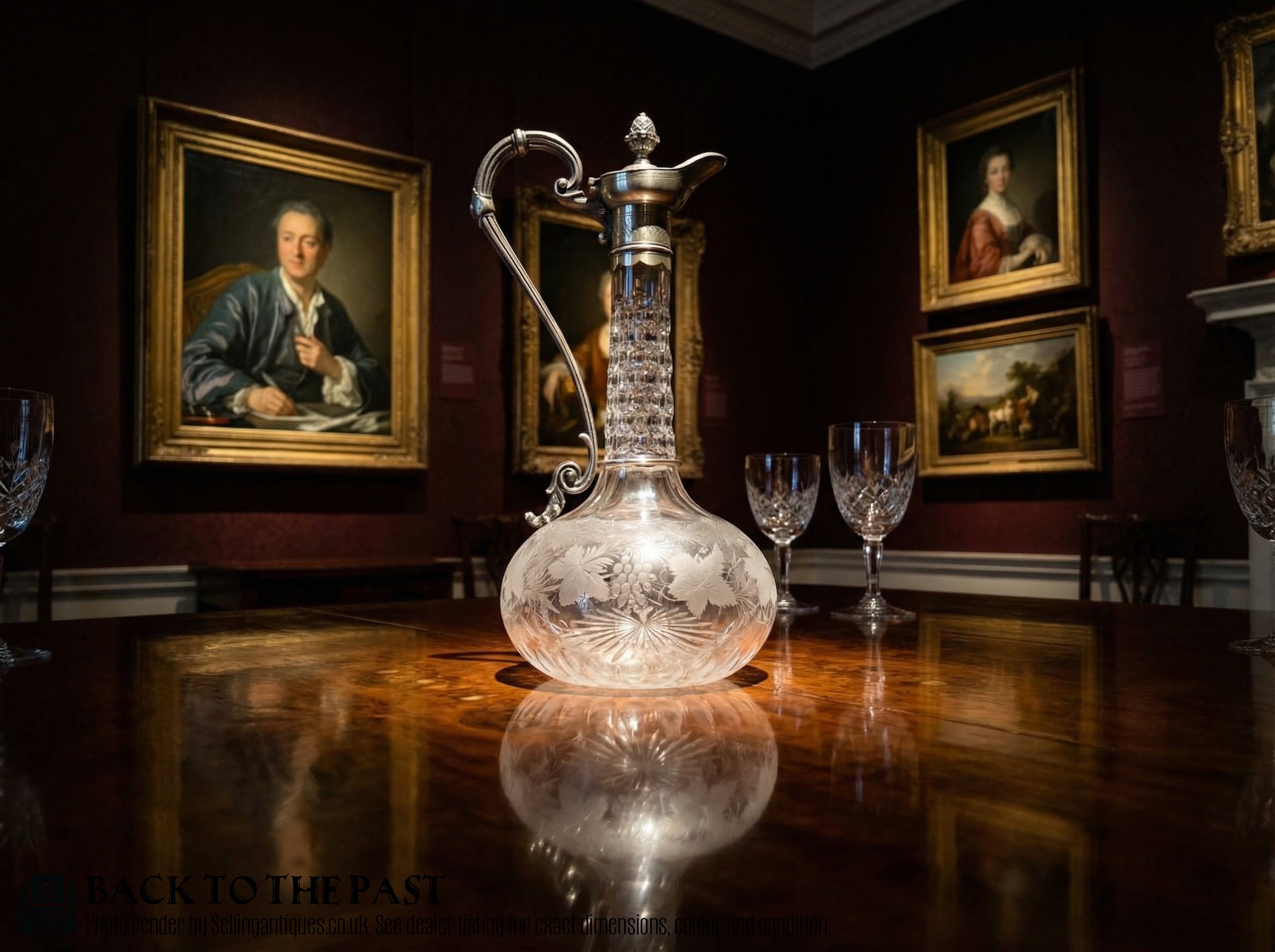
Victorian Etched Glass Decanter
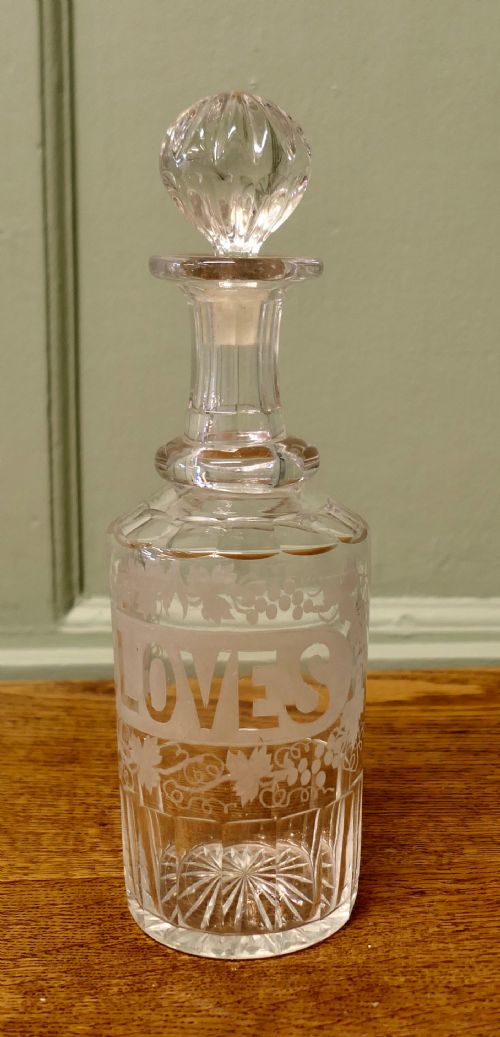
A victorian etched glass decanter encompasses vessels designed for wine, claret, spirits, and scent, appearing alongside related forms such as ewers and pitchers. The pieces span the nineteenth century, with specific examples recorded from the eighteen-sixties, seventies, eighties, and nineties, alongside Edwardian and later interpretations.
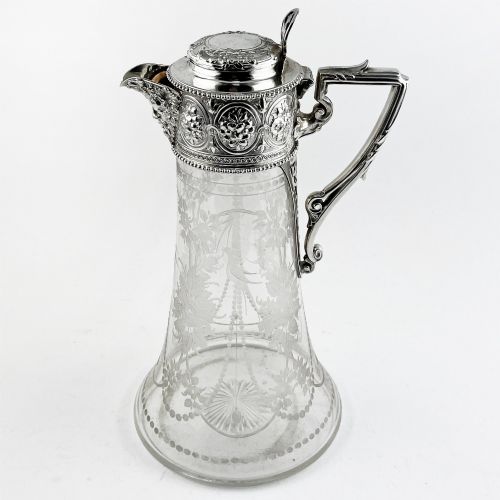
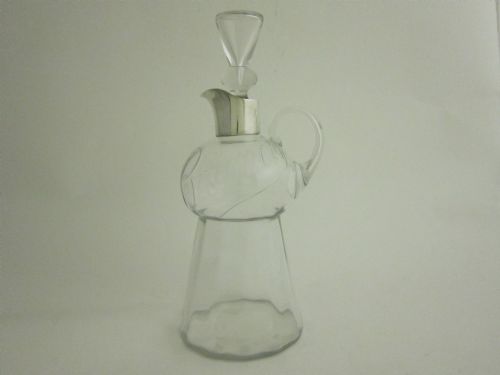
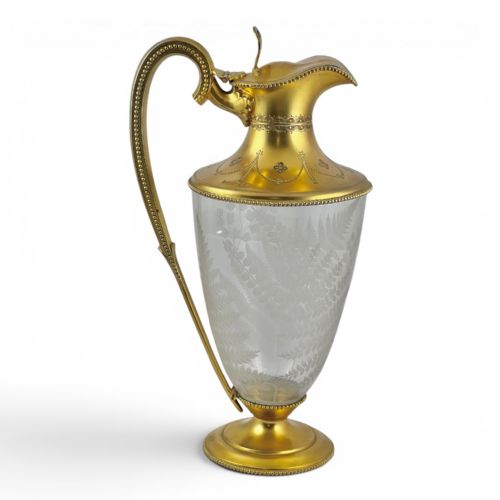
The most common versions on this page are tall, clear or coloured glass vessels featuring floral, grape, and vine motifs. They frequently incorporate fitted stoppers and mounts in sterling silver, silver gilt, or silver plate, presenting various silhouettes from straightforward hourglass shapes to ornate revival styles.
Materials and Technique
Makers utilised glass, lead crystal, and coloured glass such as ruby and green overlays, shaping the vessels through blowing and cutting. The surfaces were then decorated using wheel engraving or acid etching to produce detailed botanical patterns and scrollwork.
Metal components, including mounts, handles, and stoppers, were fashioned from sterling silver or silver plate, often bearing intricate ornamentation like masks and floral chased work to complement the glass bodies.
Several decanters feature jovial Bacchus masks and whimsical figurine tops peering out from the pouring lips.
Craftsmanship and Proportion
Superior examples display deep, crisp wheel engraving or precise acid etching that maintains sharp detail across curves and handles. The weight and clarity of the lead crystal, alongside the balance of the vessel and stopper, distinguish finer pieces from simpler utilitarian production.
The quality of the metal mounts and silver work plays a major role, where substantial cast and chased mounts securely frame the glass without awkward joins. Harmonious proportions between the body, neck, and handle indicate skilled workshop production.
Asprey and Co. Ltd·Elkington
The Victorian Etched Glass Decanter Glossary
- Claret jug
- A specialised pouring vessel designed for red wine, typically featuring a hinged metal lid and handle attached to a glass body. These pieces often incorporate silver plate or sterling silver mounts.
- Lead crystal
- A heavy glass variety containing metallic oxide that increases brilliance and refractive index. This material allows for deeper, sharper cutting and engraving.
- Overlay glass
- A technique involving layers of different coloured glass fused together, where the outer layer is partially cut or etched away to reveal the contrasting colour underneath.
- Finial
- The uppermost decorative element on a decanter stopper or lid. It provides a grip for removal and completes the silhouette of the vessel.
Victorian Etched Glass Decanter: Frequently Asked Questions
How do I clean a cloudy decanter?
Residue inside narrow necks responds to mild soaking agents rather than abrasive implements. Gentle cleaning preserves the interior glass surface without scratching.
Avoid extreme temperature changes during washing to prevent cracking old crystal. Allow the vessel to dry completely upside down before replacing the stopper.
Are stoppers original to the decanter?
Original stoppers often share matching hand-cut numbers or identical pattern work with the neck interior. Slight grinding variations can indicate a replacement from the same period.
Matching glass tint and wear patterns help confirm whether stopper and bottle started together. Many nineteenth-century vessels retain their matched components.
How do I identify silver plate mounts?
Maker marks and electroplate stamps usually appear near the handle junction or rim. These marks distinguish plated fittings from solid sterling silver.
Silver plate on these vessels utilises a base metal foundation beneath a deposited layer of silver. Over time, gentle polishing reveals the warm glow of the underlying metal.
What is the difference between etching and engraving?
Wheel engraving cuts directly into the glass surface using rotating small wheels to create deep, tactile designs. Acid etching utilises chemical resistance to eat away exposed background areas.
Etched decoration typically displays a frosted, matte finish within the pattern lines. Both techniques produce the decorative motifs seen on nineteenth-century tablewares.