


Victorian Equestrian Figurine
A victorian equestrian figurine brings the motion and majesty of the horse into the nineteenth-century interior through modelled clay, cast metal and carved stone.
Victorian Equestrian Figurine
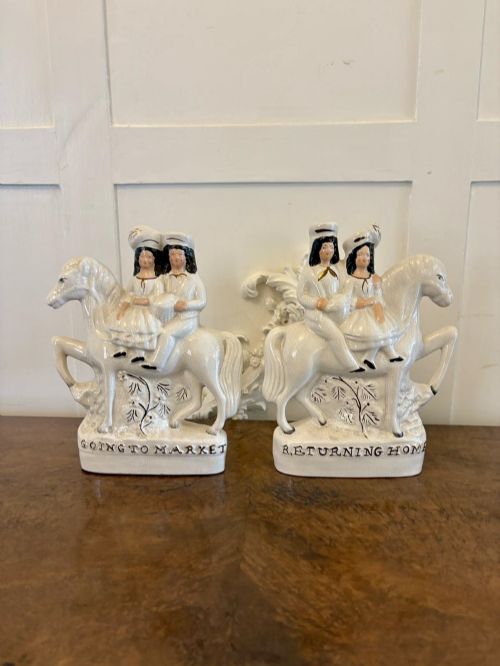
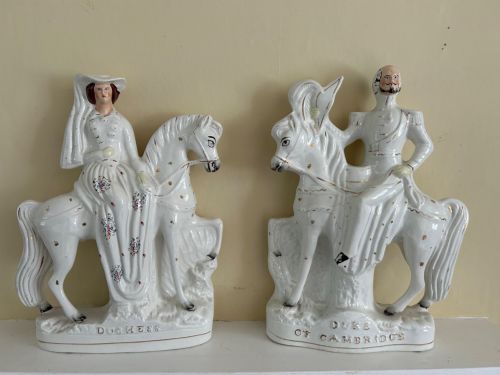
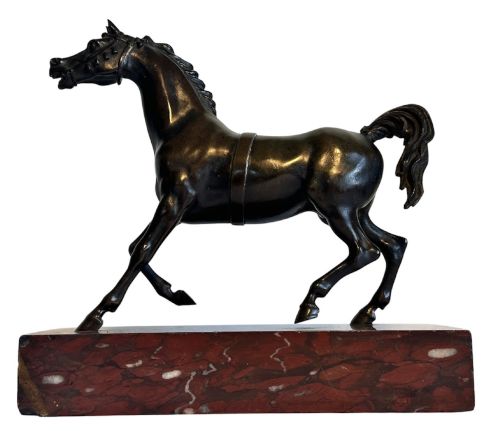
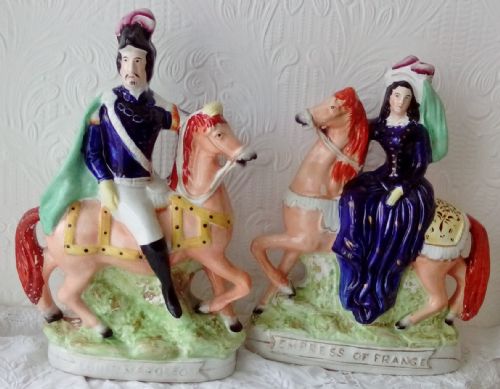
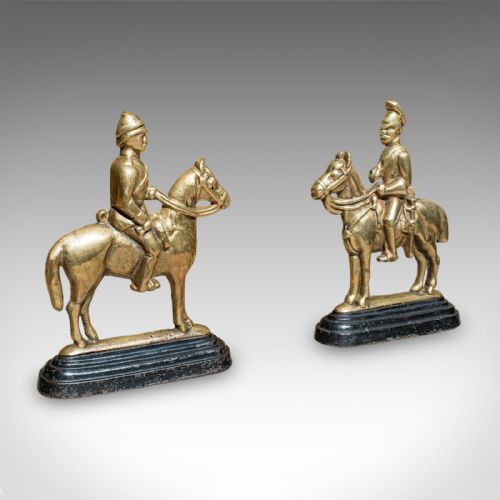
A victorian equestrian figurine encompasses both the glazed earthenware figures produced by Staffordshire potteries and the detailed metal sculptures cast in bronze or brass. The selection ranges from flatback pottery depictions of royalty, military leaders and literary figures on horseback to heavy cast metal doorstops and bookends designed for practical use.
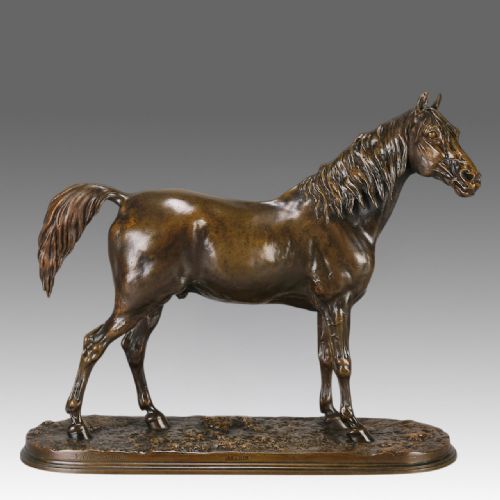
Staffordshire potteries dominate the ceramic group, often presenting pairs of mounted riders, Scottish highlanders and historical personages with hand-painted enamel details. Metal examples lean towards the animalier tradition, capturing equine anatomy through bronze and brass casting techniques.
How they were made
Pottery figures were shaped in moulds using earthenware clay, then finished with lead glazes and hand-applied enamel colours before undergoing kiln firing. Flatback models were typically hollow-backed to ensure even drying and prevent cracking during firing.
Bronze and brass sculptures relied on metal casting methods, frequently utilising a marble base to support the heavy weight of the piece. Artisans chased the cooled metal surface by hand to sharpen details in the musculature and tack.
Materials across the selection range from traditional earthenware and lead glaze to cast bronze, brass and marble.
What varies in quality
Bronze and brass castings derive their merit from the sharpness of the chasing and the stability of the mount, where defined textures in the mane and harness distinguish master foundry output from simpler utilitarian items.
P J Mêne·John Willis Good·Franz Bergman
The Victorian Equestrian Figurine Glossary
- Flatback
- A ceramic figure modelled fully on the front and sides with a flat, unglazed or minimally finished reverse meant to sit against a wall.
- Animalier
- A nineteenth-century artistic movement dedicated to the realistic depiction of animals, especially horses and hounds, in bronze.
- Staffordshire
- The English region encompassing multiple potteries responsible for producing earthenware figures, animals and chimney ornaments during the nineteenth century.
- Patina
- The surface sheen and coloration developed on bronze and brass over decades through oxidation and handling.
Victorian Equestrian Figurine: Frequently Asked Questions
What is a flatback figure?
A flatback figure is a ceramic ornament moulded with a detailed front and a flat reverse side intended to stand on a mantelpiece or shelf against a wall.
This method of construction allowed nineteenth-century potteries to use less clay and reduce weight while maintaining a decorative frontal appearance.
How were brass horse doorstops used?
Heavy brass horse figures served as functional doorstops to hold interior doors open in nineteenth-century homes.
Their solid metal construction provided the necessary weight to prevent doors from swinging shut in draughty hallways.
Are these figures glazed?
Ceramic pieces feature lead glazes that protect the underlying earthenware body and give the surface a glossy or satin sheen.
Enamel colours were often painted over or under the glaze before firing to add bright details to clothing and horses.
What distinguishes animalier bronzes?
Animalier bronzes focus on the dynamic movement and accurate anatomical study of animals, particularly horses in motion.
These sculptures reflect the nineteenth-century French and European fascination with naturalistic wildlife and equestrian subjects.