





Victorian Equestrian Ceramics
Victorian equestrian ceramics capture horses, riders and nobility in glazed earthenware, offering a glimpse into nineteenth-century life.
Victorian Equestrian Ceramics
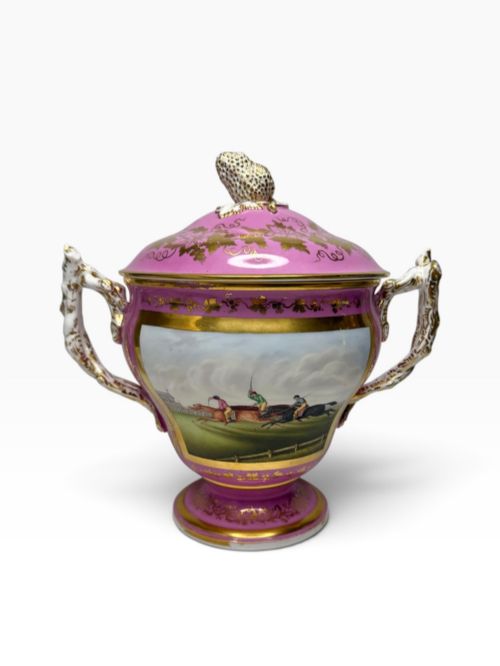
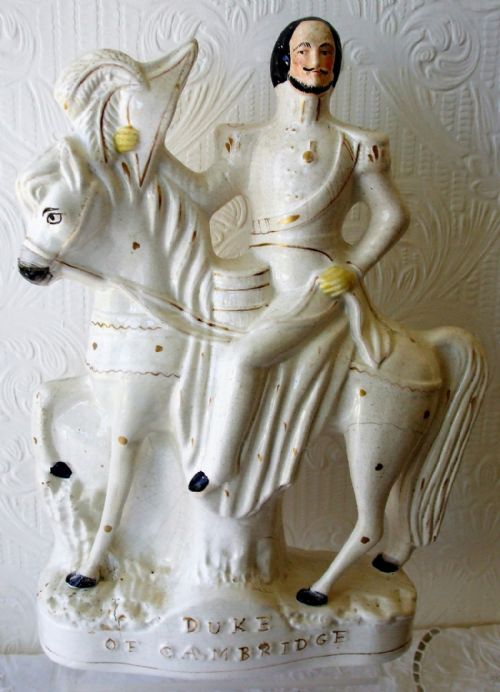
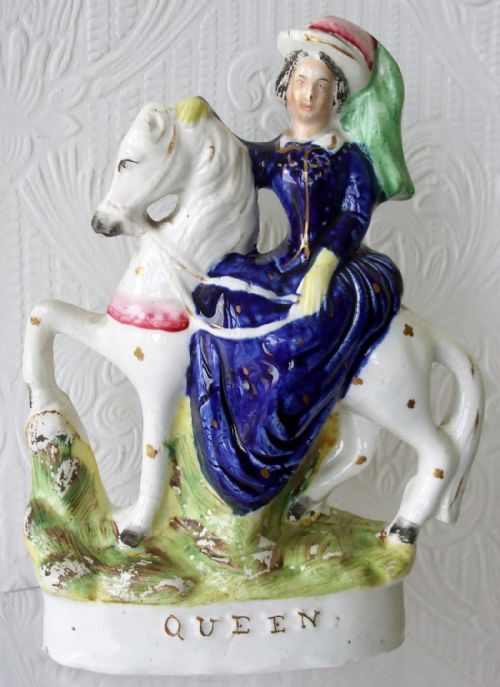
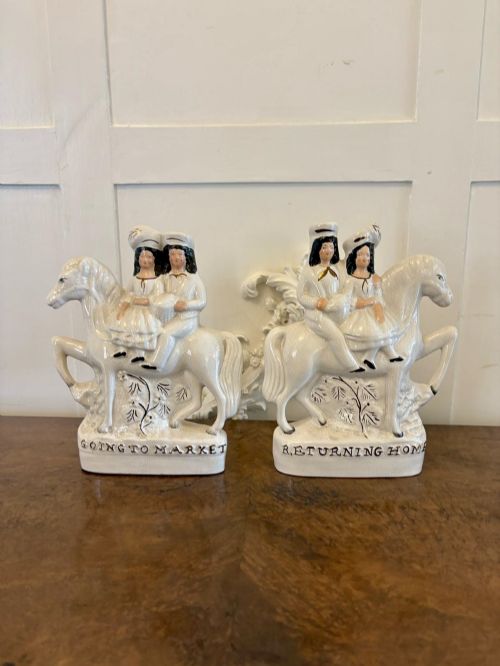
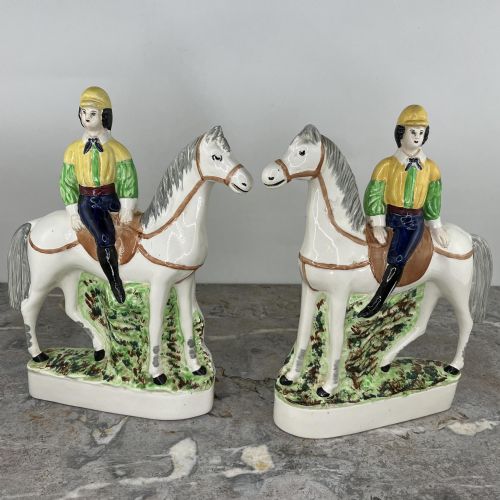
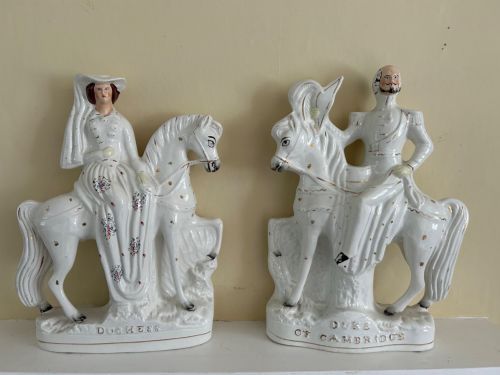
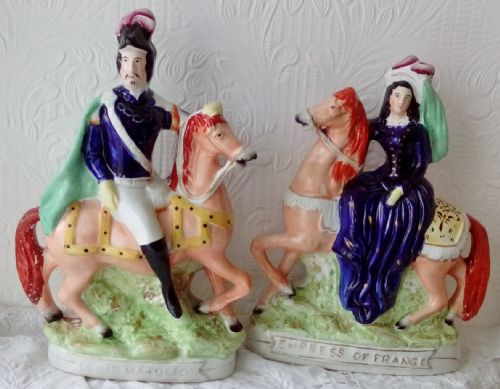
Victorian equestrian ceramics comprise earthenware figures, flatback pottery, wall brackets and mugs depicting horses, jockeys, hunters and historical riders. These pieces emerge chiefly from nineteenth-century Staffordshire potteries, capturing subjects ranging from royal portraits to mounted military figures.
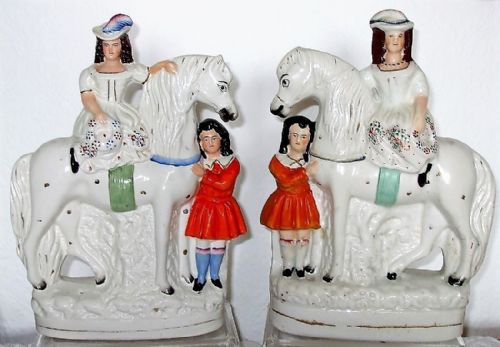
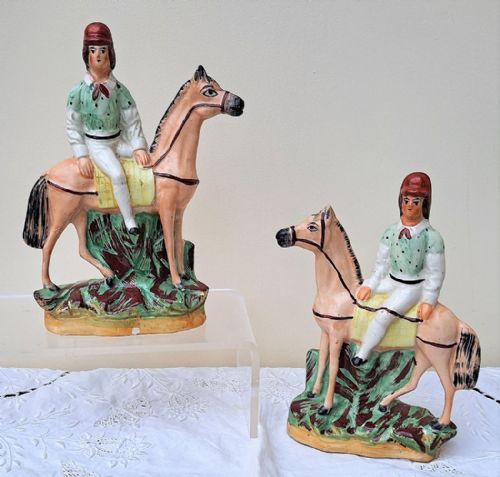
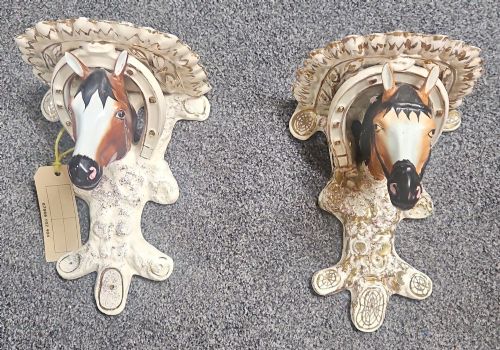
Buyers most frequently encounter paired Staffordshire figures on horseback, featuring jockeys, royalty or regional characters. The selection also includes transfer-printed loving mugs with hunting scenes and sculptural wall brackets shaped as horse heads.
The objects span periods from the early nineteenth century through to mid-century reproductions, reflecting diverse stylistic influences including primitive folk art and Rococo revival. They serve primarily as decorative ornaments rather than utilitarian vessels.
Materials and Techniques
Potters shaped these figures using earthenware and terracotta clays, frequently employing press-moulding techniques to form the hollow flatback bodies. Lead glazes provided a smooth surface finish before artisans applied hand-painted enamel colours and gilt highlights.
Transfer-printing techniques appeared on vessels such as loving mugs, applying detailed monochrome hunting scenes to the ceramic body. Many items received multiple firings to set the vibrant overglaze enamels and metallic gilt details securely.
Victorian Equestrian Ceramics Retail Price Guide 2026
Typical asking prices for victorian equestrian ceramics among the pieces listed under this phrase on Sellingantiques today, from the lower quarter to the upper quarter. They describe what is for sale here now, not the wider market.
Listings feature earthenware materials alongside lead glaze and enamel, spanning the nineteenth century with Victorian styles.
Judging Quality
The distinction between standard commercial production and notable works also lies in the expressiveness of the figures and the structural stability of the flatback construction. Well-executed modelling gives the horses and riders a sense of presence lacking in softer, more generalised casts.
Sampson Smith·Helena Wolfsohn
The Victorian Equestrian Ceramics Glossary
- Flatback
- A pottery figure designed with a finished front and a largely unglazed, flat reverse intended to stand against a wall. This construction method saved clay and reduced weight during firing.
- Earthenware
- A porous ceramic body fired at lower temperatures than stoneware or porcelain, requiring a glaze to achieve impermeability. It formed the standard base for nineteenth-century Staffordshire figures.
- Lead Glaze
- A glossy coating containing lead oxide applied to pottery before firing to create a smooth, waterproof surface. It enhances the brightness of underlying painted enamel colours.
- Gilt
- A thin layer of gold applied to ceramic surfaces for decorative enhancement. It highlights specific details like harness fittings or costume trim on figures.
- Enamel
- A vitreous coloured composition fused to the ceramic surface during a secondary firing. It provides the vibrant reds, blues and greens seen on nineteenth-century figures.
Victorian Equestrian Ceramics: Frequently Asked Questions
What are Victorian equestrian ceramics?
Victorian equestrian ceramics are nineteenth-century earthenware figures and vessels depicting horses, riders, jockeys and historical hunting scenes. They were primarily produced in Staffordshire potteries as ornamental mantelpiece displays.
These pieces reflect popular cultural interests of the period, ranging from royal portraits to famous sporting figures and dramatic highwaymen.
How were Staffordshire flatbacks displayed?
Staffordshire flatback figures were designed with unglazed backs to sit flat against walls on mantelpieces or high shelves. Their hollow construction kept the weight manageable for domestic display.
Pairs of figures were frequently arranged symmetrically to frame a fireplace or decorative mirror.
How do I identify nineteenth-century pieces?
Identifying nineteenth-century pieces involves examining the clay body, the application of lead glazes and the style of hand-painted enamel decoration. Staffordshire figures often feature characteristic ventilation holes and hollow flatback bases.
Subject matter such as period royalty and specific historical events also helps anchor the date of manufacture.
What subjects appear on these ceramics?
The subjects include mounted jockeys, royal portraits, military leaders and characters from folklore and literature. Hunting scenes also feature prominently on transfer-printed loving mugs.
Figures often commemorate specific contemporary events or popular personalities of the Victorian era.