



Victorian Entomology Chest
A victorian entomology chest provides secure, compartmentalised housing for delicate specimens, built by specialist makers to protect fragile collections from light and dust.
Victorian Entomology Chest
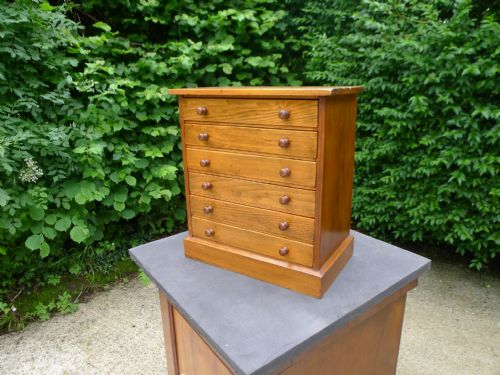
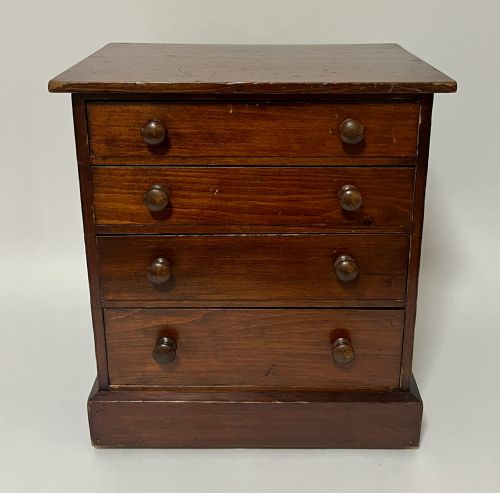
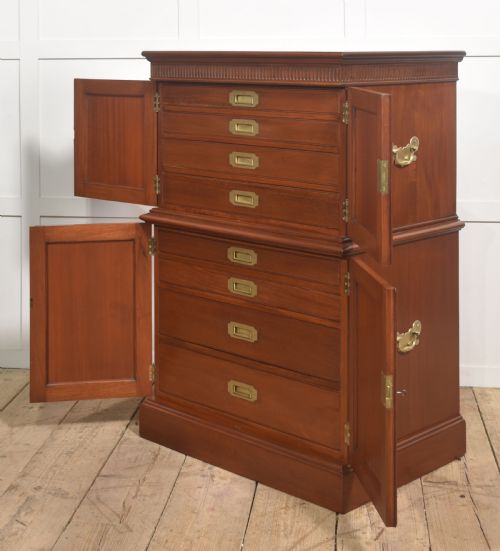
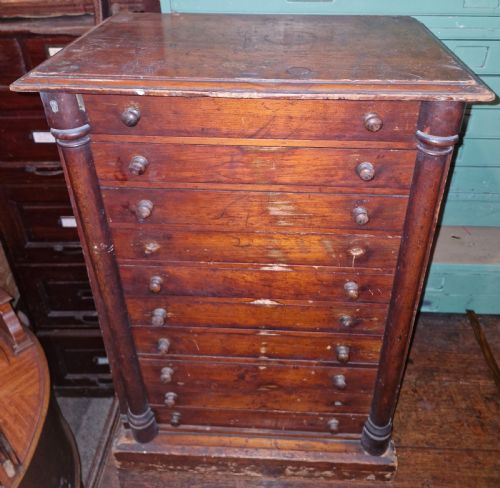
A victorian entomology chest takes the form of a specialised cabinet fitted with multiple shallow drawers designed to hold insect specimens, butterfly collections, and natural history artefacts. These pieces emerge primarily from the nineteenth century, spanning decades from eighteen sixty through to nineteen hundred, reflecting the period's intense scientific curiosity and cataloguing habits.
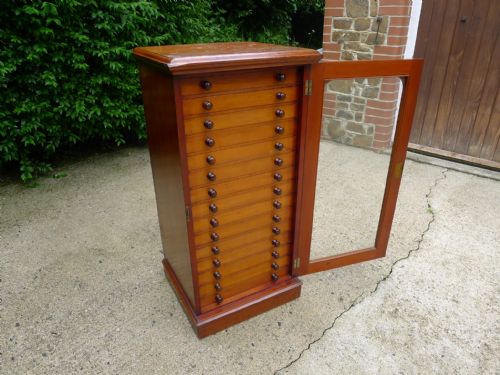
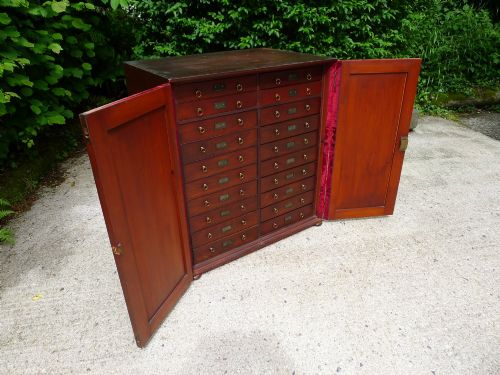
Buyers encounter numerous variations in scale, ranging from compact six-drawer tablet units to monumental forty-drawer upright carcases. The common version met on this page is the mahogany or walnut multi-drawer cabinet, often secured with locking glass-fronted panel doors.
Makers constructed these storage pieces to precise tolerances, ensuring drawers remained airtight to protect contents from pest damage. Regional workshops and specialist natural history outfitters produced cabinets tailored to serious naturalists and institutional collections.
Materials and construction methods
Makers relied heavily on dense hardwoods such as mahogany and walnut, frequently selecting flame mahogany veneer and burr walnut for exterior surfaces to display rich grain patterns. Pine, deal, and oak served as structural timbers for carcases and internal drawer construction, providing stability and resistance to warping.
Glass panels were integrated into door frames to allow viewing of contents without exposing specimens to handling or environmental fluctuations. Brass hardware, including drop handles, escutcheons, and locking mechanisms, completed the functional design of each cabinet.
Drawers utilised tight-fitting joints and dust-bead mouldings to seal each tier independently. Interior surfaces were often lined or glazed to accommodate pinned specimens securely.
One exceptional forty-drawer mahogany cabinet records the exact lifespan of its former owner, linking furniture directly to nineteenth-century natural history tracking.
Factors that separate different grades of work
The scale and complexity of the drawer arrangement distinguish standard production pieces from major institutional commissions. Cabinets boasting twenty, twenty-four, or forty drawers represent a higher level of workshop output than smaller six or twelve drawer variants.
Timber selection governs the visual hierarchy, where figured timbers like burr walnut or flame mahogany veneer elevate the cabinet's presence above plain stained pine or deal carcases. Signed works by established natural history suppliers carry distinct manufacturing credentials compared to anonymous workshop pieces.
Watkins And Doncaster·Standish·J T Crockett
The Victorian Entomology Chest Glossary
- Collectors Cabinet
- A multi-drawer piece of furniture designed specifically for the storage and classification of natural history specimens, coins, or small artefacts. These cabinets feature shallow drawers built to tight tolerances.
- Specimen Cabinet
- An alternative term for a collectors chest, often used interchangeably to describe housing units for entomological, geological, or botanical items. They prioritize dust-sealed environments over general display.
- Flame Mahogany Veneer
- A decorative wood slicing technique applied to carcase exteriors to create a distinctive, flame-like grain pattern. It signals high-status cabinet making during the nineteenth century.
- Burr Walnut
- A highly figured wood veneer derived from walnut tree growths, valued for its swirling patterns and rich texture. Cabinets finished in burr walnut represent upper-tier nineteenth-century production.
- Dust-Bead
- A raised moulding fitted around drawer apertures to prevent dust and insect ingress. This detail underpins the functional integrity of entomological storage.
Victorian Entomology Chest: Frequently Asked Questions
What were entomology chests used for?
These cabinets served as systematic storage units for naturalists, allowing them to organise and preserve large collections of butterflies, beetles, and other insects. The shallow drawers kept specimens flat and accessible for study.
Collectors also utilised them for eggs, microscope slides, and botanical samples, relying on the enclosed drawers to maintain stable internal conditions.
How do I identify the period of a cabinet?
Dating relies on timber choices, construction techniques, and hardware styles characteristic of the nineteenth century. Mid-nineteenth-century examples often employ solid mahogany or stained deal, while later decades favour burr walnut and satin birch veneers.
Maker labels, where present on drawers or carcases, provide definitive chronological markers linked to active workshop years.
How should I care for a cabinet at home?
Position the piece away from direct sunlight and fluctuating heat sources to protect timber veneers and prevent wood movement. Maintain stable indoor humidity levels to preserve drawer tolerances and timber stability.
Clean exterior surfaces with a dry cloth and avoid harsh chemical polishes that might degrade nineteenth-century polishes.