


Victorian Enamel Mantel Clock
These victorian enamel mantel clock pieces combine brass and gilt bronze with vibrant enamel panels to tell the time.
Victorian Enamel Mantel Clock
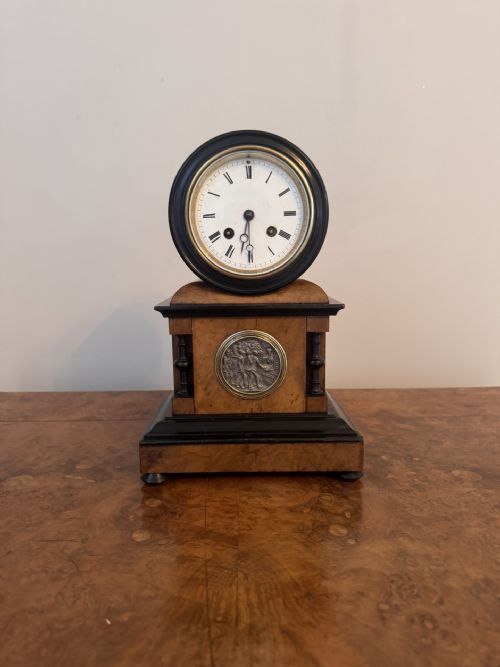
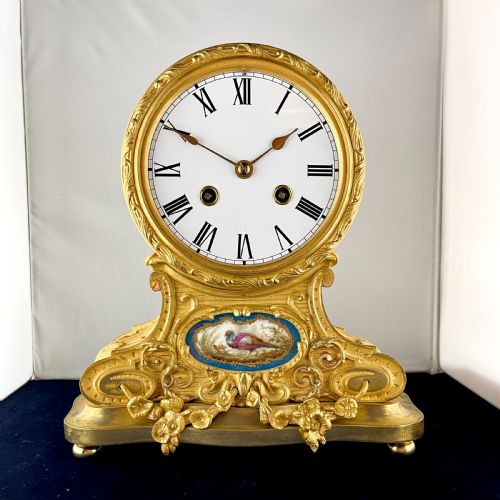
When you search for a victorian enamel mantel clock, you encounter carriage clocks, clock garniture sets, and drumhead mantel clocks originating from the nineteenth century. The French 19th Century and Napoleon III styles dominate the offerings, alongside traditional Victorian designs.
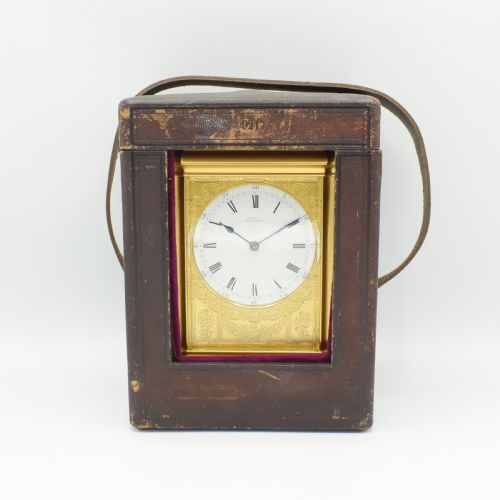
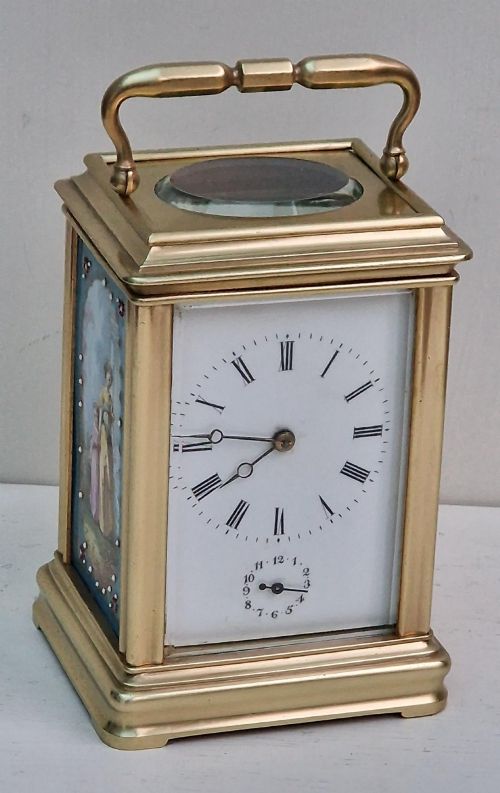
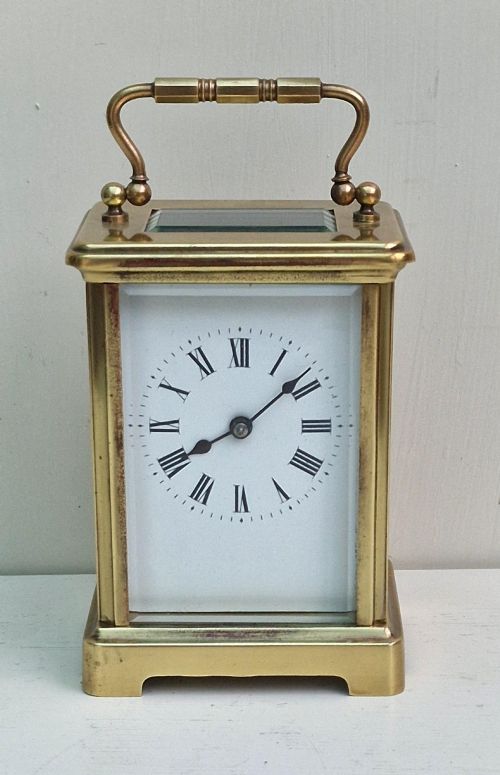
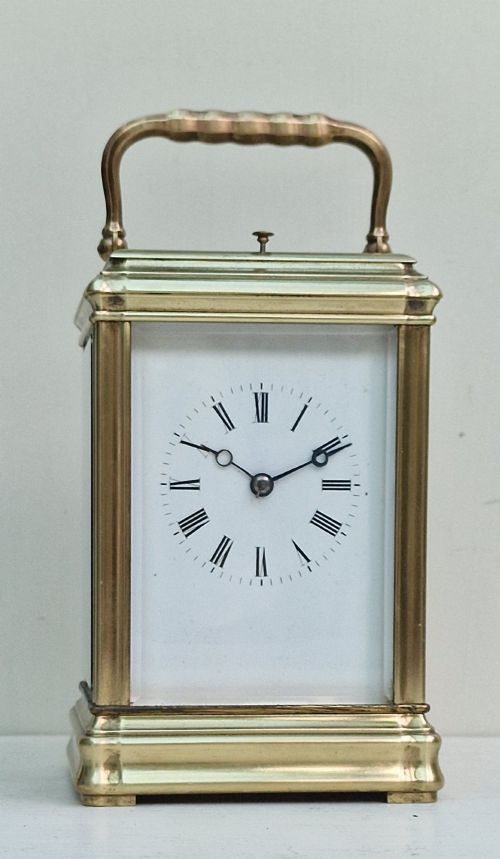
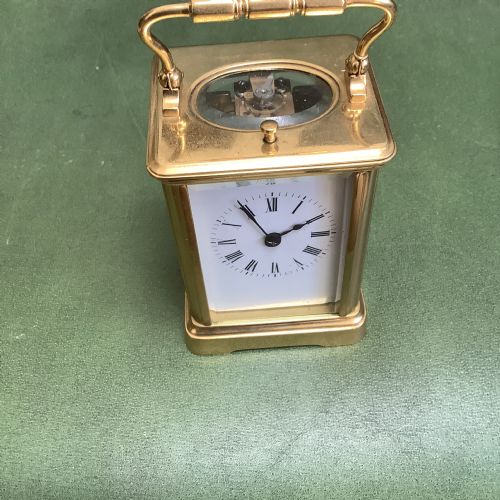
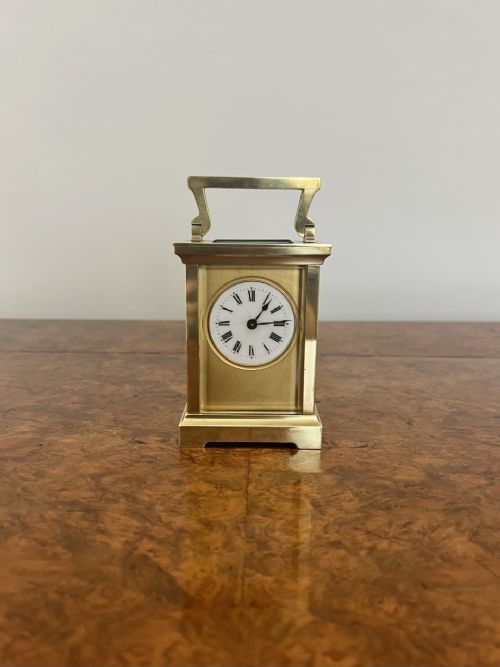
Carriage clocks with enamel panels and champleve enamel mantel clocks represent the core of what appears on this page. Makers often housed these movements in gorge cases or fitted them with travel cases for portability.
Miniature versions and large striking models sit side by side in the inventory, spanning decades from eighteen-sixty through to nineteen-hundred. Buyers encounter both simple timepieces and complex striking or repeating mechanisms.
Materials and Construction
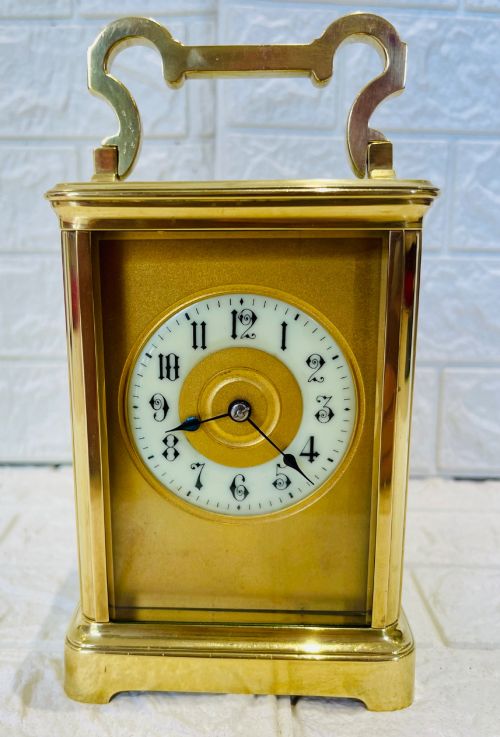
Brass, gilt brass, and gilt bronze form the structural housings for these timepieces, often paired with glass panels to reveal the movement within. Champleve enamel and porcelain panels provide decorative colour and detail across the dial and case surfaces.
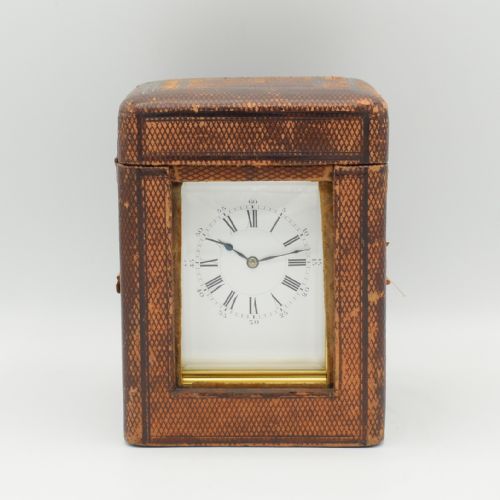
Makers utilised engraving techniques on the brass frames, complementing the applied enamel work with intricate geometric or floral patterns. Leather appears chiefly on the exterior travel cases supplied with portable carriage clocks.
Some miniature carriage clocks were built small enough to pack into leather travel cases for Victorian railway journeys.
Distinctions in Quality
The weight and thickness of the brass or gilt bronze housing separate standard production pieces from heavier, more substantial examples. Precision in the hand-engraving across the case and the clarity of the enamel panels indicate the skill invested by the maker.
Complexity of the internal movement distinguishes the tier of a clock, moving from basic timepieces to striking, repeating, and grand sonnerie mechanisms. The presence of original travel cases and signed dials by noted makers adds further distinction.
Henri Jacot·Mappin and Web·Pickford of London·Drocourt Paris·T. Martin and Co·Margaine Of France·Latshea and Sons Edinburgh
The Victorian Enamel Mantel Clock Glossary
- Champleve Enamel
- A technique where troughs are dug into a metal surface and filled with vitreous enamel before firing. This method creates colourful geometric or floral patterns across the brass case.
- Carriage Clock
- A portable spring-driven clock with a handle, originally designed for travel during the nineteenth century. These clocks frequently feature glass panels and brass gorge cases.
- Gorge Case
- A stepped brass housing style commonly found on nineteenth-century French carriage clocks. The distinctive multi-tiered top moulding defines this particular architectural frame.
- Clock Garniture Set
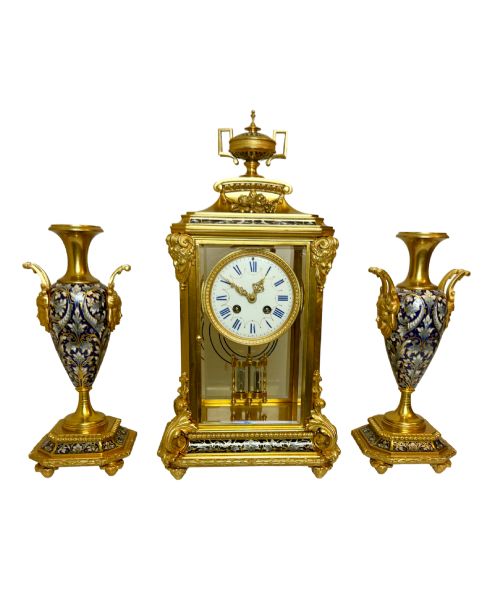
- A matching set comprising a central mantel clock accompanied by side ornaments or vases. These sets utilise uniform materials like gilt bronze and enamel.
- Grand Sonnerie
- A complex striking train that chimes the hours and quarters automatically on the passage of time. This complication marks a higher tier of clockmaking craftsmanship.
Victorian Enamel Mantel Clock: Frequently Asked Questions
How do repeating carriage clocks work?
Repeating carriage clocks contain an extra mechanism that sounds the last hour or quarter-hour when a button or cord is pressed. This allowed owners to check the time in the dark without lighting a candle.
The complication requires additional gear trains inside the brass case to govern the striking sequence on demand.
Are these clocks French or British?
Many carriage clocks and enamel mantel clocks on this page originate from nineteenth-century French workshops. Prominent makers in Paris produced a large share of the surviving decorative timepieces.
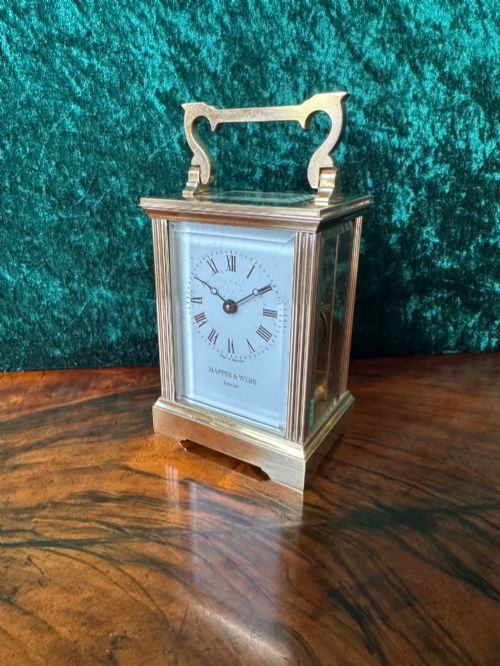
At the same time, British retailers and makers such as Mappin and Web retailed or produced similar brass and enamel designs for the domestic market.
What does a clock garniture set include?
A clock garniture set includes a central mantel clock accompanied by matching ornamental side pieces or vases. These matched suites share identical materials, such as gilt bronze and champleve enamel.
Victorian drawing rooms utilised these balanced arrangements on mantelpieces to create a symmetrical decorative display.