


Victorian Enamel Brooch
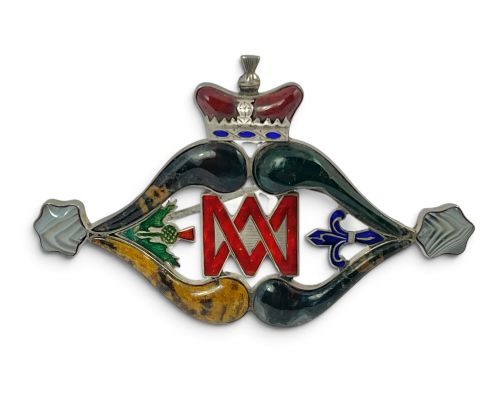
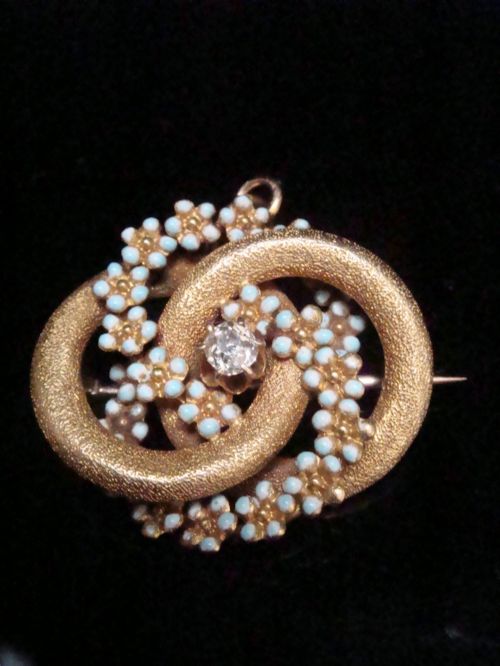
A victorian enamel brooch brings together rich coloured glass fused to metal and the intimate sentiment of the nineteenth century.

Victorian Enamel Brooch
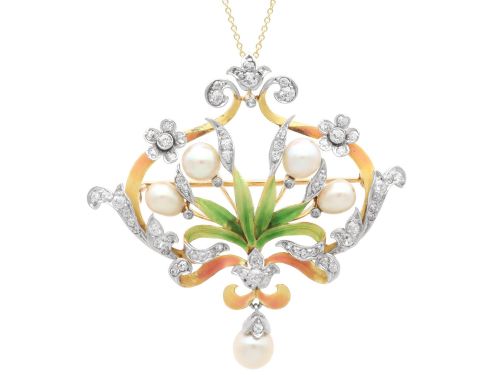
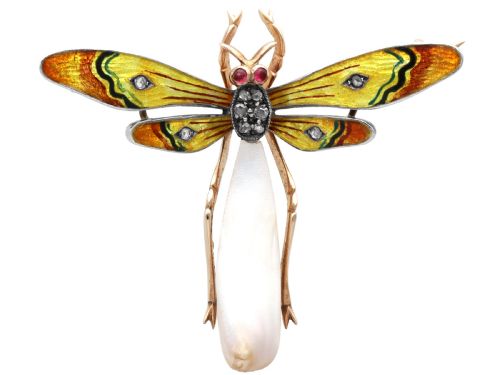
A victorian enamel brooch is a wearable ornament from the nineteenth century that uses vitreous glass fused to a metallic base to create enduring colour. When you search for this phrase, you encounter pieces that range from simple mourning jewels to elaborate pendant brooches set with diamonds and pearls.
Many examples double as pendants, offering versatile wear as both breast ornaments and neckpieces. The designs draw on stylistic revivals including Renaissance and Etruscan themes alongside naturalistic subjects like ducks, scarab beetles, and cockerels.
How they were made
Maker's workshops applied powdered glass to metal bases such as silver, 18ct gold, and silver gilt, firing the pieces at high temperatures to melt the enamel into a smooth, glossy coating. Techniques like guilloche introduced engraved geometric patterns beneath translucent coloured enamel.
Plique-a-jour methods suspended translucent enamel within delicate wire frameworks without a solid backing, allowing light to pass directly through the coloured glass. Stones including diamonds, pearls, rubies, garnets, and amethysts were then set into the metal alongside the enamel work.
Listings feature pieces across the Victorian, Edwardian, and Art Nouveau periods, utilising materials such as enamel, diamonds, pearls, silver, and gold.
What varies in quality
The calibre of a victorian enamel brooch rests upon the precision of the metalwork and the clarity of the fused glass surface. Superior examples display flawless enamel free from fractures, alongside finely articulated gold or silver mounts.
The integration of precious gemstones like diamonds and natural pearls elevates the standing of a piece, as does the complexity of specialised enamel techniques such as plique-a-jour or guilloche. Maker attribution also separates standard production items from masterworks.
Gustav Gaudernack·Anton Michelsen
The Victorian Enamel Brooch Glossary
- Guilloche
- An ornamental technique in which a very precise, intricate pattern is mechanically engraved into an underlying metal surface. Translucent enamel is then applied over the top to let the pattern show through.
- Plique-a-jour
- An enamelling technique similar to stained glass, where the enamel is applied in cells without a backing metal. This lets light shine through the transparent coloured material.
- Silver Gilt
- Silver that has been coated with a thin layer of gold over its surface. This gives the appearance of solid gold while utilising silver as the base metal.
- Mourning Brooch
- A commemorative jewel worn to remember a deceased person, often featuring black enamel, seed pearls, and a compartment at the rear for hair.
- Cartouche
- An oval or oblong frame with a convex surface, often used to enclose a design or motif on a brooch. It provides a distinct border for decorative enamel work.
Victorian Enamel Brooch: Frequently Asked Questions
What does guilloche enamel look like?
Guilloche enamel has a repeating geometric or wavy pattern visible beneath a glossy, coloured glass coating. The underlying engraving catches the light and creates a sense of depth.
Most examples use rich blue, red, or green transparent enamel over a silver or gold ground to highlight the engraved texture.
How should I care for my brooch?
Clean your piece gently using a soft, dry cloth to remove dust and skin oils from the metal and enamel surface. Avoid harsh chemical dips, ultrasonic cleaners, and prolonged immersion in water.
Store the item separately in a lined box to prevent the metal and stones from scratching the delicate glass enamel.
Are all mourning brooches black?
While black enamel is common in mourning jewellery, many pieces use deep blue or white enamel alongside seed pearls. Blue enamel often symbolised loyalty and memory in nineteenth-century sentiment.
The inclusion of woven hair behind a glass panel or an engraved inscription on the reverse usually identifies the mourning purpose regardless of enamel colour.