
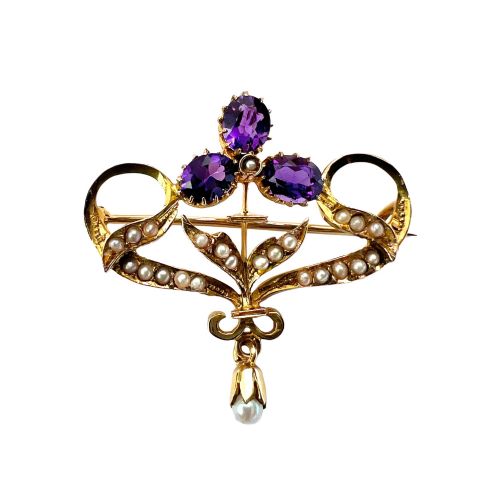
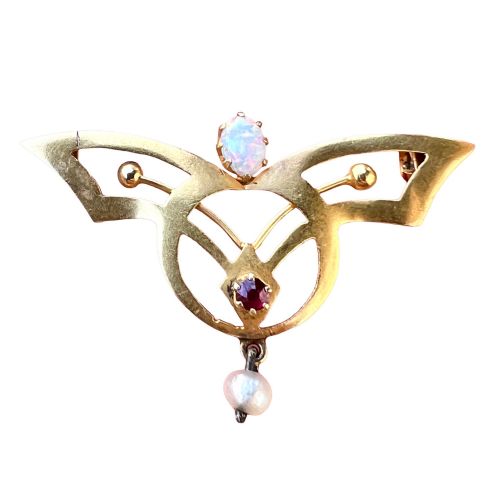


Pearl Pendant Brooch
A pearl pendant brooch offers dual wearability, combining a detachable chain suspension with secure pin fixings for versatile styling.

Pearl Pendant Brooch
A pearl pendant brooch serves as a multifunctional ornament designed to transition from a lapel pin to a neck chain pendant. These convertible jewels bridge the gap between structured tailoring and delicate neckwear.
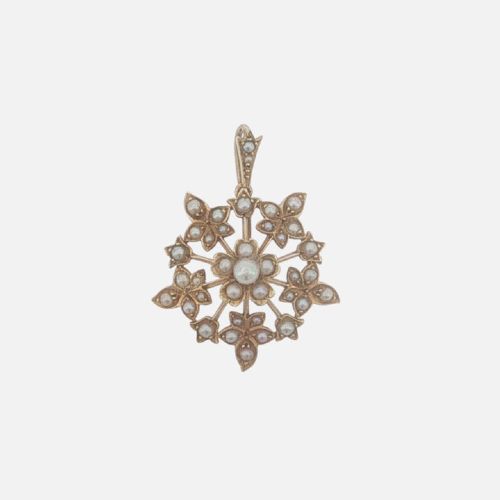
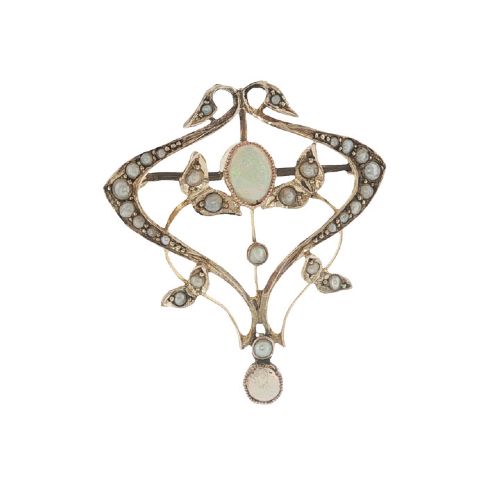
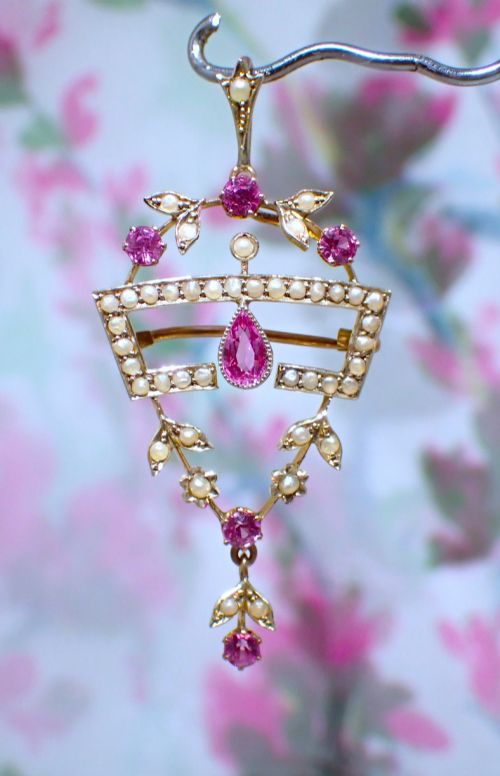
Most examples found in the current selection date from the Victorian and Edwardian periods, stretching from the late nineteenth century through to the early twentieth century. Common configurations incorporate central gemstones or botanical motifs alongside the pearls.
Makers of this era frequently integrated hinged bails and pin stems into a single frame, allowing the wearer to alter the mounting. Collectors encounter forms ranging from celestial starbursts and insects to classic ribbon sliders and heart shapes.
Distinctions in craftsmanship and materials
The degree of hand-finishing and the integration of the conversion mechanism dictate the calibre of the piece. Superior examples conceal the folding bail and pin mechanism seamlessly within the reverse of the design without compromising structural rigidity.
The uniformity, lustre, and natural origin of the pearls separate standard items from exceptional ones. Master jewellers matched seed pearls meticulously for size and orient, and paired them with stones possessing clean facets and high saturation.
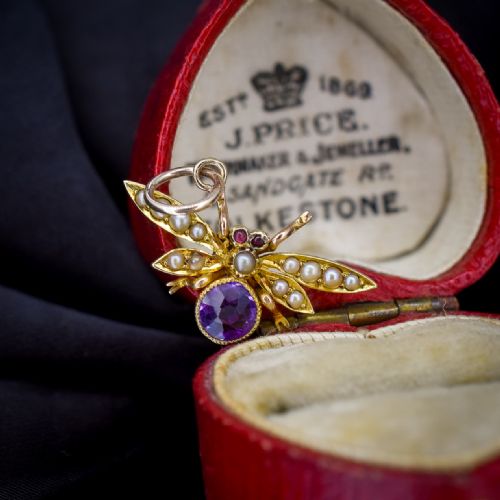
Victorian jewellers turned beetles and flies into charming wearable companions by setting tiny crawling insects with seed pearl bodies and ruby eyes.
Meyle & Meyer
The Pearl Pendant Brooch Glossary
- Seed pearl
- A very small, naturally occurring pearl, often drilled and threaded onto fine wire or silk within antique jewellery. These tiny spheres form dense clusters or delicate floral motifs.
- Plique-a-jour
- An enamelling technique where the enamel is applied without a backing, creating a translucent, stained-glass effect. This method appears frequently in Art Nouveau metalwork.
- Guilloche
- A decorative technique in which a precise, intricate pattern is mechanically engraved into a metal surface. Transparent enamel is then layered over the engraving to catch the light.
- Lavalier
- A pendant style featuring a central gemstone suspended from a smaller stone or delicate chain drop. These items hang lower on the chest than standard necklace pendants.
- Old cut diamond
- A diamond cut by hand before the advent of modern machinery, typically characterised by a high crown and small table. These stones possess a distinctive, softer candlelight scintillation.
Pearl Pendant Brooch: Frequently Asked Questions
How do I wear a pendant brooch?
These jewels feature a hidden or hinged loop alongside a pin mechanism on the reverse. You can thread a chain through the bail to suspend it around the neck, or secure the pin fastening directly onto clothing.
This dual functionality allows the piece to serve as a lapel ornament or a traditional necklace centrepiece depending on your attire.
How can I date my pendant brooch?
Dating relies upon examining the materials, gemstone cuts, and structural motifs present in the mount. Victorian pieces often incorporate heavier gold settings, closed-back gemstone mounts, and motifs like stars or hearts.
Edwardian and Art Nouveau examples typically showcase lighter platinum or gold work, flowing organic lines, and brighter stones like peridot or tourmaline.
Were these jewels originally sold with chains?
Many antique conversion pieces survive without their original matching chains because owners wore them interchangeably across multiple neckchains. When a chain does accompany the jewel, it often matches the gold purity and age of the main body.
Finding a fitted box or original matching chain remains an unusual occurrence for pieces from this era.
How do I care for antique pearls?
Pearls are organic gems sensitive to acids, cosmetics, and perfumes, requiring gentle cleaning with a soft, dry cloth after wear. Avoid submerging antique seed-pearl settings in liquid cleaners, as moisture can degrade the historic adhesives or backing materials.
Store the jewel separately from harder gemstones to prevent surface scratching on the pearls.