


Victorian Emerald Ring
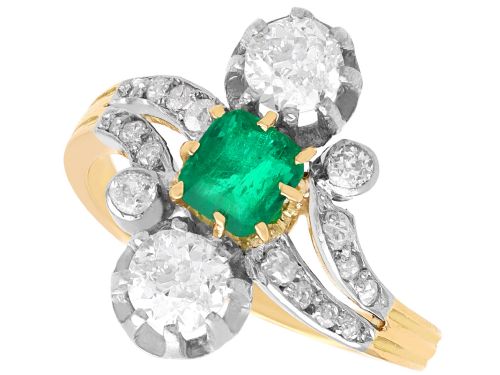
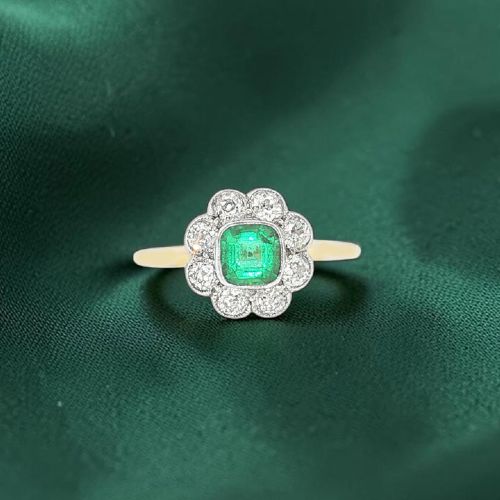
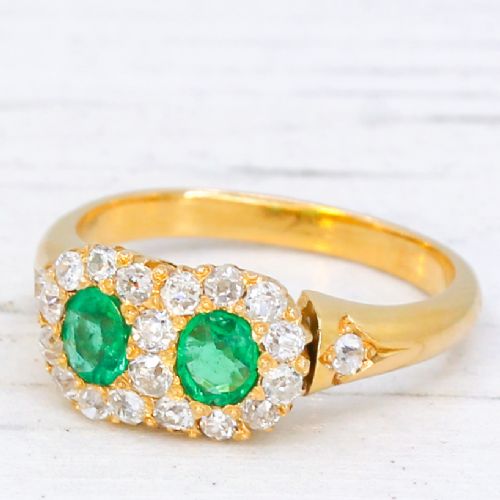
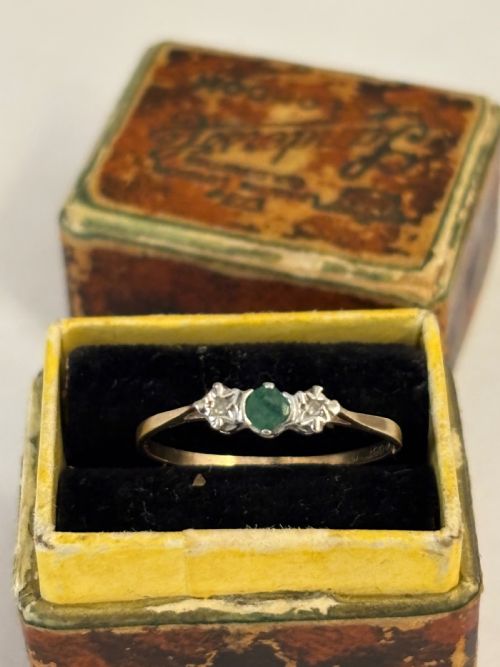
A victorian emerald ring brings together deep green beryl and old-cut diamonds in gold settings that hold the romance of the nineteenth century.
Victorian Emerald Ring
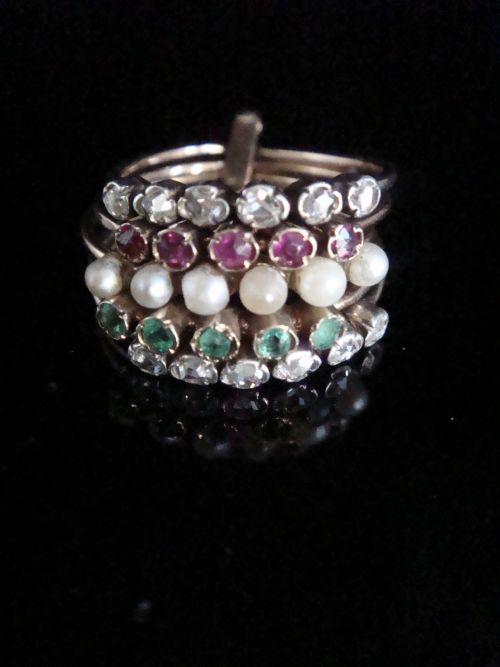
A victorian emerald ring encompasses cluster formations, multi-stone bands, and navette designs created during the nineteenth and early twentieth centuries. Buyers seeking this phrase encounter pieces shaped by nineteenth-century goldsmithing, often pairing emeralds with diamonds, pearls, or amethysts.
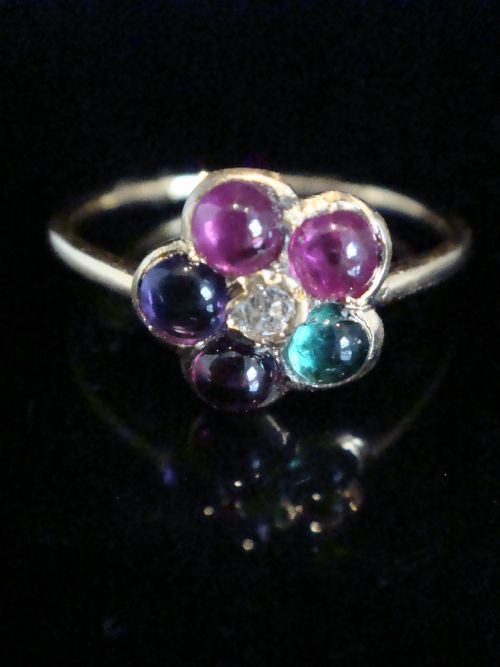
The selections on this page lean heavily towards gold bands, featuring 15ct yellow gold, 18ct yellow gold, and rose gold mountings. Cluster arrangements dominate the available forms, alongside multi-stone settings that spell out sentiments through gemstone acrostics.
Origins stretch across English workshops and continental makers, incorporating stones ranging from Colombian emeralds to paste substitutes. Buyers find both substantial solitaire focal points and delicate stacking configurations that reflect the diverse tastes of the period.
What varies in quality
The standard of the goldsmith's work dictates the structural integrity and refinement of the metal setting, from simple cast bands to intricate hand-pierced gallery wire. Superior examples display balanced proportions between the central emerald and surrounding diamond clusters, showing careful matching of stone sizes and cuts.
The nature of the emerald itself influences the character of the piece, with variations spanning natural Colombian stones to treated gems, doublets, and paste substitutes. Metal purity also shifts across the range, moving between higher gold carat weights and lower alloys or silver-topped elements.
One Victorian ring spells out feelings silently using lapis, opal, vesuvianite, and emeralds.
The Victorian Emerald Ring Glossary
- Navette
- A boat-shaped gemstone setting that tapers to points at either end. This elongated silhouette sits horizontally across the finger.
- Cluster
- An arrangement where a central gemstone is surrounded by a border of smaller stones, typically diamonds. This layout was immensely popular for nineteenth-century dress rings.
- Old-cut
- A diamond cutting style characterised by a small table, high crown, and open culet, hand-faceted before modern machinery. These cuts produce a softer, candlelight sparkle.
- Acrostic
- A ring design where the first letters of the gemstones spell out a word, such as REGARD or DEAREST. Gems like ruby, emerald, amethyst, and diamond convey hidden messages.
- Columbian
- Pertaining to emeralds sourced from the mines of Colombia, historically prized for a vivid green coloration. These stones frequently appear in high-end nineteenth-century cluster and solitaire rings.
Victorian Emerald Ring: Frequently Asked Questions
How do I care for a victorian emerald ring?
Emeralds are a softer gemstone with natural inclusions, so cleaning should be done gently with warm soapy water rather than ultrasonic machines. Avoid exposing the ring to harsh chemicals, sudden temperature changes, or heavy impacts that could damage the stone.
Store the piece separately from harder gems like diamonds to prevent scratching. Regular checks by a jeweller ensure the claws holding the emerald and surrounding diamonds remain secure.
What does a dearest ring mean?
A dearest ring uses an acrostic code where the first letter of each gemstone spells out the word. The stones typically follow the sequence diamond, emerald, amethyst, ruby, emerald, sapphire, and topaz.
These pieces served as sentimental tokens of affection in the nineteenth century. The presence of multiple coloured stones creates a vibrant multi-gem band that doubles as a secret message.
How can I tell a true antique setting?
Antique gold settings display hand-fabricated elements, tool marks, and closed backs or specific bezel styles typical of nineteenth-century bench work. Hallmarks, where present, indicate the specific assay office and gold standard used during the period.
Wear patterns on the metal and the irregular facets of old-cut diamonds help distinguish genuine pieces from later reproductions. Examining the mounting under magnification reveals the construction methods of the era.
Are emerald treatments common in these rings?
Natural emeralds from the nineteenth century often contain internal fractures and inclusions that were traditionally oiled or treated to improve clarity. The presence of oil or minor enhancements is a standard characteristic of antique emeralds rather than a modern innovation.
Grading reports or dealer notes sometimes specify the extent of these treatments. Buyers should expect natural internal growth patterns in stones dating to the Victorian and Edwardian eras.