

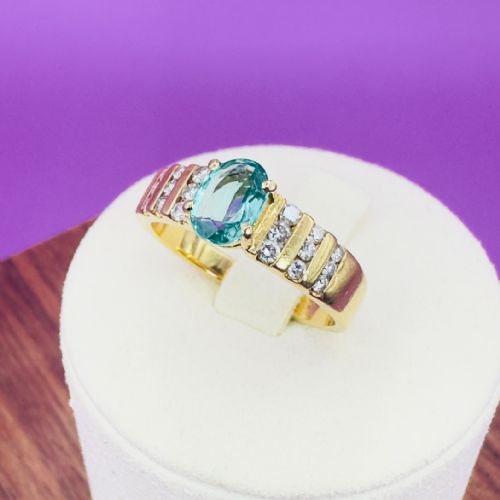

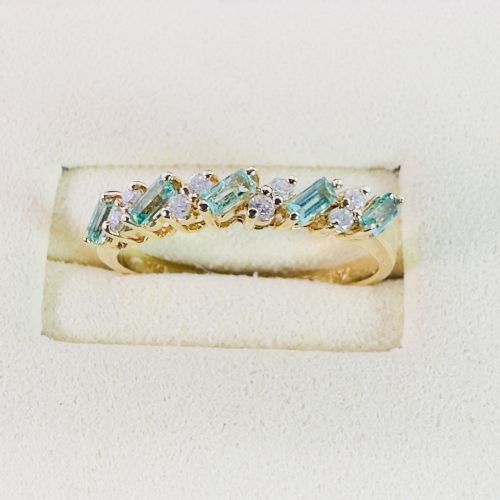


Gold Emerald Band
A gold emerald band brings together rich green beryl and warm precious metal in wearable finger ornaments spanning from the Victorian era to the mid-twentieth century.
Gold Emerald Band
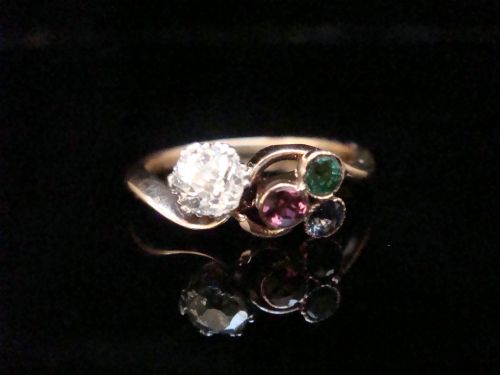
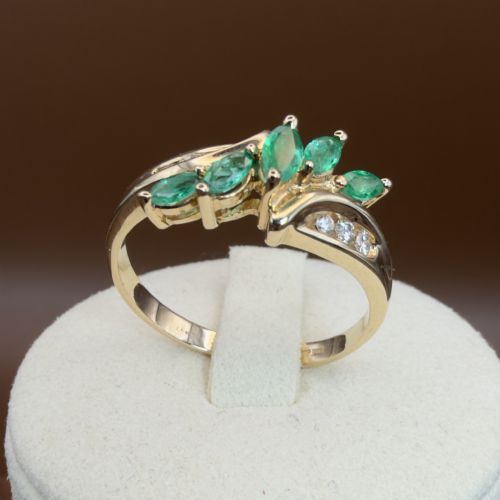
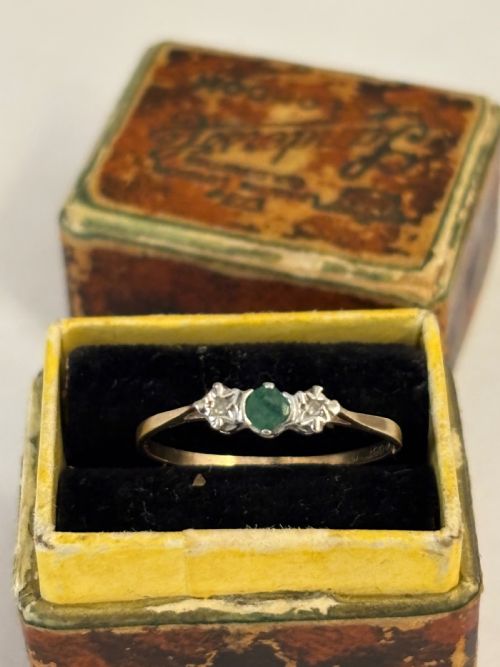
A gold emerald band encompasses rings fashioned from various gold purities, featuring emerald centre stones or accent gems arranged in linear settings, cluster configurations, or multi-stone rows. The selection here ranges from early twentieth-century Edwardian multi-gem creations and Art Deco tank rings to mid-century examples from the nineteen-fifties and nineteen-sixties.
Shoppers encounter diverse structural forms under this heading, including traditional five-stone rings, wide textured gold bands, stacking designs, and cluster mounts where emeralds sit alongside diamonds, sapphires, rubies, or pearls. Materials span from nine-carat, fourteen-carat, and eighteen-carat yellow, white, and rose gold to platinum accents.
Origins stretch across British and international workshops, incorporating antique Australian dress rings alongside European pieces. The assortment captures shifts in taste from delicate Edwardian filigree and floral motifs to bold, geometric Art Deco styling and chunky retro cocktail proportions.
Assessing quality in gold emerald band selections
Quality differences stem from the inherent characteristics of the emeralds and accompanying diamonds, alongside the precision of the metalwork. Superior examples display balanced gemstone proportions, secure claw or flush settings, and substantial gold weight that resists everyday bending.
The sophistication of the design execution separates standard productions from exceptional pieces. Finer specimens exhibit crisp geometric lines in Art Deco motifs, intact delicate filigree in Edwardian mounts, and harmonious colour saturation across multi-stone layouts without awkward stone substitutions.
Asprey
The Gold Emerald Band Glossary
- Cluster ring
- A ring style featuring a central gemstone surrounded by a cluster of smaller accent stones, typically diamonds framing an emerald.
- Old cut
- An early diamond cutting style characterised by a smaller table, higher crown, and larger culet, commonly found in antique and Edwardian pieces.
- Tank ring
- A bold, chunky ring style popular during the nineteen-forties, featuring stepped geometric gold work reminiscent of military vehicle treads.
- Five stone ring
- A traditional setting style featuring five gems of graduated or uniform size arranged in a horizontal row across the finger.
- Paste
- Hand-cut glass or vitreous enamel used historically as a simulated gemstone substitute in period jewellery.
Gold Emerald Band: Frequently Asked Questions
How do I care for a gold emerald band?
Emeralds are relatively soft gemstones that require gentle cleaning with a soft cloth and warm soapy water rather than ultrasonic machines. Avoid exposing antique settings to harsh chemicals or hard impacts.
Store your ring separately from other jewellery to prevent scratching the softer emerald facets and the surrounding gold or platinum band.
Can these rings be resized easily?
Resizing depends entirely on the specific construction of the band, including whether the shoulders feature continuous channel-set stones or intricate engravings. Plain gold shanks and simple multi-stone mounts generally permit straightforward adjustment by a skilled jeweller.
Intricate Edwardian filigree or full eternity designs present greater challenges and require professional assessment to preserve the structural integrity of the metalwork.
What is the difference between Edwardian and Art Deco bands?
Edwardian rings typically showcase delicate yellow or rose gold and platinum work, often incorporating floral motifs, millegrain edges, and graceful curves. The focus rests on ethereal lightness and intricate wirework.
Art Deco pieces embrace bold geometry, sharp lines, and strong contrasts between white and yellow metals, reflecting industrial influences and modern design movements of the nineteen-twenties and nineteen-thirties.
Are these emeralds natural or treated?
The inventory includes both natural emeralds and period paste substitutes, reflecting the diverse manufacturing practices of different eras. Antique and vintage pieces often feature natural stones mined and cut according to the standards of their respective decades.
Examining specific descriptions helps identify whether a piece contains certified natural emeralds, standard untreated stones, or historical simulant materials.