






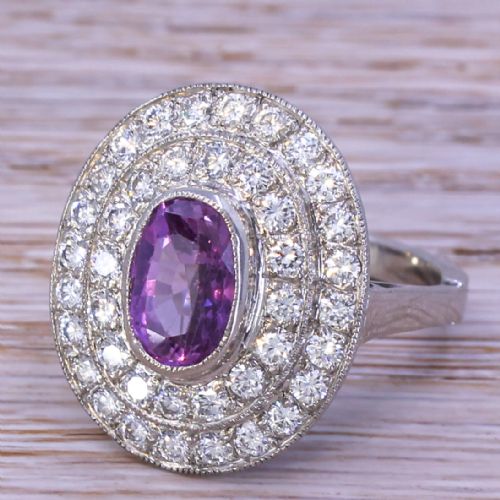
Fine Gemstone Cocktail Ring
A fine gemstone cocktail ring makes a bold statement on the hand, combining generous central stones with glittering diamond surrounds.
Fine Gemstone Cocktail Ring
A fine gemstone cocktail ring is designed to catch the eye across a crowded room, using substantial coloured stones to create maximum visual impact. These pieces range from substantial Edwardian and Victorian clusters to bold mid-century modern and Retro tank designs.
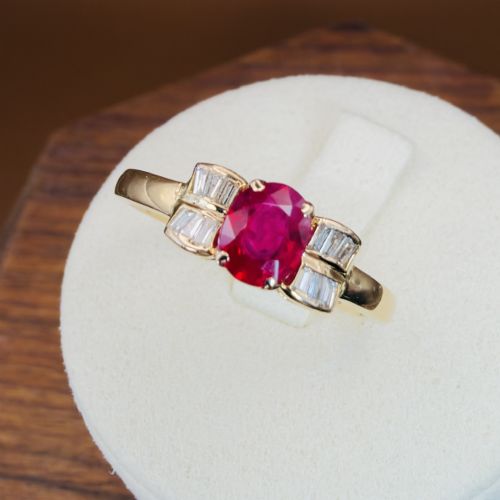
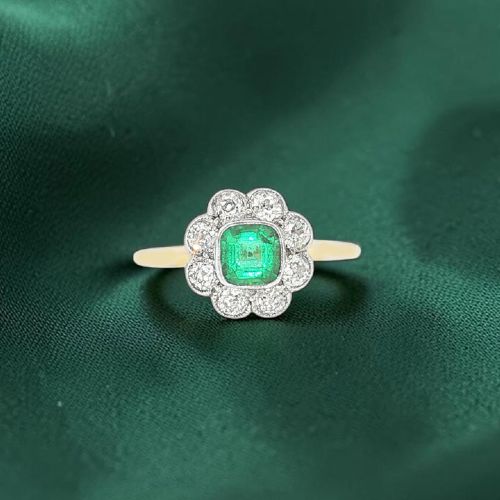
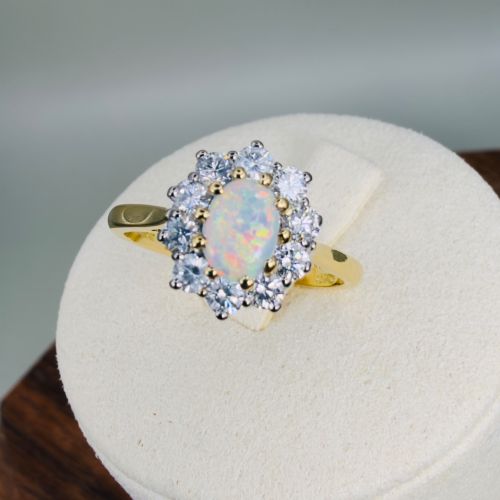
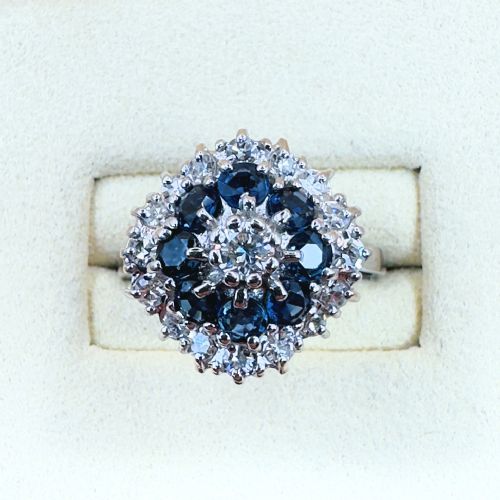
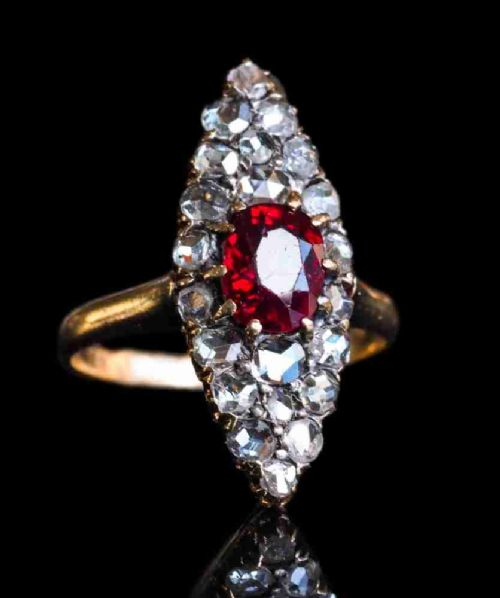
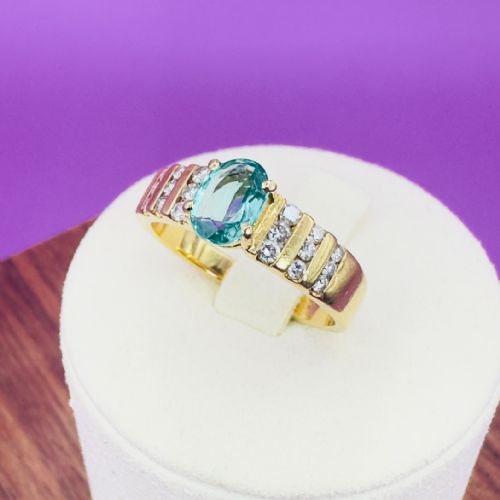
The selections encountered here most frequently date from the mid-twentieth century, particularly the nineteen-fifties and sixties, alongside earlier antique examples from the Victorian and Edwardian eras. Cluster forms dominate the selection, framing central emeralds, rubies, sapphires, opals and tanzanites within sparkling diamond borders.
Materials and construction
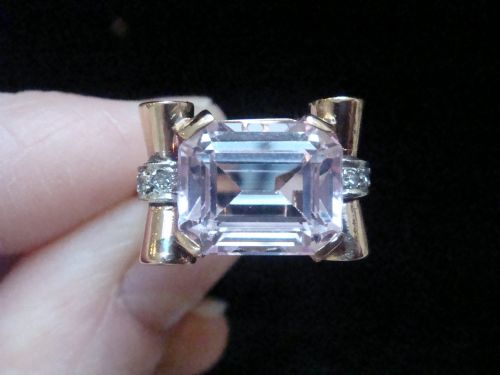
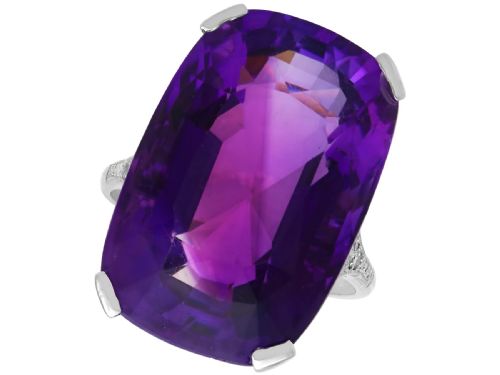
Central stones - including cabochon opals, cushion-cut amethysts and faceted rubies - are paired with brilliant, baguette or princess-cut diamonds. Construction methods span traditional claw settings in antique pieces to heavy geometric tank designs from the mid-century period.
Heavy tank rings borrow their bold, industrial lines directly from the heavy machinery of the mid-twentieth century.
Factors determining quality
Quality rests primarily in the provenance and natural characteristics of the central gemstone, such as unheated rubies or untreated Colombian emeralds. The saturation of colour and the clarity of both the main stone and surrounding diamonds set superior examples apart.
The precision of the metalwork also defines the tier of a piece, from the architectural weight of a Retro tank mounting to the delicate pierced gallery of an Edwardian cluster. Heavier gold weights and substantial diamond carat totals indicate higher production standards.
The Fine Gemstone Cocktail Ring Glossary
- Cluster ring
- A ring featuring a prominent central gemstone encircled by a border of smaller stones, typically diamonds. This arrangement maximises the perceived size and brilliance of the jewel.
- Navette ring
- A ring shaped like a little boat, featuring an elongated marquise silhouette that tapers to points at either end. This form flatters the finger and accommodates multiple stones.
- Cabochon
- A gemstone shaped and polished with a smooth, rounded convex surface rather than faceted. This cut is frequently utilised for opals, star stones and certain emeralds.
- Tank ring
- A robust style of jewellery originating in the mid-twentieth century, characterised by heavy, volumetric gold forms inspired by military machinery. These pieces often incorporate calibrated gemstones and diamonds.
- Ballerina ring
- A distinctive cocktail ring featuring a central stone encircled by radiating rows of tapered baguettes or small diamonds, resembling a tutu. This setting creates a dramatic, scalloped silhouette.
Fine Gemstone Cocktail Ring: Frequently Asked Questions
What is a fine gemstone cocktail ring?
A fine gemstone cocktail ring is an eye-catching piece of jewellery featuring a prominent coloured gemstone surrounded by diamonds, designed for evening wear and social occasions.
These rings became popular for their oversized presence and vibrant use of precious stones like rubies, emeralds and sapphires.
How do I style a vintage cocktail ring?
Wear a cocktail ring on its own on the hand to let the bold design and colourful centre stone command full attention.
Because these pieces have substantial settings and high profiles, they work best paired with simpler evening attire or tailored daily wear.
How can I tell an Edwardian ring from a mid-century piece?
Edwardian rings typically feature delicate openwork, platinum-topped gold settings and intricate filigree details with softer floral or garland motifs.
Mid-century pieces from the nineteen-fifties and sixties tend to display bolder geometric lines, heavier gold weights and structured cluster arrangements.
What are the most common gemstones found in these rings?
Rubies, sapphires and emeralds appear most frequently as the central focus of these cluster and cocktail designs, often accompanied by diamond accents.
Opals, tanzanites, kunzites and amethysts also feature prominently in pieces dating from the Victorian era through the mid-twentieth century.