
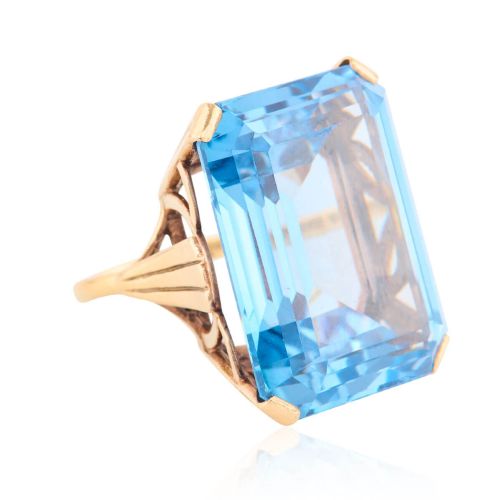
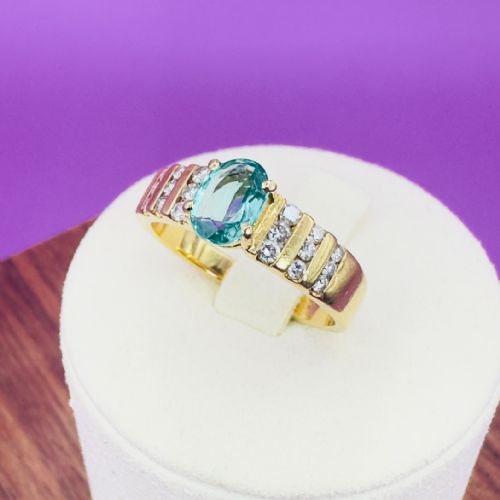


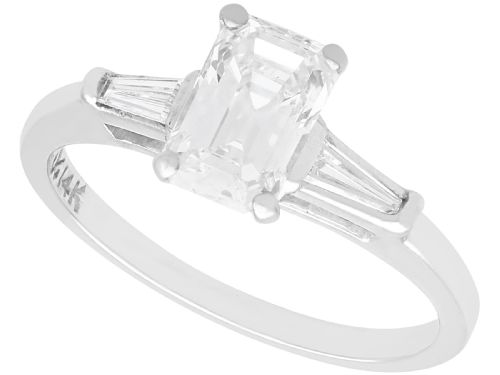


Gold Emerald Solitaire Ring
A gold emerald solitaire ring brings a singular green stone to the hand, balancing clean lines with rich colour.
Gold Emerald Solitaire Ring
A gold emerald solitaire ring focuses attention on a single green gemstone set within a precious metal band. The selection includes striking examples from the 1920s and 1930s alongside pieces from the 1950s and 1960s.
While many listings feature substantial emeralds, the broader inventory also contains alternative central stones such as aquamarine, amethyst, sapphire, and paste set in parallel with the core design. These rings display the distinct geometric tastes of the Art Deco period and the cleaner profiles of mid-century modernism.
Buyers encounter variations in gold carat weight, spanning nine carat and eighteen carat yellow gold, alongside white gold settings. The overarching form remains centred on an unencumbered main stone that defines the character of each piece.
Materials and Construction
Goldsmiths utilised yellow gold and white gold in varying purities, notably nine carat, fourteen carat, fifteen carat, and eighteen carat, to form the bands and settings. Gemstones including emerald, diamond, amethyst, and aquamarine were cut into emerald shapes or princess cuts to fit these mounts.
Construction techniques from the Art Deco era and the mid-century period relied on secure claw settings and bezel mounts to hold large central stones firmly in place. Metalwork was shaped by hand to create the clean profiles and geometric galleries characteristic of these decades.
The site listings feature rings spanning four distinct decades: the 1920s, 1930s, 1950s, and 1960s.
Judging Quality
The standard of a piece rests upon the depth of colour and clarity within the central gemstone, alongside the precision of its emerald cut. Stones with vibrant saturation and minimal inclusions elevate the overall presence of the ring.
Craftsmanship in the metalwork distinguishes finer examples, visible in the crispness of the shoulders and the secure execution of the setting. The integration of supporting diamonds or the integrity of the gold alloy further separates standard items from exceptional ones.
The Gold Emerald Solitaire Ring Glossary
- Solitaire ring
- A ring featuring a single central gemstone mounted on a band without major side stones. This setting maximises the visual impact of the primary stone.
- Emerald cut
- A rectangular or square stone cut with stepped facets and clipped corners. This facet arrangement highlights clarity and depth of colour.
- Art Deco
- A design style spanning the 1920s and 1930s characterised by symmetry, geometric lines, and streamlined elegance. It remains a defining aesthetic for antique jewellery.
- Columbian emerald
- An emerald originating from the mines of Colombia, historically renowned for an intense and luminous green hue. These stones are prized for their distinctive coloration.
Gold Emerald Solitaire Ring: Frequently Asked Questions
How do I care for my ring?
Clean your gold emerald solitaire ring gently using warm water and a soft cloth, avoiding harsh chemical ultrasonic cleaners.
Store the ring in a separate lined box to prevent softer stones from scratching against harder gems.
Can I wear this daily?
These antique and mid-century rings suit regular wear provided you remove them during heavy physical tasks.
Emeralds require mindful handling due to their natural internal characteristics compared to harder diamonds.
How do I date a piece?
Examine the mounting style, stone cuts, and metal purity hallmarks to align the piece with Art Deco or mid-century eras.
Design motifs from the 1920s display geometric precision, whereas 1950s examples often favour bolder proportions.
What is a doublet?
A doublet consists of two joined sections, often pairing a genuine gemstone top with a supportive base.
This technique historically achieved the appearance of a larger or more vibrant stone.