

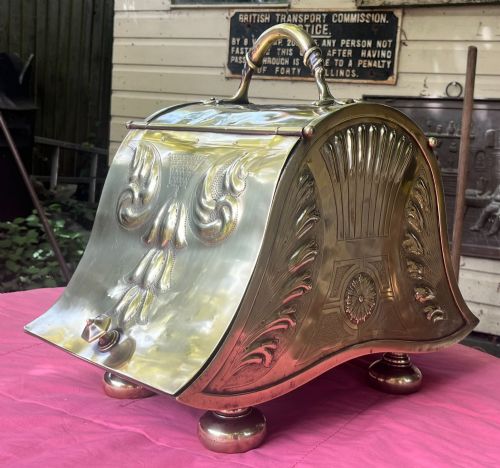


Victorian Embossed Coal Scuttle
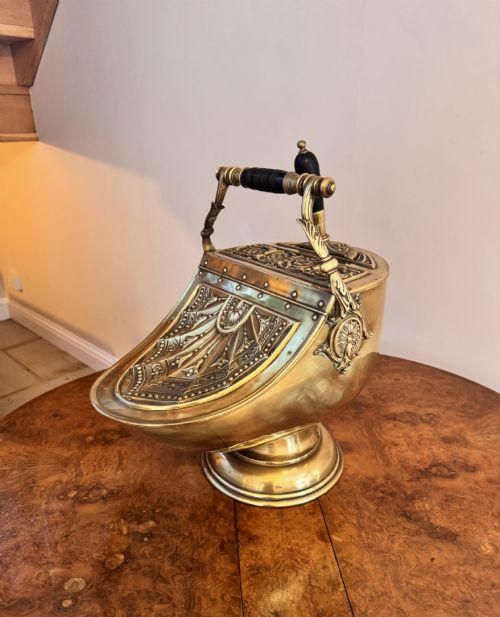
A victorian embossed coal scuttle brings functional hearthside metalwork into the room with beaten patterns that catch the firelight.
Victorian Embossed Coal Scuttle
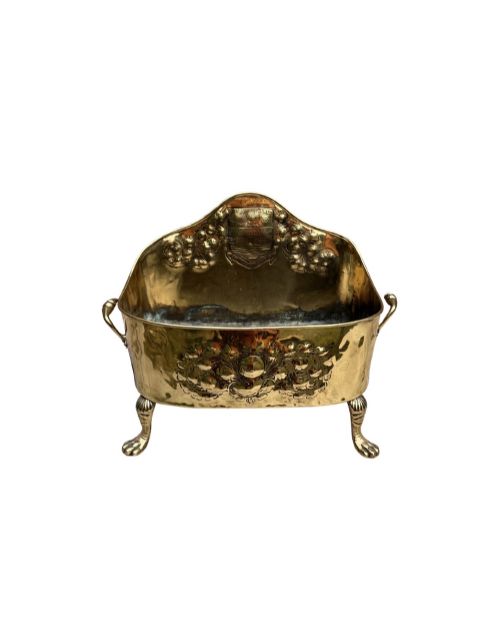
A victorian embossed coal scuttle is a fireside accessory designed to hold fuel near the hearth, appearing in forms such as coal boxes, log bins, and buckets. The pieces on this page span the nineteenth century and into the early twentieth century, incorporating later styles alongside Victorian work.
Buyers will most frequently encounter brass and copper vessels decorated with hammered or raised motifs. These utilitarian objects served domestic heating needs in period homes while offering decorative appeal by the fireplace.
How they were made
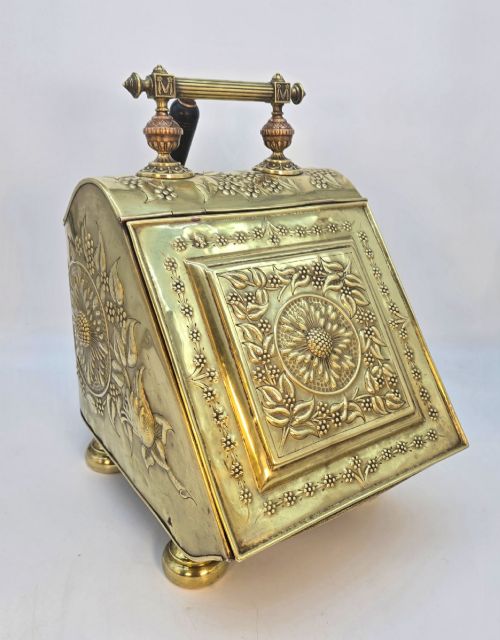
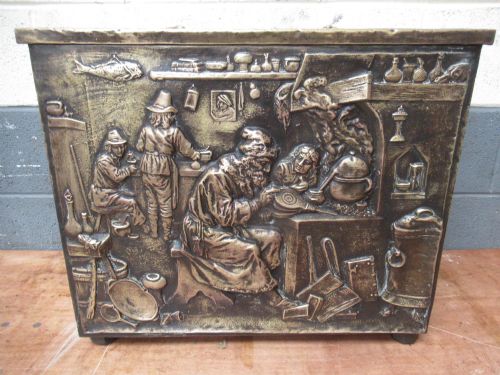
Sheet brass and copper form the primary body of these vessels, shaped through metalworking techniques that include repoussé and embossing to create raised surface patterns. Iron, wood, and ebony often appear in structural mounts, handles, and internal linings.
Maker interventions range from simple helmet buckets to double-lidded boxes complete with original shovels. Surface finishes combine polished metal with textured hand-beaten panels depicting tavern scenes or classical motifs.
Victorian Embossed Coal Scuttle Retail Price Guide 2026
Typical asking prices for victorian embossed coal scuttle among the pieces listed under this phrase on Sellingantiques today, from the lower quarter to the upper quarter. They describe what is for sale here now, not the wider market.
Listings feature brass, copper, and iron materials across Victorian, Arts and Crafts, Regency, and Art Nouveau styles.
What varies in quality
The distinction between standard fuel storage and finer fireside pieces rests on the depth and crispness of the embossed metalwork. Hand-finished repoussé details display greater definition than simpler pressed designs.
Survival of original elements, such as matching shovels, interior liners, and sturdy handles, elevates a piece. Heavier gauge metal and thoughtful construction distinguish country house items from simpler utilitarian buckets.
Henry Loveridge·Petrus Ramus
The Victorian Embossed Coal Scuttle Glossary
- Repoussé
- A metalworking technique where the pattern is hammered into relief from the reverse side. This creates tactile, three-dimensional decorative panels on the body of the scuttle.
- Purdonium
- A specialised type of coal box featuring a sloping front or tipping mechanism for ease of access. It usually includes an interior metal liner and a fitted shovel.
- Dinanderie
- A term for historical brass or copper wares originating from towns along the Meuse valley. It is often applied to decorative continental metalwork found by the hearth.
- Helmet bucket
- A traditional coal scuttle shape featuring a flared rim and pointed spout resembling a classical helmet. This profile facilitates the pouring of fuel onto the fire.
Victorian Embossed Coal Scuttle: Frequently Asked Questions
What is a coal purdonium?
A purdonium is an enclosed box designed to store coal neatly beside the fireplace. It typically houses a removable metal liner to contain dust and debris.
These pieces often feature a hinged lid and a drop-down front or shovel compartment. They kept domestic fuel hidden away while remaining close at hand for the hearth.
How do I clean a brass coal scuttle?
Maintenance depends on whether you prefer a bright polished finish or a warm aged patina. Gentle dusting and occasional wiping preserve the metal surface without stripping historical character.
Avoid harsh abrasive compounds that can flatten the delicate embossed or repoussé details. Old brass responds best to mild soapy water and a soft cloth.
Were these vessels only used for coal?
While primarily built for coal, many examples served multiple purposes around the fireside. Listings include log boxes, peat bins, and general fireside storage baskets.
Larger vessels frequently double as jardinieres or plant holders when retired from active fuel duty. Their waterproof metal interiors made them suitable for holding potted foliage.
How do I spot an original shovel?
An original shovel matches the metal composition and decorative style of the scuttle body. It often slides into a dedicated side sleeve or interior rack built into the box.
Matching wear patterns and patination between the scuttle and the scoop indicate they have travelled together through time. Replacement shovels are common due to heavy daily use by the hearth.