


Victorian Elm Table
A victorian elm table brings domestic utility and rich grain figures into a room.
Victorian Elm Table
A victorian elm table encompasses utilitarian domestic furniture built during the nineteenth century, ranging from robust kitchen boards to occasional side stands. These pieces often reflect regional country traditions rather than metropolitan cabinet-making, showing practical construction methods suited to hard daily use.
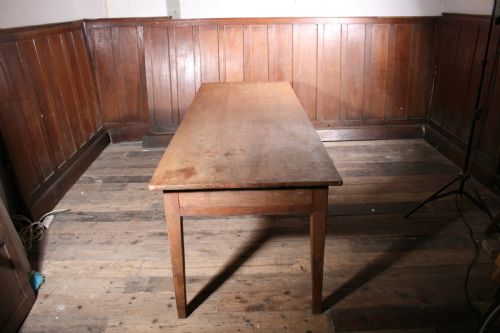
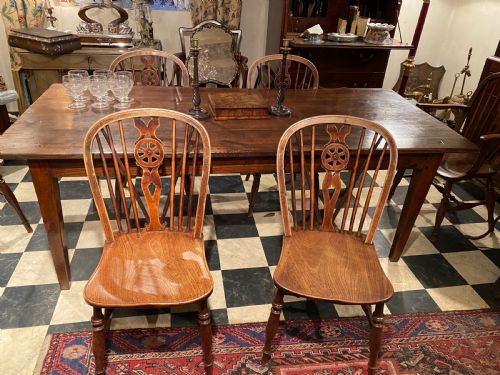
The version most commonly met on this page is the rustic farmhouse or kitchen dining table, frequently paired with a pine or oak frame. Side tables, low coffee formats, and occasional pieces also appear regularly, showing the timber's adaptability for domestic surfaces.
How they were made
Makers utilised solid elm for its toughness and interlocking grain, which resisted splitting under heavy kitchen labour. Secondary timbers such as pine, oak, and walnut frequently appeared in frames, drawers, and stretchers to support the heavy plank tops.
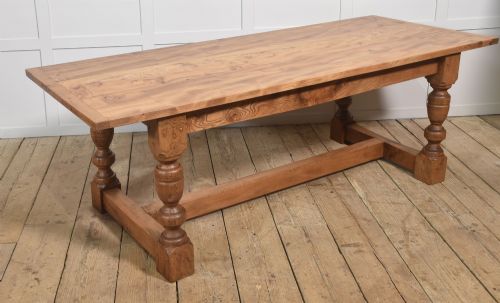
Construction relied on traditional joinery techniques, including pegged mortise and tenon joints for refectory frames and sturdy turning for legs. Surface treatments ranged from natural wax finishes that highlighted the burr and figure of the wood to ebonised and lacquered applications.
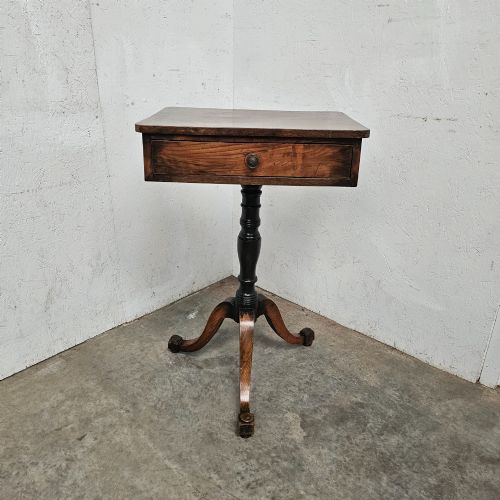
Many tables incorporate functional additions like single drawers with turned wooden knobs, drop leaves for space-saving versatility, or tripod bases for smaller lamp and wine stands.
Listings feature traditional forms including cricket tables, refectory dining boards, pig benches, and octagonal side tables.
What varies in quality
The visual appeal of the timber surface dictates much of the standing of a victorian elm table, particularly where burr elm, figured grain, or contrasting secondary woods like rosewood and walnut are present. Tables featuring thick, single-piece plank tops carry a greater visual weight and historical presence than those constructed from multiple narrow strips.
Proportion and structural integrity define the craftsmanship of each piece, from well-balanced pedestal lamp tables to heavy refectory dining boards with uniform leg turnings. Refined edge moulding and well-fitted drawers distinguish finer parlour or dressing variants from utilitarian workshop benches.
The Victorian Elm Table Glossary
- Burr elm
- A growth deformity on the tree that produces dense, highly swirled grain patterns prized for decorative table tops.
- Cricket table
- A small, light three-legged occasional table with a round top, traditionally used in domestic settings for tea or candles.
- Refectory table
- A long, narrow dining table historically built for communal dining, characterised by sturdy stretcher rails connecting the legs.
- Drop leaf
- A table featuring hinged flaps on one or both sides that fold down to reduce the footprint when not in use.
- Ebonised
- Wood treated with a chemical stain or finish to imitate expensive ebony, popular in nineteenth-century decorative furniture.
Victorian Elm Table: Frequently Asked Questions
How do I clean my victorian elm table?
Apply a natural beeswax polish occasionally and buff with a soft cloth to nourish the dry timber. Avoid harsh modern chemical sprays and keep the surface away from direct heat sources.
Water spills should be wiped away immediately to prevent ring marks from forming on the untreated or waxed grain.
Can I use an elm table for daily dining?
Elm is a notoriously tough and durable hardwood that handles daily domestic use with ease. The natural interlocking grain resists heavy knocks during family meals.
Using placemats and coasters will help protect the antique polish from hot plates and moisture over time.
How do I tell if a table is genuinely Victorian?
Examine the construction methods underneath the top, looking for hand-cut joints, timber shrinkage, and appropriate patination. Tool marks left by saws and hand planes offer clear clues to nineteenth-century workshop practices.
Hardware such as handmade screws or wooden drawer runners also helps confirm the period of manufacture.
Why are elm tops often paired with pine bases?
Makers utilised elm primarily for the top surface because its interlocking fibres withstood heavy kitchen chopping and daily friction. Softer timbers like pine or oak provided a stable, lighter framework for the legs and aprons.
This mixed-timber construction was standard practice in regional country workshops.