





Victorian Ebony Table
When you want a victorian ebony table, you are looking at dense tropical timber and ebonised woods shaped into centre, card, and occasional tables through the nineteenth century.
Victorian Ebony Table
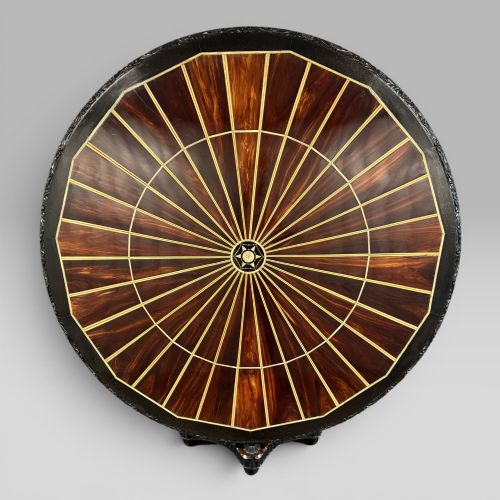
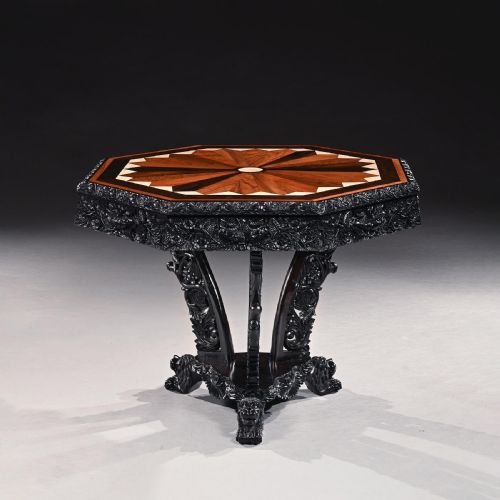
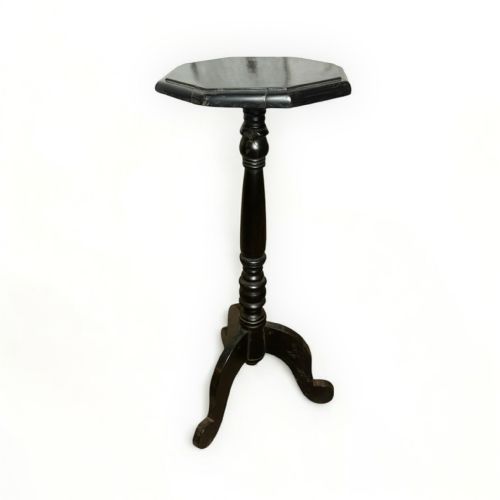
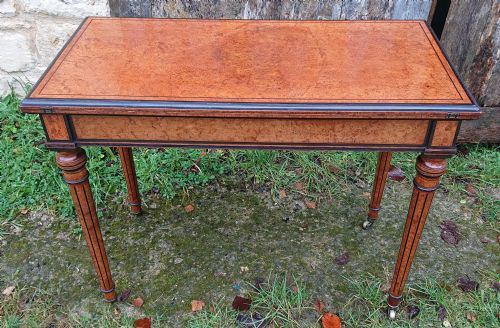
A victorian ebony table encompasses several distinct forms originating primarily from nineteenth-century British workshops, colonial trade routes, and continental makers. The pieces encountered most frequently on this page range from occasional and centre tables to writing desks and card tables constructed during the Victorian period.
Makers utilised dense natural ebony as well as ebonised fruitwoods, pairing the dark timber with contrasting secondary woods such as burr walnut, amboyna, and oak. Surviving examples reflect varied design movements, from Aesthetic Movement parcels and Arts and Crafts simplicity to elaborate Anglo-Indian colonial carving.
Form follows function across these tables, dividing small occasional pieces meant for drawing rooms from substantial centre tables designed to anchor a room. Buyers also encounter specialised folding card tables, writing tables fitted with drawers, and occasional pieces inlaid with specimen woods.
Distinctions in Quality
Quality rests upon the choice of timber and the precision of the joinery, distinguishing solid ebony construction and well-matched veneers from basic ebonised deal. Superior pieces display seamless inlay work, tight dovetails in drawer construction, and structural stability despite the tendency of dense tropical woods to react to climate shifts.
The refinement of the carving and the complexity of the secondary woods elevate certain examples above standard production pieces. Tables that retain their original brass hardware, unblemished surface polishes, and structurally sound pedestals represent the upper tier of surviving nineteenth-century work.
Certain occasional tables double as sewing accessories, hiding compartments for thread and needles beneath heavy dark lids.
Gregory and Co·Lamb of Manchester·Holtzapffel
The Victorian Ebony Table Glossary
- Ebonised
- Wood treated with stain, dye, or polish to imitate the deep black colour of true ebony. This technique was widely utilised by Victorian cabinetmakers to achieve a uniform dark finish on more accessible timbers.
- Macassar Ebony
- A distinct species of banded ebony characterised by warm brown and black streaks. It gained popularity during the Victorian era for high-end occasional and centre tables.
- Specimen Wood
- Furniture decorated with geometric arrangements of numerous different natural timbers. These woods display their native colours without artificial stains.
- Parquetry
- Geometric mosaic woodwork used for surfaces such as table tops. Artisans arranged small blocks of contrasting timbers to form repeating patterns.
- Centre Table
- A freestanding table finished on all sides intended to stand in the middle of a room rather than against a wall. These pieces typically feature elaborate pedestal bases or four robust legs.
Victorian Ebony Table: Frequently Asked Questions
How do I care for an ebony table?
Maintenance requires keeping the timber away from direct heat sources and sudden humidity shifts, which can cause dense tropical woods and underlying veneers to split. Regular dusting with a soft, dry cloth preserves the finish without requiring heavy polishes.
Applying occasional microcrystalline wax helps protect the polished surface from moisture and handling marks. Avoid silicone-based sprays that can penetrate older French polish finishes.
Where were these tables originally placed?
Centre tables stood in the middle of Victorian reception rooms to display decorative objects, lamps, or books. Occasional and side tables were positioned against walls or beside seating areas for everyday use.
Specialised forms like card tables remained folded against a wall until needed for evening entertainment. Writing tables and desks found their places in libraries, private studies, or ladies' boudoirs.
How do I tell Victorian from Edwardian pieces?
Victorian pieces generally display heavier proportions, darker finishes, and intricate ornamentation such as heavy carving, brass mounts, or dense inlay. Aesthetic Movement and mid-Victorian designs favoured substantial presence and rich contrasting woods.
Edwardian pieces often introduce lighter construction, more restrained proportions, and simpler decorative schemes influenced by Arts and Crafts ideals. Examining the secondary woods and construction methods helps clarify the period of manufacture.