

Victorian Earthenware Vase
These pieces of victorian earthenware vase range from domestic Staffordshire animal groups to continental majolica and ambitious studio pottery.
Victorian Earthenware Vase
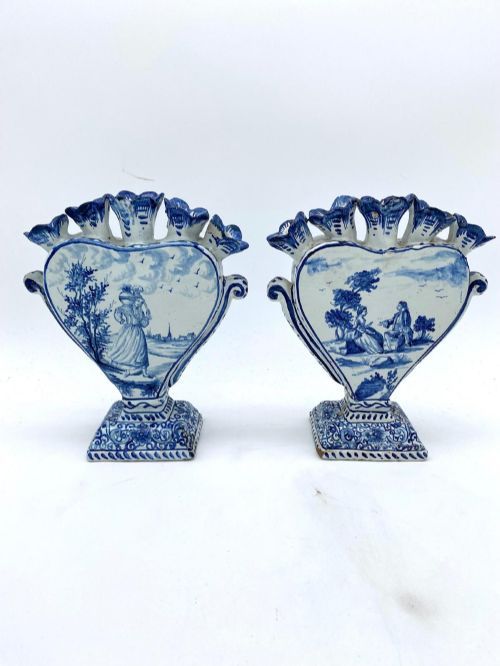
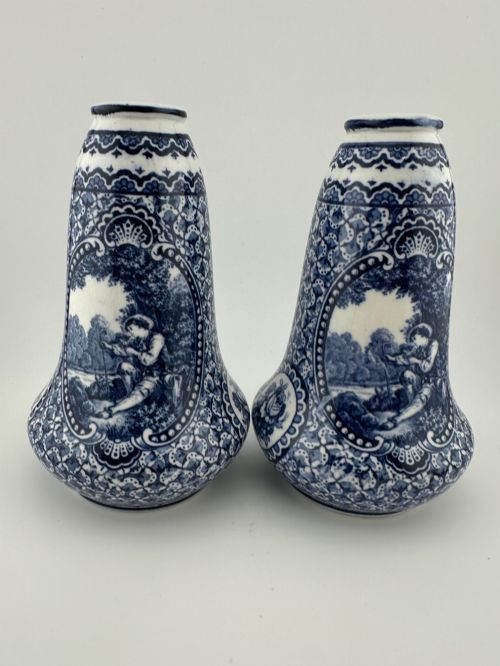
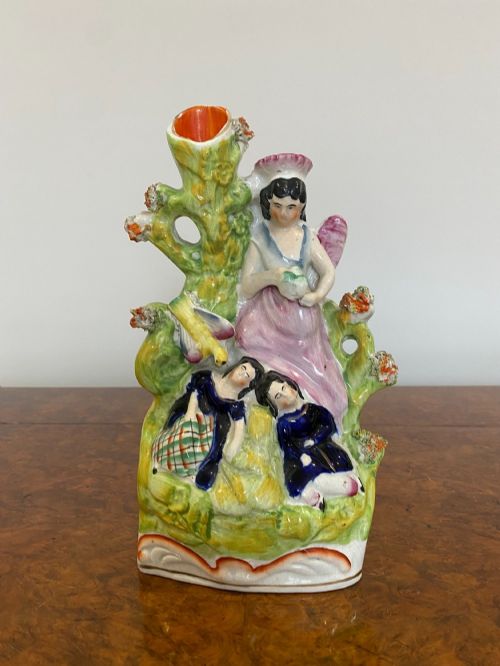
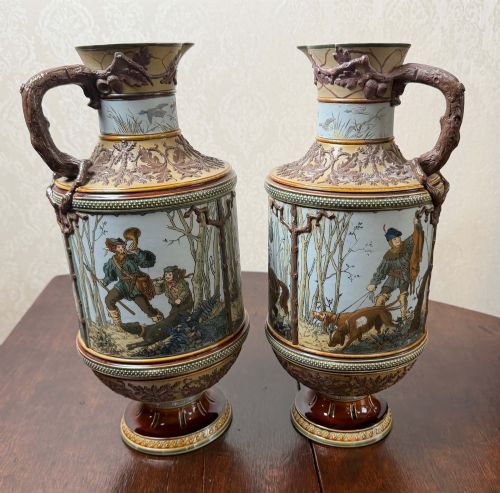
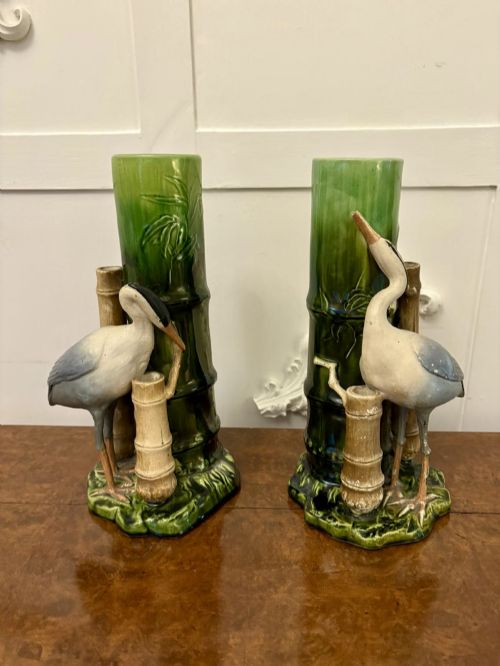
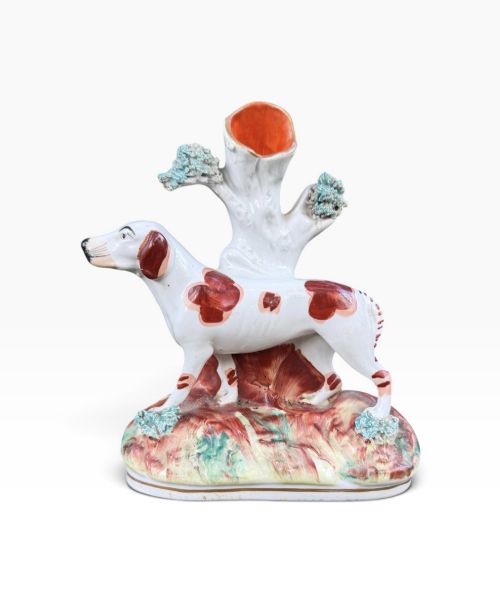
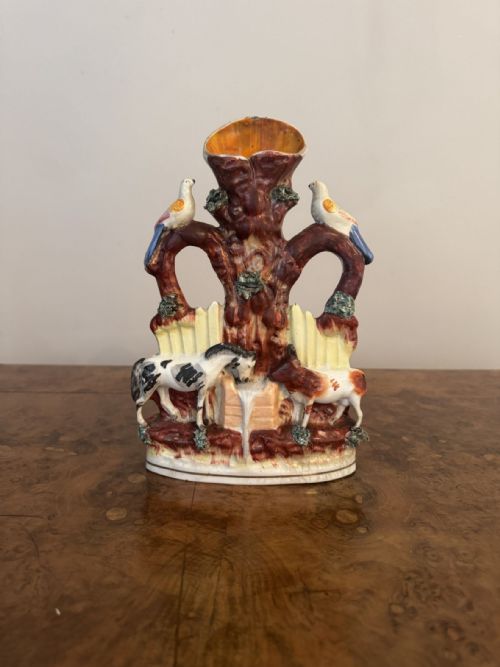
A victorian earthenware vase takes many forms across this selection, spanning simple spill vases modelled as sheep, cows, lions, and deer, alongside larger cabinet vessels and ewers. Buyers frequently encounter nineteenth-century Staffordshire pottery figures combined with spill holders, designed to hold small stems on mantelpieces.
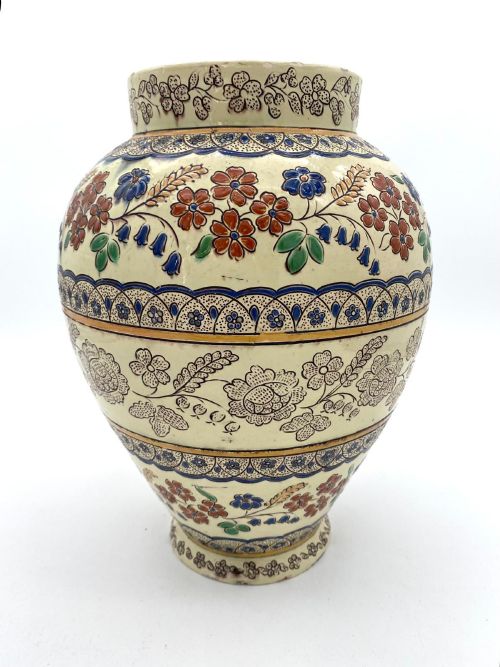
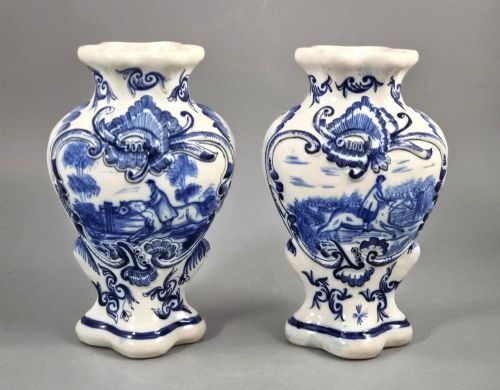
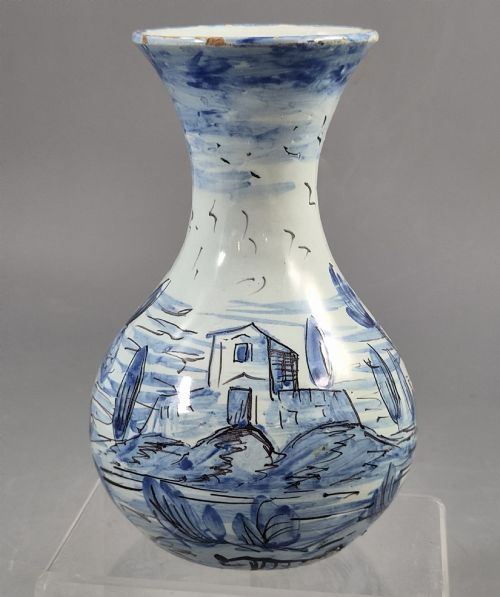
The material reaches beyond standard earthenware into glazed ceramic, faience, and majolica from English, French, Italian, and Japanese makers. Production dates cluster heavily in the latter half of the nineteenth century, particularly the eighteen-eighties and eighteen-nineties, encompassing Arts and Crafts and Renaissance Revival aesthetics.
How they were made
Potters shaped these bodies from earthenware and faience, applying lead glazes, enamels, and occasionally gold leaf to enrich the surface. Many English Staffordshire pieces rely on hand-painted details over moulded clay bases, while continental majolica and Italian pieces utilise rich coloured glazes over tin-glazed earthenware.
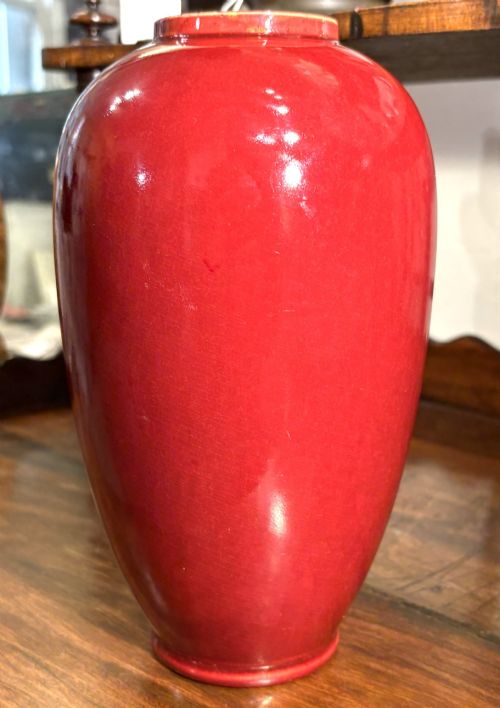
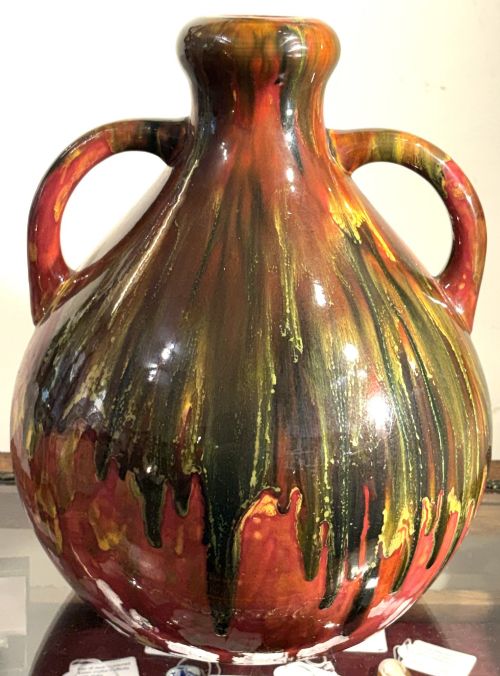
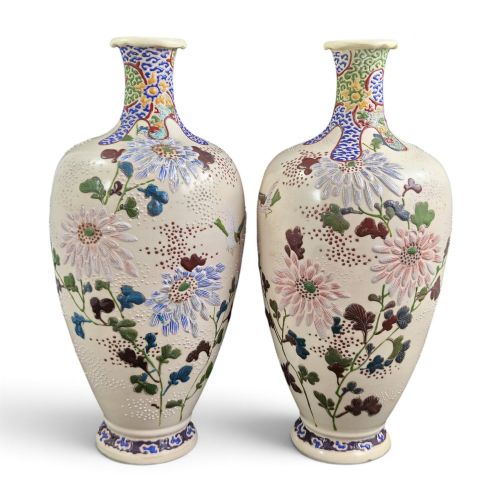
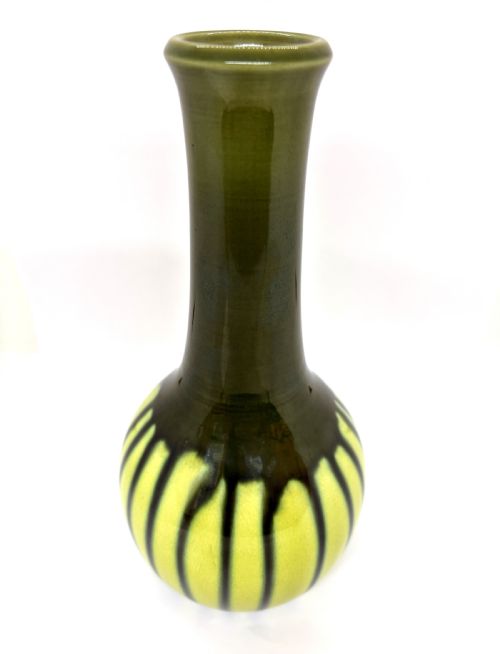
Studio potteries such as Burmantofts, Doulton Lambeth, and Sir Edmund Elton employed specialised ceramic techniques, carving and glazing their earthenware to achieve textured floral and abstract patterns. Japanese Satsuma and Meiji period pieces demonstrate intricate moriage enamel work applied directly to the ceramic ground.
Victorian Earthenware Vase Retail Price Guide 2026
Typical asking prices for victorian earthenware vase among the pieces listed under this phrase on Sellingantiques today, from the lower quarter to the upper quarter. They describe what is for sale here now, not the wider market.
The listings span Victorian earthenwares, including English Staffordshire animal spill vases, Japanese Satsuma wares, and French faience.
What varies in quality
With majolica and studio pottery, the depth and consistency of the glaze dictate the visual weight of the vessel. Superior pieces display complex multi-fired enamels, rich cobalt blues, and crisp relief moulding rather than simple dipped monochrome surfaces.
Burmantofts Pottery·Thomas Parr factory·Cantagalli·Fourmaintraux-Courquin·Doulton Lambeth·Lauder Pottery Barnstaple·Mettlach Pottery·Sir Edmund Harry Elton·Kinkozan·Minton
The Victorian Earthenware Vase Glossary
- Spill vase
- A small hollow vessel designed to hold taper spills used for lighting fires and candles. These are frequently modelled as animals or figures.
- Majolica
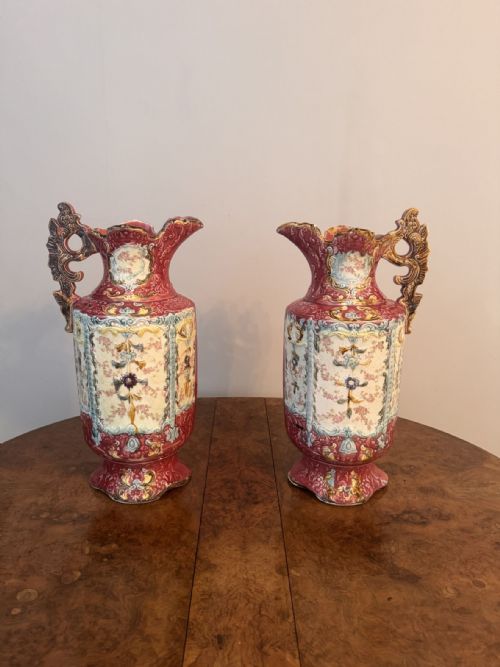
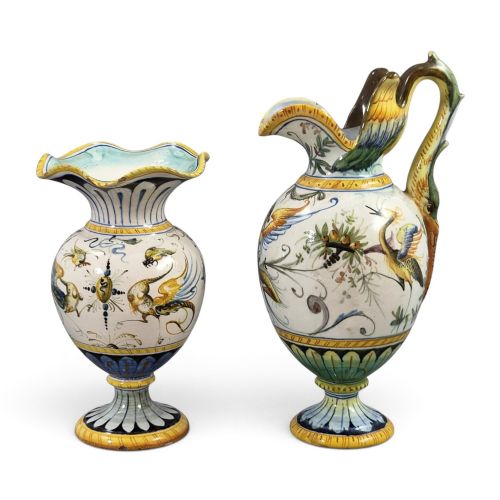
- A type of earthenware coated with a tin glaze and painted with metallic oxide colours, highly popular for Victorian decorative urns and ewers.
- Faience
- European tin-glazed earthenware, often encompassing decorative continental vases and cabinet pieces from the nineteenth century.
- Moriage
- A Japanese ceramic technique using piped clay trails to create raised decorative patterns beneath the glaze and enamel work.
- Flatback
- A Staffordshire figure or vase moulded with a flat, unpainted reverse intended to sit flush against a wall or mantelpiece.
Victorian Earthenware Vase: Frequently Asked Questions
What is a spill vase?
A spill vase is a small ceramic holder designed to keep thin rolled paper spills near a fireplace for lighting candles or pipes.
In Victorian homes, these were often modelled as charming animals or figures to serve as decorative mantelpiece ornaments when not in use.
How do I date these ceramics?
Dating relies on stylistic clues, registered design marks, and known factory active periods spanning the nineteenth century.
Most pieces carry aesthetic influences such as Renaissance Revival or Arts and Crafts that firmly anchor them in the Victorian era.
Are these vases waterproof?
Many nineteenth-century earthenware and majolica vessels feature porous bodies beneath their glazes, making them better suited for dry floral displays.
Some studio pottery and glazed earthenware can hold water safely, but inspection of the interior glaze helps determine practical use.
What is majolica?
Majolica is a colourful lead-glazed earthenware produced by applying opaque tin glazes and vibrant metal-oxide pigments.
Victorian makers utilised this technique to create heavily moulded ewers, urns, and decorative cabinet pieces with rich surface textures.