


Victorian Earthenware Spaniels
Victorian earthenware spaniels are ceramic mantelpiece ornaments that bring traditional English character to a room.
Victorian Earthenware Spaniels
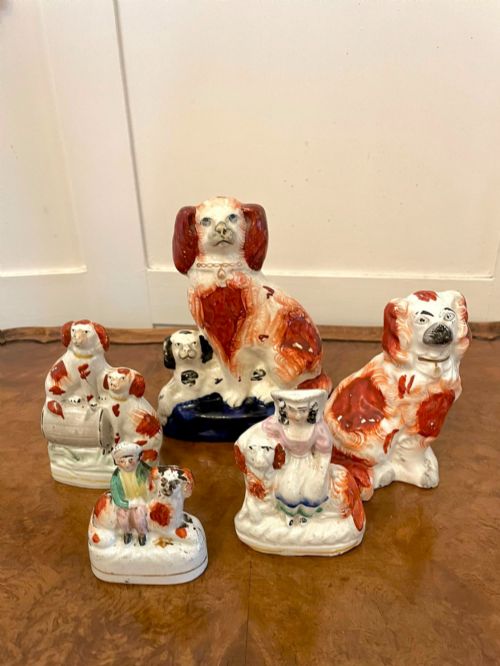
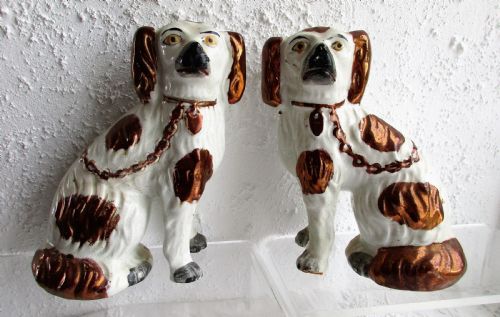
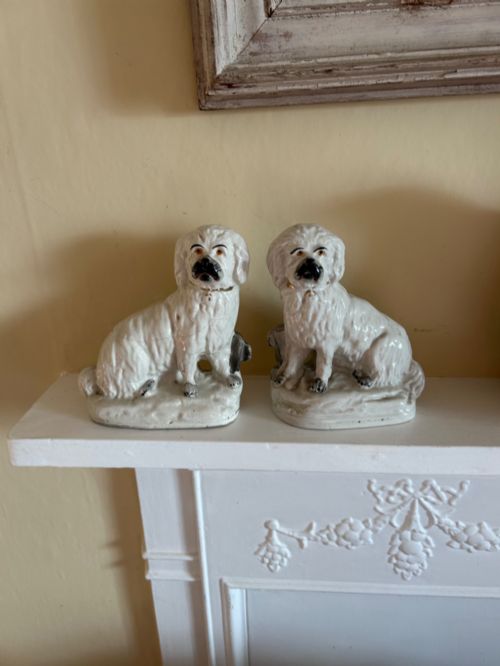
When searching for victorian earthenware spaniels, a buyer encounters ceramic figures made primarily in pairs during the nineteenth century, including the Victorian era and the Regency period. These decorative objects take various forms beyond standard mantel dogs, such as money boxes, jugs, toby jugs, quill holders, and spill vases.
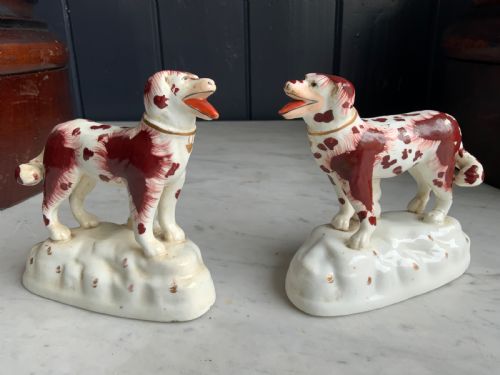
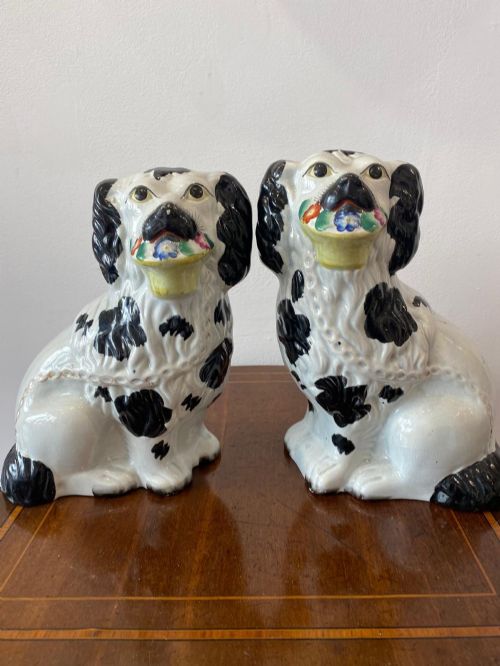
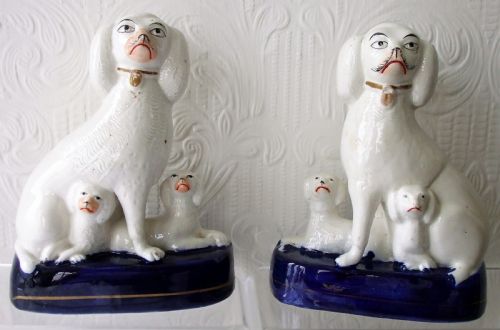
The most common version on this page is the seated spaniel pair, often finished in white and gilt, red and white, or black and white colourways. Variations also include poodles with pups, Maltese terriers, and dogs accompanied by puppies or incorporated into clock groups.
Materials and production methods
Makers shaped the clay into canine subjects, sometimes adding surface textures such as encrusting on cushions or separate elements for quill holders and spill vases before firing and glazing the ceramic.
Object forms on this site range from standard decorative figurines and money boxes to jugs, clock groups, and quill holders.
Distinctions in quality
Quality rests in the crispness of the moulding and the precision of the hand-painted enamel work upon the earthenware surface. Stronger examples display clear facial expressions and carefully applied gilding rather than rushed or blurred brushwork.
The presence of secondary forms, such as pups, cushions, or functional elements like spill vases and money boxes, demonstrates greater ambition in the ceramic manufacture.
Beswick
The Victorian Earthenware Spaniels Glossary
- Earthenware
- A porous pottery body fired at relatively low temperatures, requiring a glaze to achieve impermeability. It serves as the primary material for nineteenth-century mantel figures.
- Spill vase
- A hollow cylindrical container attached to a figure, designed to hold taper spills for lighting fires or pipes. These combine utility with decorative canine sculpture.
- Comforter spaniel
- A colloquial term for the seated Staffordshire dogs traditionally placed on mantelpieces to guard the hearth. They frequently appear in mirrored pairs facing inwards.
Victorian Earthenware Spaniels: Frequently Asked Questions
How do I display a pair?
Place the spaniels facing inwards toward each other, traditionally on either end of a mantelpiece or sideboard.
This symmetrical arrangement follows the historical manner in which nineteenth-century households decorated their hearths.
Are they all hollow?
Most earthenware spaniels are cast as hollow figures to allow for even firing in the kiln.
Some specific forms, such as money boxes and spill vases, include deliberate openings for their functional purposes.
What colours do they come in?
The listings show variations including plain white with gilt highlights, red and white patches, and black and white markings.
Enamel paints and gold leaf provided the finish on top of the ceramic glaze.
Did they make other animals?
Poodles with pups and Maltese terriers appear alongside the dominant spaniel figures in nineteenth-century pottery.
These alternative breeds share the same earthenware materials and mantelpiece function.