



Victorian Earthenware Equestrian Figure
These Victorian earthenware equestrian figure pieces bring bold nineteenth-century presence to a room, depicting royalty, jockeys and historical riders in glazed pottery.
Victorian Earthenware Equestrian Figure
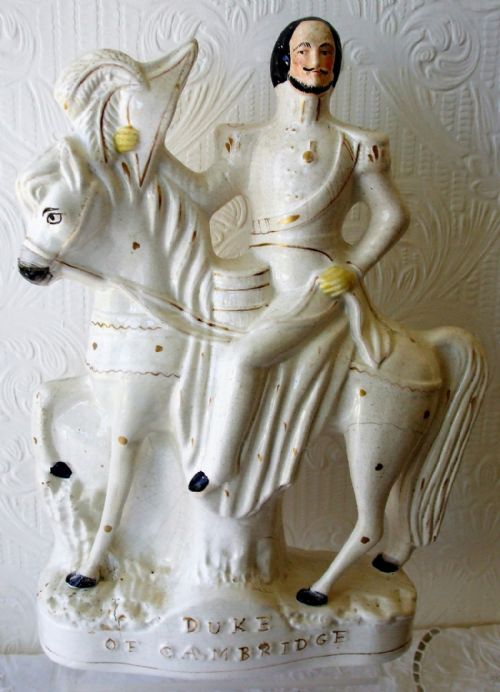
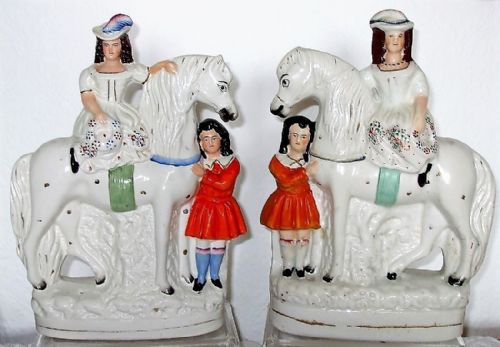
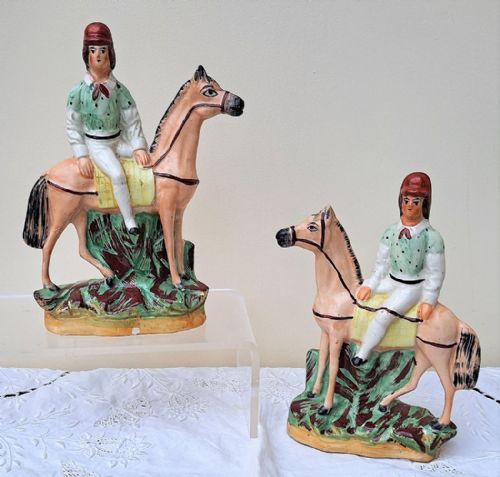
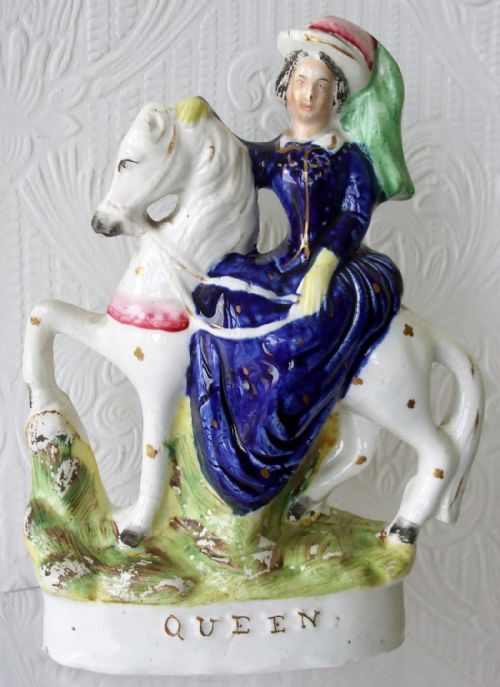
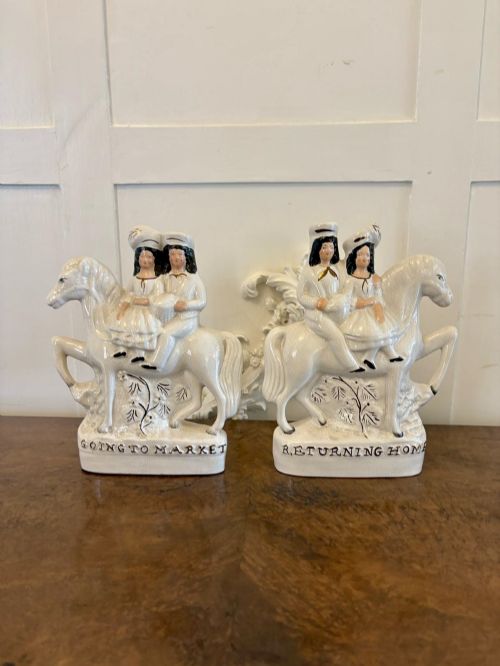
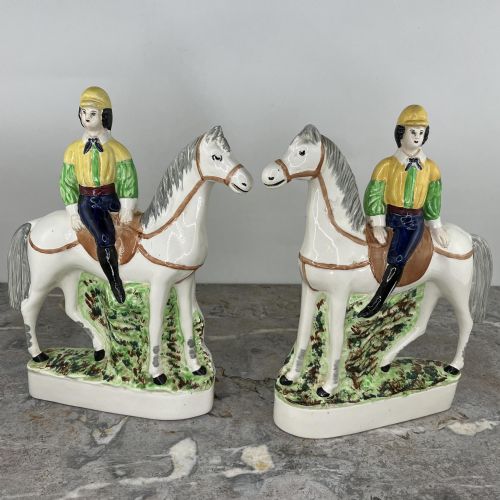
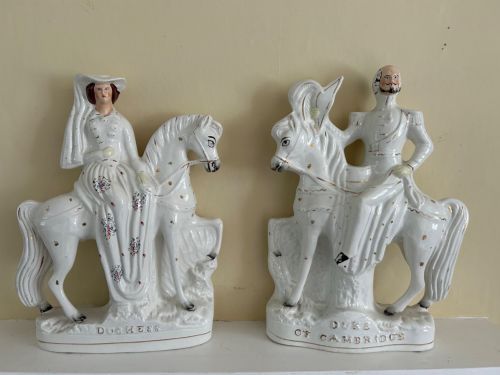
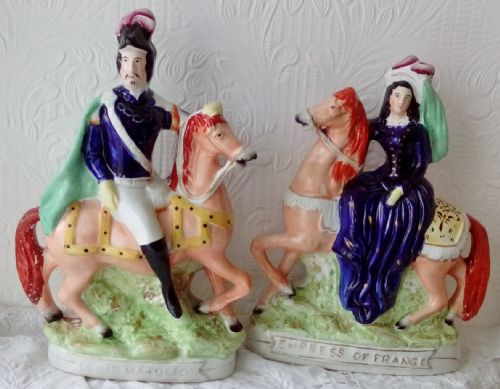
A victorian earthenware equestrian figure typically captures riders on horseback, ranging from notable figures such as the Duke and Duchess of Cambridge, Queen Victoria, and Louis Napoleon to mounted jockeys, highwaymen, and Scottish highlanders. These earthenware creations often take the form of flatback figures designed to sit against a mantelpiece or shelf rather than in the round.
The dominant style on this page is Victorian Staffordshire pottery alongside primitive folk art, with pieces dating from the nineteenth century into later mid-century reinterpretations. Subjects span royal portrait figures, children with horses, and specific characters like Joan of Arc or leopard hunters, showing the broad narrative scope potteries embraced.
Most examples appear either as individual decorative figurines or matched pairs, providing a symmetrical display for interior spaces. The forms rely on press-moulded earthenware bodies finished with colourful enamel paints and glazes to bring out the details of rider attire and horse harness.
Materials and production methods
Potters shaped these figures using earthenware clay, frequently utilising press-moulds to form the bulk of the horse and rider before hand-finishing surface details. This technique allowed regional workshops to produce consistent shapes efficiently while leaving room for individual artistic touches.
Once formed and fired, the pieces received lead glazes and vibrant enamel paints, sometimes accented with gilt highlights. These surface coatings gave the pottery its characteristic glossy sheen and bright palette, though firing temperatures and pigment quality varied across different potteries.
Victorian Earthenware Equestrian Figure Retail Price Guide 2026
Typical asking prices for victorian earthenware equestrian figure among the pieces listed under this phrase on Sellingantiques today, from the lower quarter to the upper quarter. They describe what is for sale here now, not the wider market.
Among the stately royals and noble chargers, a cheeky leopard hunter and highwayman Tom King keep the horses company.
Assessing quality in earthenware figures
The depth and richness of the enamel colours and the preservation of any original gilt highlights distinguish superior works from standard production pieces. Additionally, the stability and cleanliness of the flatback base indicate how carefully the pottery was finished before its initial firing.
Sampson Smith
The Victorian Earthenware Equestrian Figure Glossary
- Earthenware
- Porous pottery fired at relatively low temperatures, forming the primary ceramic body for these nineteenth-century figures. It requires a glaze to become impermeable to liquids.
- Flatback
- A style of figure moulded with a finished front and sides while leaving the rear flat and unadorned. This design allowed the pottery to sit flush against a wall or mantelpiece.
- Enamel
- Opaque glass-based paint applied over the fired glaze to add colour to the riders and horses. Subsequent low-temperature firings fixed these pigments permanently to the surface.
- Lead glaze
- A glossy coating containing lead oxide applied to earthenware before firing to seal the porous clay. It gives the figures their characteristic reflective shine.
- Staffordshire pottery
- Ceramic wares produced in the various potteries of the Staffordshire region in England. This area dominated the manufacture of decorative nineteenth-century figures.
Victorian Earthenware Equestrian Figure: Frequently Asked Questions
What subjects do these figures show?
These pieces portray a wide array of mounted subjects, including reigning monarchs, political figures, jockeys, highwaymen, and literary or historical characters like Joan of Arc.
Potters also modelled everyday scenes, such as children with horses or musicians on horseback, reflecting popular Victorian interests.
Where were these ceramic figures displayed?
Makers designed flatback equestrian figures specifically to stand on mantelpieces, ledgers, and shelves in nineteenth-century homes. Their flat rears meant they sat securely against vertical surfaces in domestic parlours.
Pairs were frequently produced to create symmetrical arrangements on either side of a fireplace clock or ornament.
How do I care for antique earthenware?
Keep these glazed ceramic figures out of direct sunlight to prevent the enamel colours and painted details from fading over time.
Dust them gently with a dry, soft brush, avoiding chemical cleaners or excess moisture that could damage the porous earthenware body or the painted surface.
How can I tell older pieces apart?
Nineteenth-century examples display the distinct moulding styles, heavy earthenware bodies, and hand-painted enamel palettes characteristic of the period's regional potteries. Later twentieth-century pieces often show different clay densities, crisper modern pigments, or specific maker attributions.
Examining the underside, the weight of the ceramic, and the application of the glaze helps distinguish original Victorian work from later revivals.