



Victorian Duchesse Table
When you search for a Victorian duchesse table, you are looking at a grand dressing and writing piece designed for the nineteenth-century bedroom.
Victorian Duchesse Table
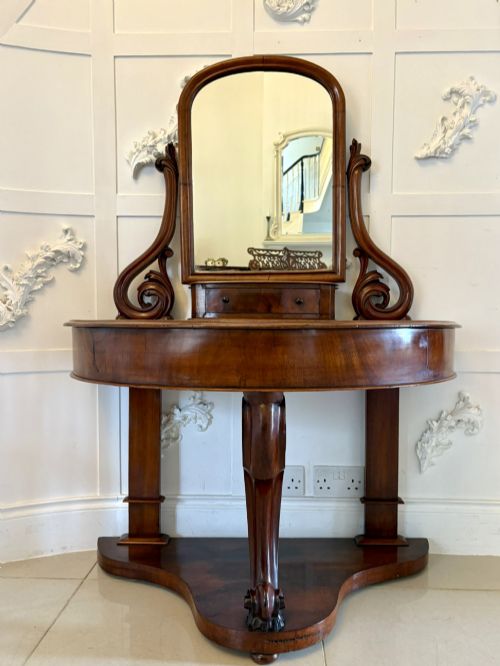
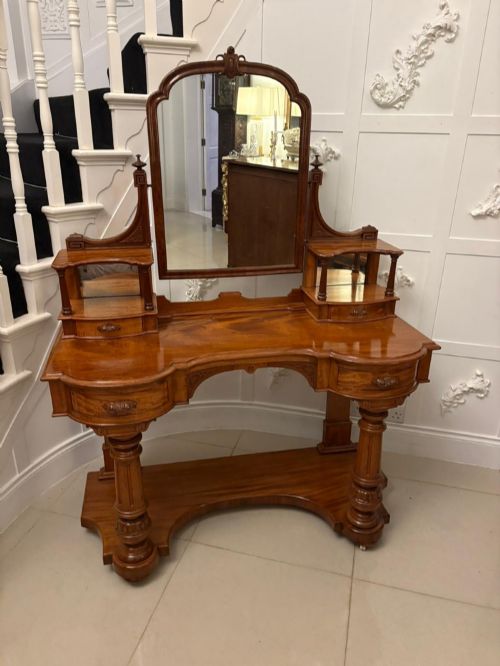
A Victorian duchesse table combines a large central mirror, often swinging, with a distinctive setup of smaller drawers and a tiered surface. The form sits firmly in the Victorian period, with examples spanning from the mid-nineteenth century through to 1900.
Most pieces encountered on this page emerge in mahogany or walnut, though variations appear in satinbirch and birds eye maple. They frequently function as dressing tables, console tables, or writing desks.
Makers adapted French Rococo Revival and Empire Revival influences, creating curved silhouettes and ornate upper tiers. Collectors often find matching washstands or related side tables associated with these suites.
How they were made
Cabinetmakers utilised dense timber foundations of mahogany and walnut, frequently selecting flame mahogany veneers for rich grain patterns. Carved wooden details define the structural supports and mirror frames.
Makers applied specialised touches such as satinwood inlay, glass inserts, and brass hardware to accentuate the curved surfaces. Marble tops appear on specific washstand and console variants, adding weight and a cool tactile surface.
Victorian Duchesse Table Retail Price Guide 2026
Typical asking prices for victorian duchesse table among the pieces listed under this phrase on Sellingantiques today, from the lower quarter to the upper quarter. They describe what is for sale here now, not the wider market.
Listings feature pieces from the Victorian era, spanning the mid-nineteenth century through to 1900, constructed in mahogany, walnut, and marble.
What varies in quality
The choice of timber grain dictates much of the visual weight, with matched flame veneers and burr walnut sitting at the upper end of the scale. Subtlety and depth in the hand-carved wooden elements separate standard production from superior workshop output.
The integration of secondary details, such as inlaid satinwood patterns or fitted candle sconces, marks the distinction between simpler pieces and elaborately finished examples.
Edwards and Roberts
The Victorian Duchesse Table Glossary
- Duchesse dressing table
- A large nineteenth-century dressing table featuring an attached mirror and tiered display surfaces. It typically includes small drawers for cosmetics and personal items.
- Console table
- A side table designed to stand against a wall, frequently appearing in matching sets or related hallway configurations. These often share the curved legs and decorative apron of the main dressing piece.
- Flame mahogany
- A highly figured timber cut where the branches join the main trunk, creating a flamy pattern. Cabinetmakers used this veneer to draw the eye across large flat surfaces.
- Burr walnut
- Timber taken from the warted growths on walnut trees, showing swirling, intricate grain patterns. It signals a decorative priority in Victorian bedroom furniture.
- Satinwood inlay
- Contrasting light-coloured wood inserted into the primary timber surface to form decorative motifs. This technique highlights the geometric or floral borders on tabletops and drawer fronts.
Victorian Duchesse Table: Frequently Asked Questions
What is a duchesse table used for?
A duchesse table served as a dedicated dressing and writing station in the Victorian bedroom. The setup provided a large mirror for grooming alongside surface space for letters and personal items.
Smaller drawers kept personal effects close to hand while the wider tabletop supported daily toilet routines.
How do I date a Victorian table?
Dating relies on observing the combination of timber choices, joinery methods, and revival styles present on the piece. Mid-nineteenth century examples often favour solid mahogany and simpler architectural lines.
Later Victorian pieces from the 1880s and 1890s frequently incorporate heavier carvings, burr walnut veneers, or French-influenced curves.
Where did the style originate?
The design draws heavily upon French Rococo Revival and Empire Revival aesthetic movements popular across Europe. British cabinetmakers adapted these continental curves and tiered mirror frames for Victorian homes.
This fusion resulted in grand bedroom furniture that prioritized decorative presence alongside practical function.
How do I care for polished wood?
Maintenance involves keeping the timber away from direct sunlight and maintaining stable room humidity. Regular dusting with a soft, dry cloth preserves the polished shellac or wax finish.
Avoiding moisture on marble and timber surfaces prevents permanent staining and protects the underlying veneer.