




Victorian Drinking Cabinet
When you search for a Victorian drinking cabinet, you are looking for period hospitality furniture designed to hold decanters, glasses, and spirits securely.
Victorian Drinking Cabinet
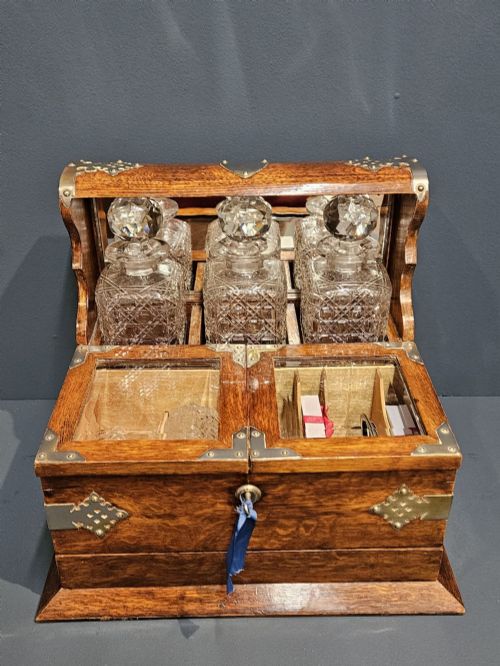
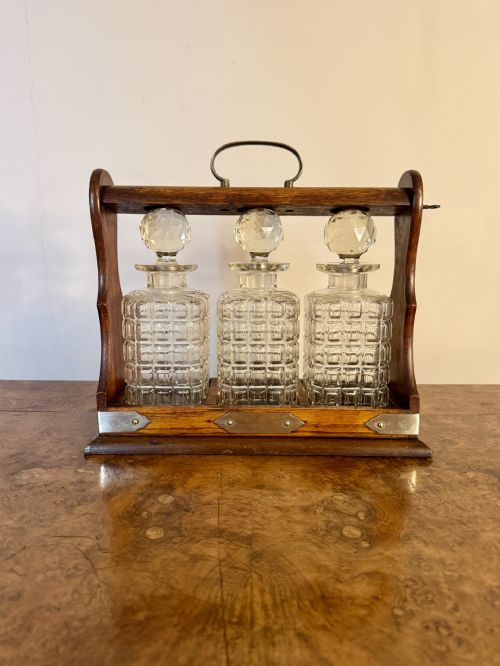
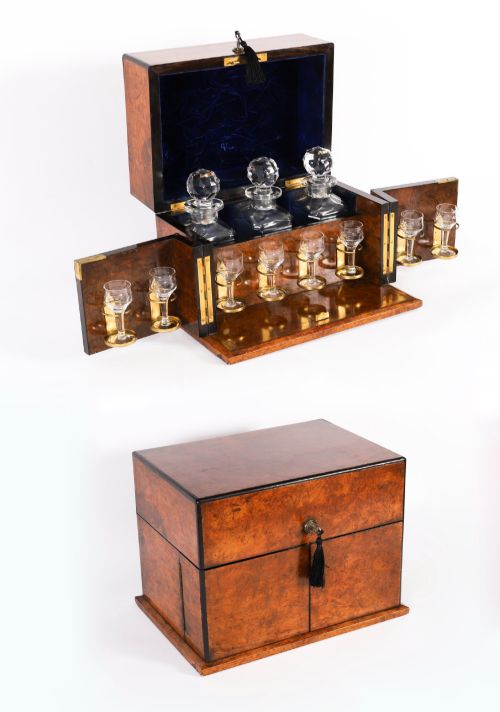
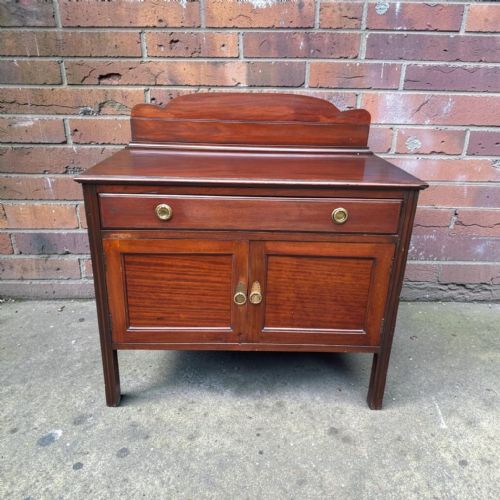
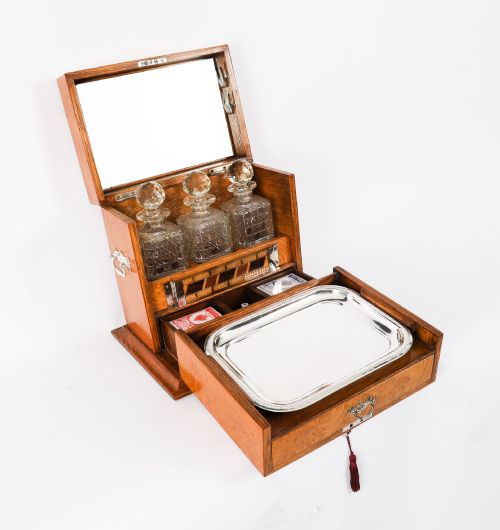
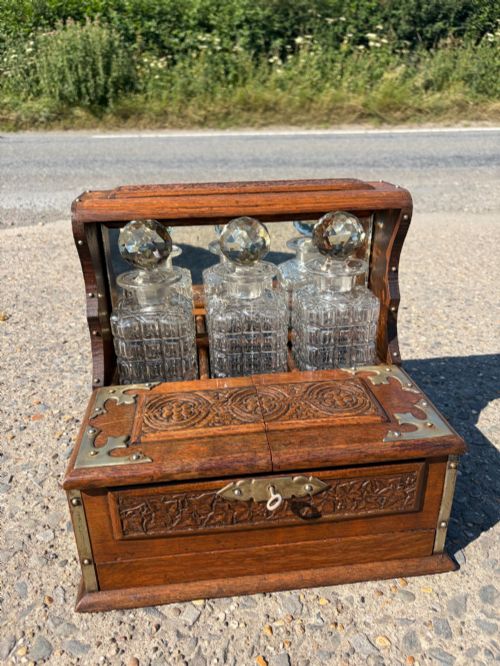
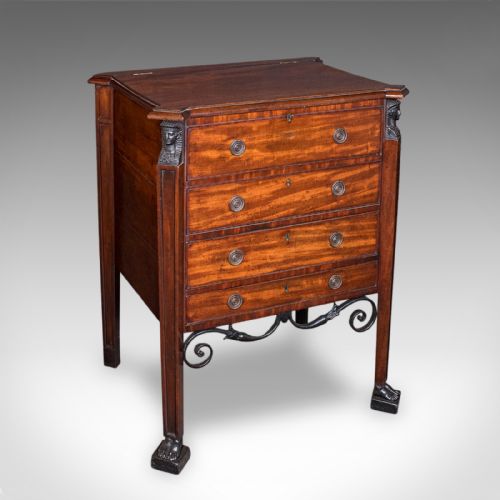
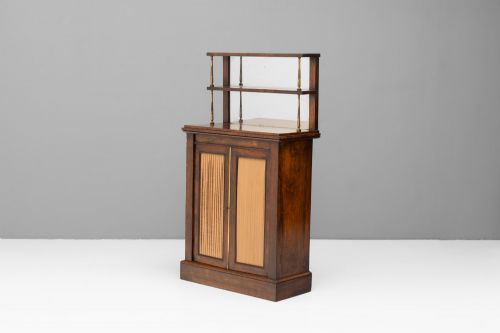
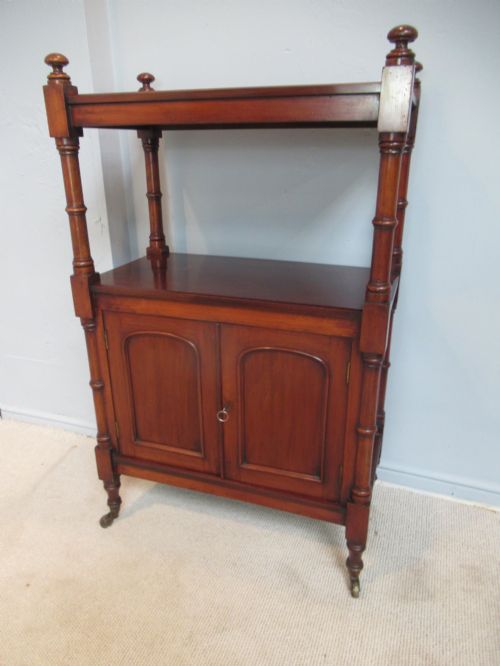
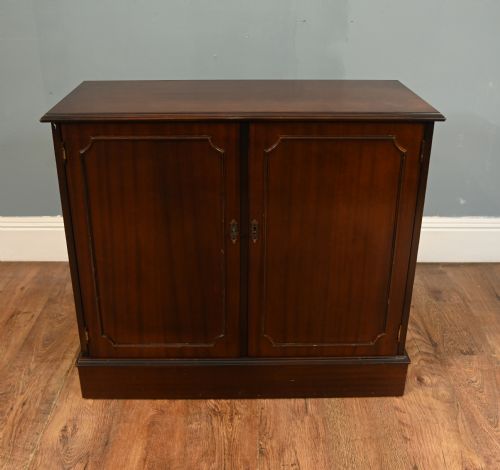
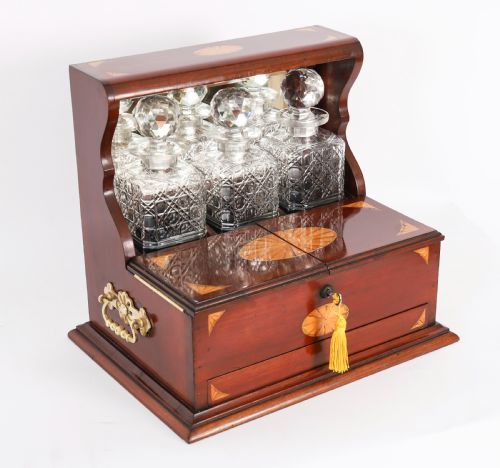
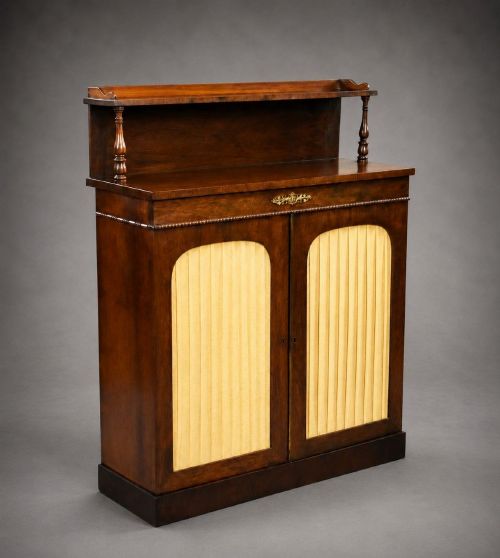
A Victorian drinking cabinet spans several distinct forms designed for entertaining, including tantalus sets, cellarettes, side cabinets, and dry bar compendiums. You are most likely to encounter oak and mahogany tantalus units alongside figured rosewood chiffoniers and sideboards across this selection.
The materials and styles reflect nineteenth-century interior tastes, ranging from plain campaign styles in mahogany to heavily carved oak pieces influenced by Gothic and Flemish Renaissance revivals. These cabinets served formal dining rooms, libraries, and private drawing rooms as functional display and storage furniture.
Origins vary from English workshops to regional variations, incorporating brass hardware, cut glass decanters, and mirrored backs to enhance the presentation of wines and spirits.
How they were made
Cabinetmakers utilised dense hardwoods such as mahogany, oak, and rosewood, often applying burr walnut veneers or satinwood inlay to primary display surfaces. Structural stability relied on traditional joinery, while brass handles, hinges, and lockable mechanisms provided both reinforcement and security.
Interiors frequently integrated cut crystal decanters paired with mirrored backs and glass shelving to reflect light through stored glassware. Carving techniques varied from plain campaign brass bindings to elaborate lion masks and marquetry stringing.
Victorian Drinking Cabinet Retail Price Guide 2026
Typical asking prices for victorian drinking cabinet among the pieces listed under this phrase on Sellingantiques today, from the lower quarter to the upper quarter. They describe what is for sale here now, not the wider market.
The selection includes specialised regional forms such as teak veranda gin cabinets originating from Ceylon alongside domestic English sideboards.
What varies in quality
Quality depends on the selection of timber figures, such as pollard oak, burr walnut, or figured mahogany, and the precision of the cabinetmaker's joinery. Superior examples integrate fully fitted game compendiums, original cut crystal decanters, and functioning brass locking mechanisms for tantalus frames.
The depth of hand-carving and the sophistication of inlay work also separate standard production items from exhibition-grade pieces designed by prominent cabinet makers.
Holland & Sons·Maples & Co
The Victorian Drinking Cabinet Glossary
- Tantalus
- A locking beverage stand that secures decanters within a wooden frame, preventing access without a key while displaying the contents. The locking bar typically holds two or three cut crystal bottles.
- Cellarette
- A dedicated storage chest or cabinet for wine bottles, often lead-lined or compartmentalised. These containers were traditionally kept beneath a sideboard or freestanding in the dining room.
- Chiffonier
- A compact sideboard featuring enclosed shelving beneath a raised upper tier or back panel. These pieces served dual purposes for storing tableware and drinks.
- Marquetry
- Decorative woodwork where thin slices of tinted wood, shell, or ivory are assembled into geometric or pictorial patterns. This technique decorates the surfaces of high-status cabinets.
- Compendium
- A multi-functional box or cabinet housing games alongside drinking vessels. These portable dry bars combined social pastimes within a single fitted enclosure.
Victorian Drinking Cabinet: Frequently Asked Questions
What is a tantalus cabinet?
A tantalus cabinet is a locking wooden frame that holds decanters of spirits securely in place.
The mechanism prevents guests or staff from pouring drinks without the unlocking key while keeping the crystal bottles visible.
How were cellarettes used?
Cellarettes served as portable or static containers for chilling and storing wine bottles near the dining table.
Many examples feature divided interiors to hold bottles safely during formal Victorian dinners.
Are decanters usually original?
Many cabinets retain their original cut crystal decanters, particularly fitted tantalus sets.
Replacements do occur due to accidental breakage over time, so matching crystal styles remains an important detail.
Where were these cabinets placed?
These pieces sat primarily in dining rooms, drawing rooms, or private studies for evening hospitality.
Compact chiffoniers and side cabinets accommodated glassware storage alongside serving surfaces.