


Victorian Doulton Lambeth Vase
A victorian doulton lambeth vase brings salt-glazed texture and hand-painted artistry into a room, offering tactile depth that mass-produced ceramics lack.
Victorian Doulton Lambeth Vase
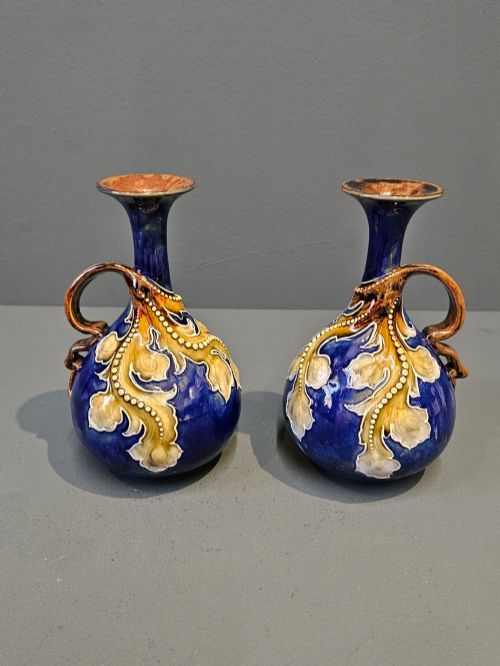
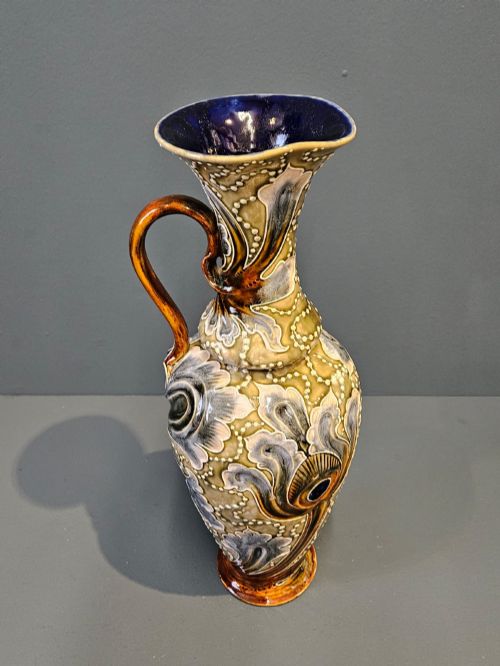
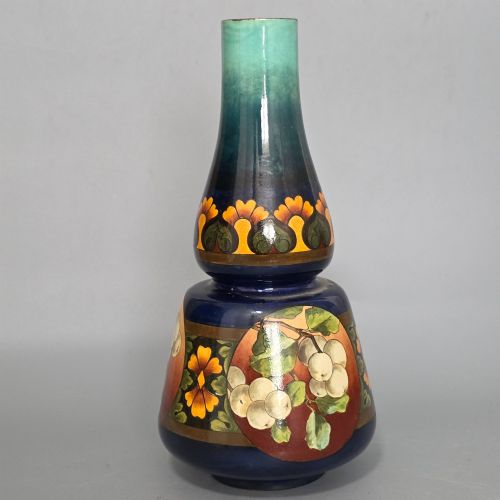
A victorian doulton lambeth vase is a piece of British pottery produced primarily during the nineteenth century, often defined by robust forms and intricate surface decoration. These vessels range from small cabinet pieces to large baluster shapes, showing the diverse output of the London workshops.
The selections encountered here span styles from the Aesthetic Movement and Arts and Crafts to Art Nouveau. Many examples bear the hallmarks of specific artists whose hand-painted foliage, pate-sur-pate work, or raised slip patterns set individual pieces apart.
Buyers frequently find pairs alongside singular statement ewers and jugs. The material presence remains consistent across these forms, combining heavy stoneware bodies with varied decorative glazes.
Materials and Techniques
Makers utilised dense stoneware and earthenware as the foundational body for these vessels. The clay was shaped on the potter's wheel or cast into moulds, creating sturdy forms ready to receive complex surface treatments.
Decorating techniques included Slaters Patent methods, where lace or fabrics were impressed directly into the damp clay to create textured backgrounds. Artists then applied coloured enamels, gilt, and salt glazes before firing the ceramic at high temperatures.
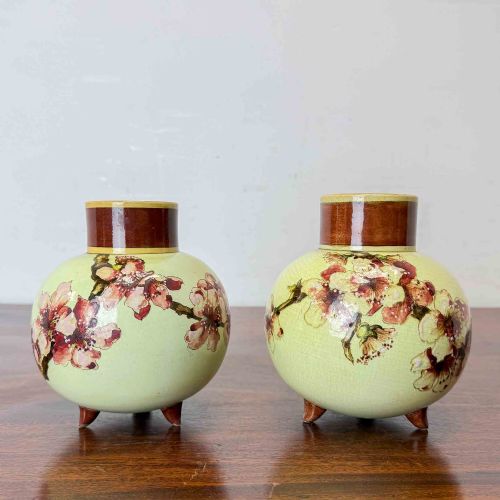
Specialised ranges like Faience and Carrara Ware introduced smooth white backgrounds and hand-painted floral motifs. These distinct approaches allowed individual artists to execute detailed botanical and figurative designs across the pottery body.
Listings feature stoneware and earthenware materials decorated within Arts and Crafts, Art Nouveau, and Aesthetic Movement styles.
Evaluating the Range
The distinction between ordinary production pieces and superior examples rests on the complexity of the hand decoration. Studio artists who executed signed, detailed floral panels or pate-sur-pate work elevated a standard vessel into an exceptional work of art.
Form and proportion also dictate the standing of a piece. Well-balanced baluster shapes, crisp incised detailing, and successful application of Slaters Patent texturing demonstrate superior workshop execution.
Alice Euphemia Thatcher·Eliza Simmance·Emma Shute·Emily Edwards·Emily Stormer·Florence Barlow
The Victorian Doulton Lambeth Vase Glossary
- Stoneware
- A heavy, vitrified ceramic fired at high temperatures until impervious to liquid. This durable material forms the structural base for most Lambeth productions.
- Faience
- Earthenware pottery decorated with opaque coloured glazes. It provided a smooth canvas for detailed floral painting.
- Slaters Patent
- A technique involving the impression of textiles or lace into damp clay. This created distinctive textured patterns across the body of the vase.
- Carrara Ware
- A ceramic body named after Italian marble, known for its smooth white matte finish. It frequently served as a ground for hand-painted garlands.
- Aesthetic Movement
- A late nineteenth-century design current emphasising visual beauty over narrative function. Pieces in this style focus on form, pattern, and refined colour harmonies.
Victorian Doulton Lambeth Vase: Frequently Asked Questions
How are these vases cleaned safely?
Dust gently with a soft, dry cloth to protect the historic glaze and enamel work from damage. Avoid liquid immersion, particularly on pieces with exposed earthenware or delicate gilt highlights.
Moisture can seep into unglazed areas or historic repairs over time. Keep these vessels in stable indoor environments away from direct sunlight and excessive humidity.
What defines the Aesthetic style?
The Aesthetic style prioritises visual and tactile beauty above narrative subject matter. Objects from this movement often feature stylised natural motifs, geometric borders, and harmonious colour palettes.
This design philosophy influenced how makers decorated stoneware surfaces with integrated patterns and Japanese-inspired floral motifs.
How do I spot artist signatures?
Artists frequently incised their initials or full names directly into the base of the pottery alongside factory stamps. Examining the underside under good light reveals these hand-drawn ciphers.
Matching an incised mark to a specific maker confirms the individual hand behind the painted foliage or slip decoration.
Where should I display my vase?
Position your vessel on a stable surface away from high-traffic zones where it might be accidentally knocked. Natural indirect light highlights the detailed salt-glaze textures and hand-painted surfaces.
Pairing single vessels with matching pairs creates a balanced mantelpiece or cabinet arrangement that reflects period display conventions.