



Victorian Doulton Jug
These Victorian Doulton jugs bring tangible nineteenth-century craftsmanship into your home, combining robust stoneware bodies with intricate artistic detailing.
Victorian Doulton Jug
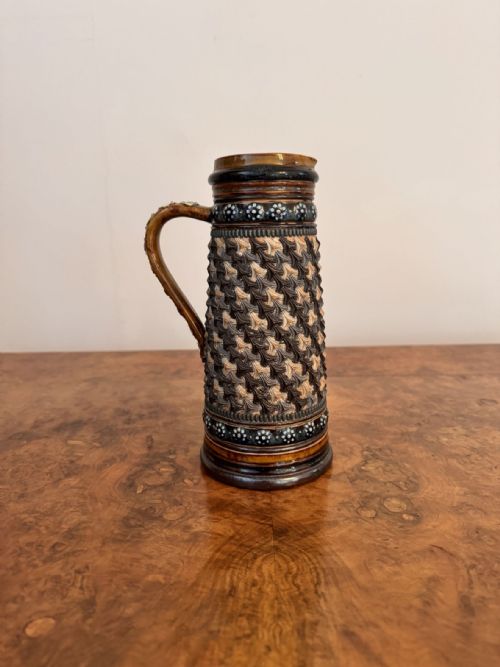
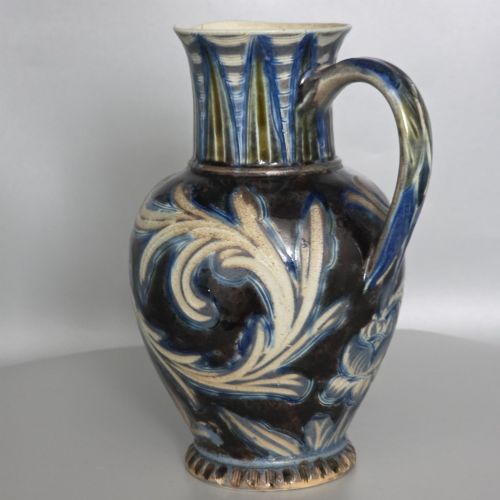
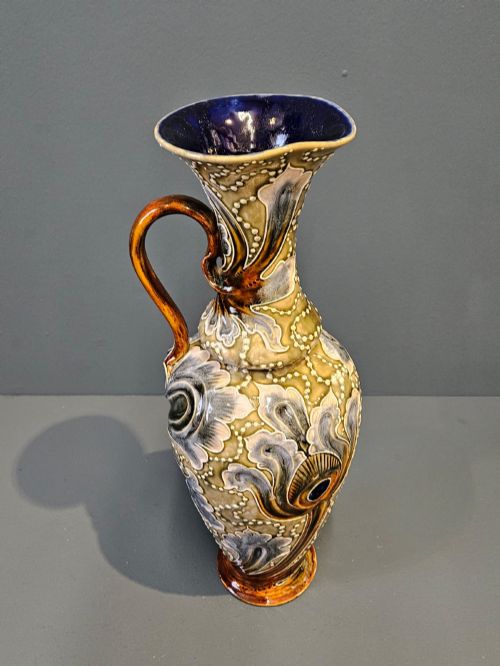
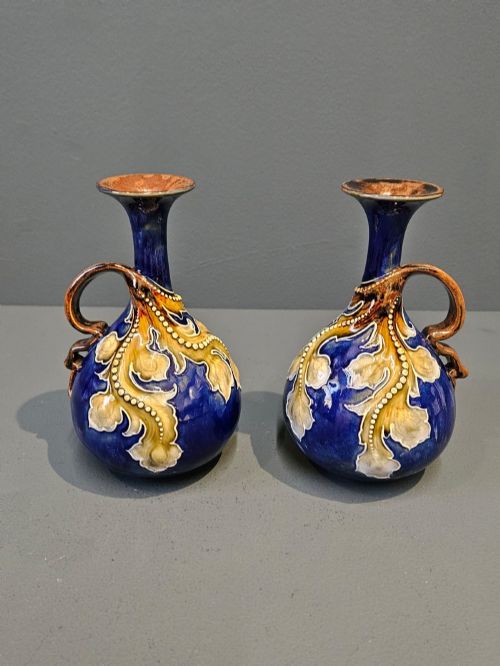
A Victorian Doulton jug represents the pinnacle of late nineteenth-century British ceramic production, emerging primarily from the famous Lambeth and Burslem potteries. When you search for a Victorian Doulton jug, you encounter robust stoneware vessels alongside finer earthenware pieces, often shaped as harvest jugs, water pitchers, or sporting containers. These pieces reflect the shift from industrial utility to prized parlour ornament, capturing the diverse aesthetic movements of the period.
The versions most commonly met on this page belong to the Doulton Lambeth tradition, frequently dated between the 1870s and the 1900s. You will find brown glazed salt glaze jugs, pieces adorned with silver rims, and vessels displaying distinctive Art Nouveau or Aesthetic style motifs. Alongside standard pouring jugs, the selection includes related forms such as ewers and whisky flasks, grounding each object in its utilitarian Victorian origins.
How They Were Made
Potters relied heavily on durable stoneware and earthenware bodies, frequently utilising salt glaze techniques where common salt thrown into the kiln during firing produced a characteristic pebbled texture. Many pieces incorporated rich brown glazes, hand-painted decoration, and incised patterns that required immense precision before the final firing.
Metalwork often complemented the ceramic body, with craftsmen mounting silver rims and collars onto the top of salt glaze harvest jugs. Specialised techniques such as Slater's patent application added textured lace patterns directly onto the clay surface, while individual decorators signed or stamped their work to denote completion.
Victorian Doulton Jug Retail Price Guide 2026
Typical asking prices for victorian doulton jug among the pieces listed under this phrase on Sellingantiques today, from the lower quarter to the upper quarter. They describe what is for sale here now, not the wider market.
Golfing enthusiasts can pour their dram from a brown glazed Kingsware flask.
What Varies in Quality
The standard of a Victorian Doulton jug rests upon the crispness of its incised decoration and the balance of its form. Pieces bearing named decorators show a superior level of artistic execution compared to standard factory output, elevating a utilitarian vessel into a distinct work of art.
Material application and secondary components also dictate the hierarchy. The inclusion of hallmarked silver rims or intricate hand-painted motifs separates ordinary production pieces from those created for exhibition or special commemoration.
Emma Shute·Walker and Hall
The Victorian Doulton Jug Glossary
- Salt glaze
- A vitreous coating formed by throwing common salt into the kiln at the height of temperature, creating a pitted orange-peel texture. This finish protects the porous stoneware body beneath.
- Stoneware
- A heavy, dense ceramic fired at high temperatures until semi-vitrified and impermeable to liquids. It forms the robust foundation for most Lambeth production.
- Earthenware
- A porous pottery body fired at lower temperatures than stoneware, requiring an applied glaze to hold liquids. It provides a smoother base for fine hand-painted decoration.
- Puzzle jug
- A vessel featuring a pierced neck and multiple spouts designed to confound the drinker, requiring liquid to be sucked through a hidden channel. These items showcase the playful side of Victorian ceramic innovation.
- Kingsware
- A dark brown glazed stoneware developed by Royal Doulton, often featuring moulded sporting or historical motifs picked out in lighter tones. It became particularly popular for whisky flasks and novelty containers.
Victorian Doulton Jug: Frequently Asked Questions
What is a Doulton Lambeth jug?
A Doulton Lambeth jug is a ceramic vessel produced at the Doulton London pottery during the late nineteenth century, known for durable stoneware and artistic incising.
These pieces typically showcase the decorative ideals of the Arts and Crafts or Aesthetic movements, setting them apart from ordinary household utensils.
Were these jugs used for water or display?
Many began as functional items for water, harvest ale, or whisky, but the finer decorative examples served primarily as parlour ornaments.
Their robust stoneware construction meant they could handle daily use, though high-art pieces were often kept safely on display.
Why do some jugs have silver rims?
Silver rims were added to strengthen the vulnerable top edge of stoneware jugs or to elevate the presentation of high-end harvest pieces.
Retailers and manufacturers often fitted these mounts to appeal to affluent Victorian buyers seeking refined table accessories.