



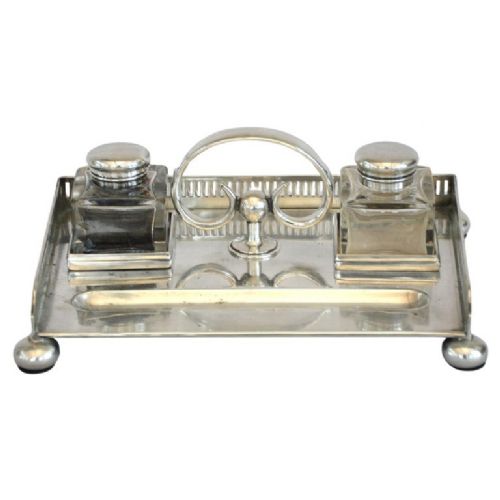
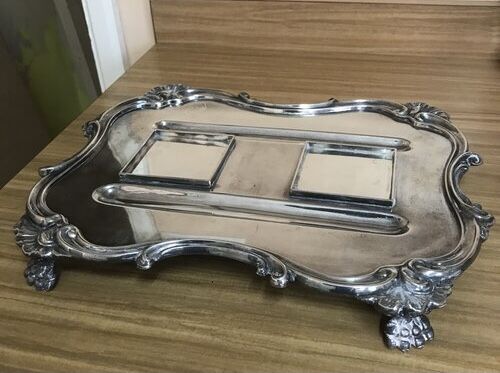


Victorian Double Inkwell Stand
These pieces of a victorian double inkwell stand bring a tangible weight of history and purpose to a desk.
Victorian Double Inkwell Stand
When you search for a victorian double inkwell stand, you examine desk accessories designed to hold two ink reservoirs alongside pens and other writing paraphernalia. These items served a practical function in nineteenth-century correspondence, acting as the central apparatus for daily letter writing.
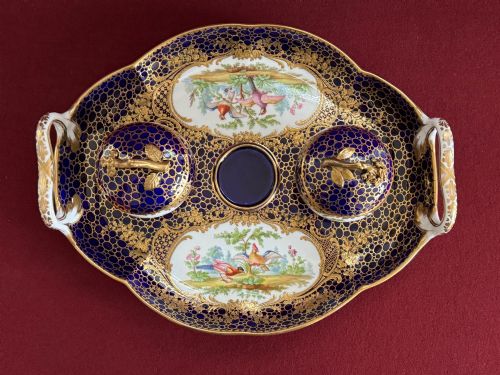
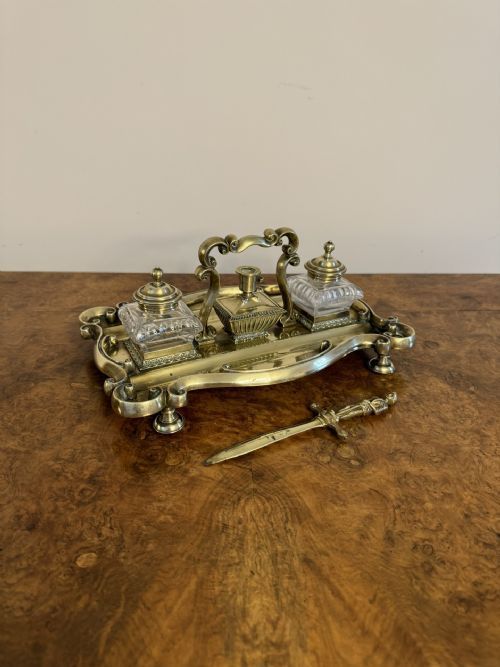
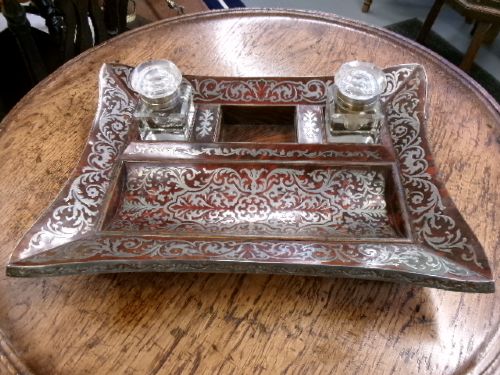
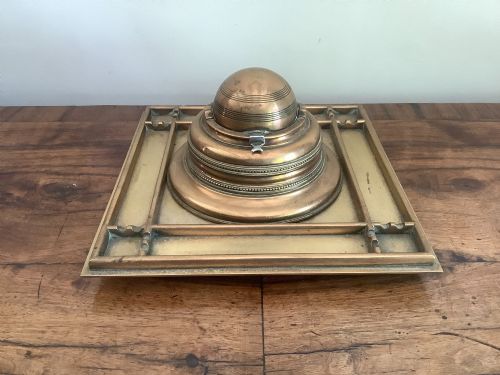
The versions you meet most frequently on this page belong to the Victorian period, often featuring brass, silver plate, or wood. Forms range from simple wooden trays to elaborate gilt bronze, ormolu, and inlaid boulle work examples equipped with matching inkwells.
Makers and designers of these desk sets utilised diverse regional styles, spanning English brasswork, French ormolu, Dutch delft faience, and carved Black Forest wood. Each piece reflects the material preferences and writing habits of its era.
How They Were Made
Makers constructed these stands using a foundation of timber such as walnut, mahogany, or ebony, frequently mounted with cast brass, ormolu, or silver plate. Wooden bodies often received intricate carving, inlay, or boulle work, pairing organic grain with polished metal mounts.
The glass inkwells themselves were produced through heavy moulding or cutting, creating robust vessels designed to withstand daily dipping of steel nibs. Metal components combined casting, chasing, and plating techniques to achieve decorative detail and structural durability.
Victorian Double Inkwell Stand Retail Price Guide 2026
Typical asking prices for victorian double inkwell stand among the pieces listed under this phrase on Sellingantiques today, from the lower quarter to the upper quarter. They describe what is for sale here now, not the wider market.
Desk accessories span periods from the Victorian era and the nineteenth century through to Edwardian designs and the early twentieth century.
What Varies in Quality
The distinction between standard and exceptional pieces rests in the ambition of the design and the execution of the materials. Heavier castings, finer metal chasing, and sophisticated timber inlays elevate a desk stand from a utilitarian accessory to an ornamental centrepiece.
Walker And Hall·Harrods·James Cartland & Sons·A. Marionnet·Martin Hall
The Victorian Double Inkwell Stand Glossary
- Boulle work
- A decorative technique involving marquetry made from tortoise-shell and brass, inlaid into cabinet furniture and desk accessories. This method originated in France and appeared on elaborate nineteenth-century pieces.
- Ormolu
- Gilded bronze used for decorative mounts on furniture and desk stands. The process involves applying a mercury and gold amalgam to cast bronze before heating.
- Faience
- Tin-glazed earthenware, seen in items such as Dutch delft desktop stands. The glaze provides a white opaque surface suitable for blue painted decoration.
- Chamberstick
- A small portable candlestick featuring a pan to catch dripping wax, occasionally incorporated into larger desk stands. These items provided local illumination for sealing letters.
- Silver plate
- A layer of silver fused to a base metal such as copper or Britannia metal. This technique offered the appearance of solid silver at a lower production cost.
Victorian Double Inkwell Stand: Frequently Asked Questions
What is a double inkstand?
A double inkstand is a desk accessory featuring two separate inkwells mounted on a shared tray or base. This arrangement allowed a writer to keep two types or colours of ink ready for use.
Such stands typically included built-in rests for quill pens or steel nib pens. They formed an essential part of a nineteenth-century writing desk setup.
How were inkstands used?
These stands sat permanently upon a writing table or bureau to facilitate daily correspondence and record keeping. The two wells held ink for writing, while accompanying trays caught stray drops.
Users dipped their pens directly into the glass reservoirs before writing letters or signing documents. The central placement kept writing materials organised in one convenient location.
How do I date a brass inkstand?
Dating relies on stylistic clues, manufacturing techniques, and material combinations recorded across the Victorian and Edwardian eras. Heavy cast brass and ornate ornamentation often point toward the mid-to-late nineteenth century.
Maker marks stamped onto metal components also help narrow down the period of production. Comparing the design motifs to known periods like French Napoleon III or Art Nouveau provides further context.
How do I care for wooden desk stands?
Wooden desk stands require gentle dusting with a dry cloth to protect polished surfaces and inlaid metal mounts. Avoid placing them in direct sunlight or near heat sources to prevent wood cracking.
Glass inkwells should be removed and washed carefully when cleaning the surrounding stand. Regular light maintenance preserves both the timber finish and the metal mounts.