








Victorian Dog Inkwell
These victorian dog inkwell pieces are characterful Victorian and Edwardian desk accessories that combine domestic utility with sculptural animal portraiture.
Victorian Dog Inkwell
When you search for a victorian dog inkwell, you encounter a specialised desk accessory designed to hold writing ink while depicting canine subjects in sculptural form. These pieces bridge the gap between functional writing equipment and decorative domestic art.
The selections available here showcase distinct regional traditions, most notably English pottery and Swiss woodcarving. You will frequently find Staffordshire pairs featuring breeds such as Dalmatians and greyhounds alongside deeply carved wooden Black Forest figures.
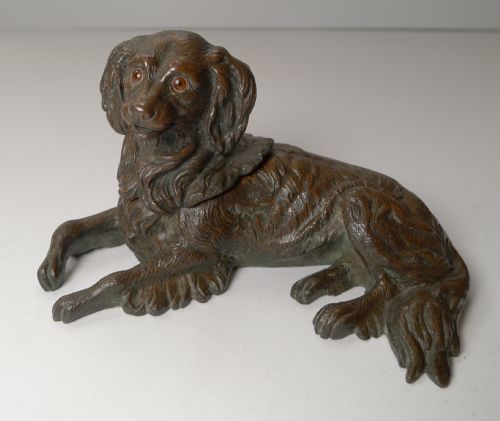
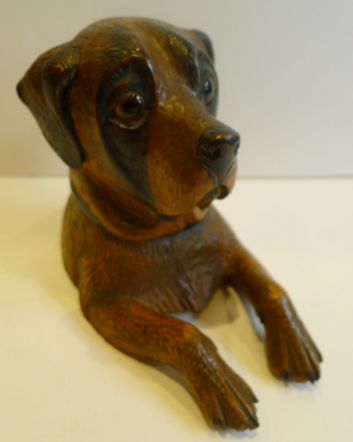
Forms range from single domestic hounds to elaborate desk tidies and triple inkwells. The canine subjects span familiar breeds like the King Charles Spaniel, English Bulldog, Bullmastiff, St. Bernard, and terrier.
How they were made
Ceramic examples rely on moulded earthenware finished with glaze, capturing the spotted coats of Dalmatians and the smooth lines of greyhounds through traditional Staffordshire pottery techniques.
Wooden pieces utilise linden wood shaped through detailed hand carving, characteristic of the Black Forest style. Carvers integrate glass eyes and hinged lids to transform realistic animal sculptures into practical desk boxes.
Metal versions incorporate cast bronze, sometimes enhanced with gold leaf and gilt finishes, alongside brass components used in kennel and figure assemblies.
Victorian Dog Inkwell Retail Price Guide 2026
Typical asking prices for victorian dog inkwell among the pieces listed under this phrase on Sellingantiques today, from the lower quarter to the upper quarter. They describe what is for sale here now, not the wider market.
Materials represented across the selection include glass, linden wood, earthenware, glaze, bronze, gold leaf, and gilt.
What varies in quality
The standard of carving or modelling dictates the success of each piece, distinguishing lively, anatomically convincing animal forms from stiff or generic representations. Fine examples capture the distinct musculature and expression of specific breeds.
Material preservation and the survival of original components, such as glass eyes and fitted glass ink inserts, influence the integrity of the object. The crispness of detail in carved linden wood or the depth of glaze on earthenware remains paramount.
Maison F. Mack
The Victorian Dog Inkwell Glossary
- Black Forest
- A style of woodcarving originating in Switzerland and the surrounding mountain regions during the nineteenth century. It is defined by deeply carved naturalistic animals and foliage.
- Staffordshire
- A term for pottery produced in the English county of Staffordshire, known for figure groups and animals made during the Victorian era.
- Desk Tidy
- A multifunctional desk accessory that combines an inkwell with compartments for pens, stamps, or other writing paraphernalia.
- Novelty Inkwell
- An inkwell shaped to resemble an animal, building, or everyday object rather than a traditional vessel.
- Gilt
- A thin layer of gold or gold-like material applied to the surface of bronze or other metals for decoration.
Victorian Dog Inkwell: Frequently Asked Questions
What materials make up a victorian dog inkwell?
These pieces appear primarily in carved linden wood, glazed earthenware, and cast bronze. Glass inserts and glass eyes frequently accompany the wooden and metal examples.
Makers selected materials based on regional traditions, such as Swiss woodcarvers working with timber and English potteries utilising clay and glaze.
How do I identify Black Forest dog inkwells?
Black Forest pieces are characterised by dark carved wood, most commonly linden, depicting realistic animals with inset glass eyes. They often incorporate naturalistic elements like tree stumps or rocks.
These items frequently function as desk tidies or boxes rather than simple ceramic figures.
Were these inkwells used every day?
Victorian households utilised them as functional writing equipment on desks and library tables. The hinged lids protected the ink from dust and drying out between uses.
Their dual role as decorative sculpture meant they remained on display even when correspondence was finished.
What breeds appear most often?
Staffordshire pottery examples frequently depict Dalmatians and greyhounds, often in pairs. Wooden Black Forest pieces showcase terriers, St. Bernards, bulldogs, and bullmastiffs.
King Charles Spaniels also appear in cast bronze desk accessories.