

Victorian Dog Clip
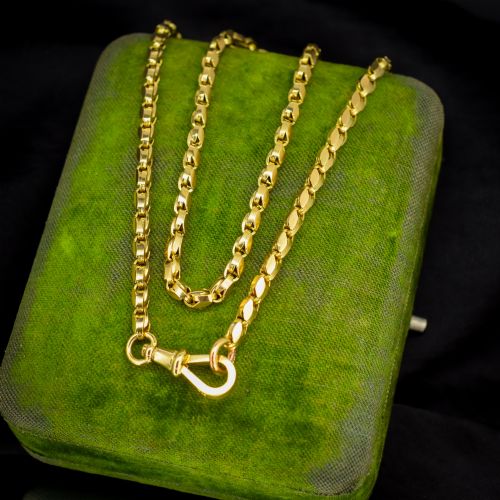
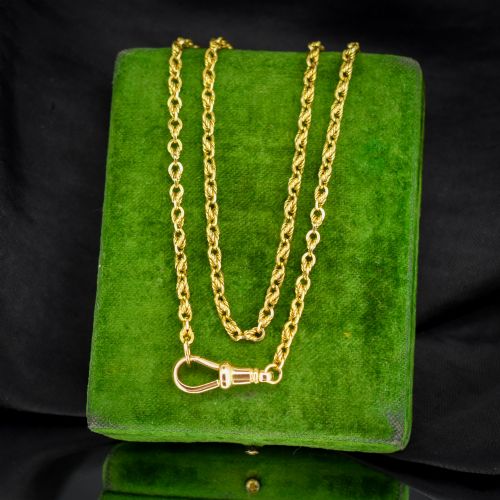
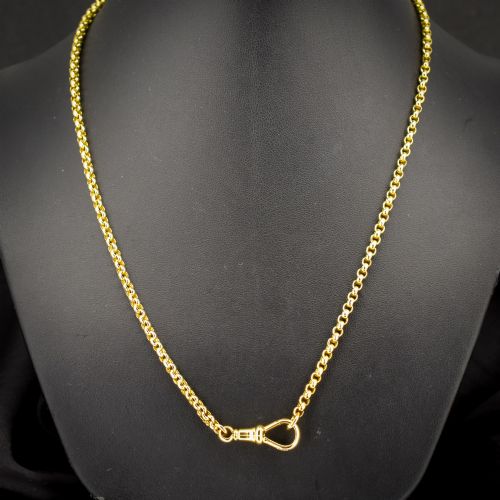
A victorian dog clip is a functional spring-loaded swivel clasp designed for pocket watch chains and adapted today as a secure fastening for necklaces and bracelets.
Victorian Dog Clip
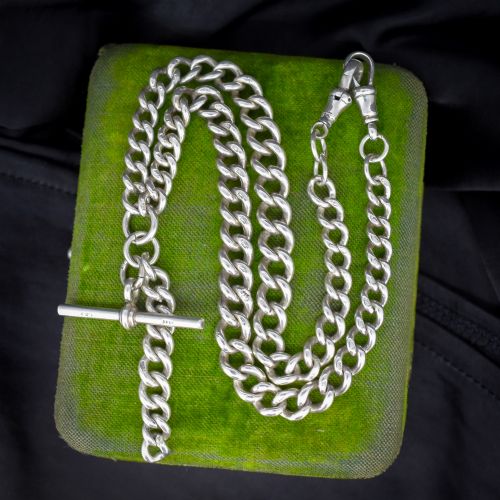
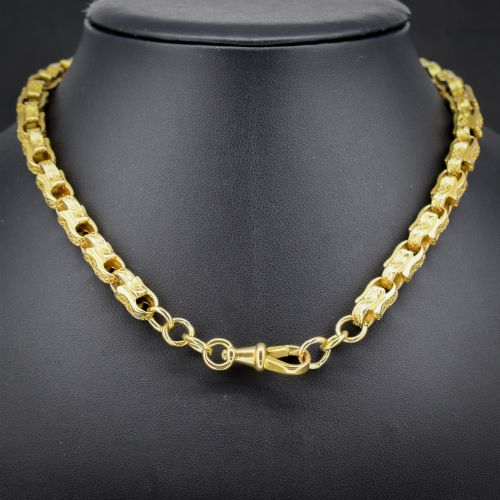
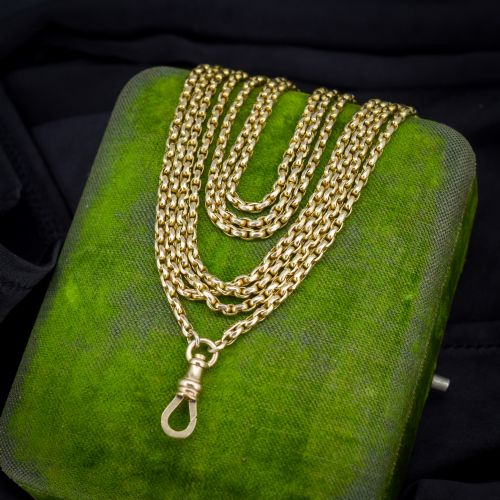
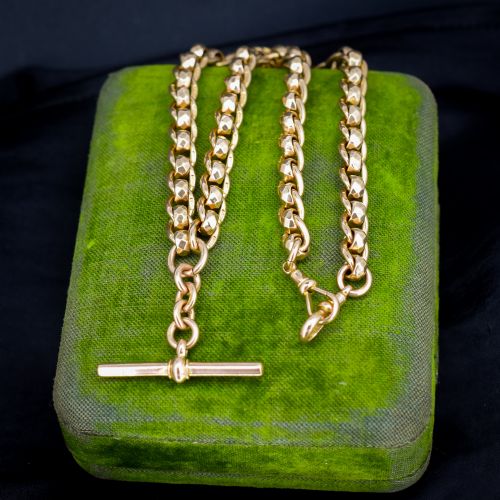
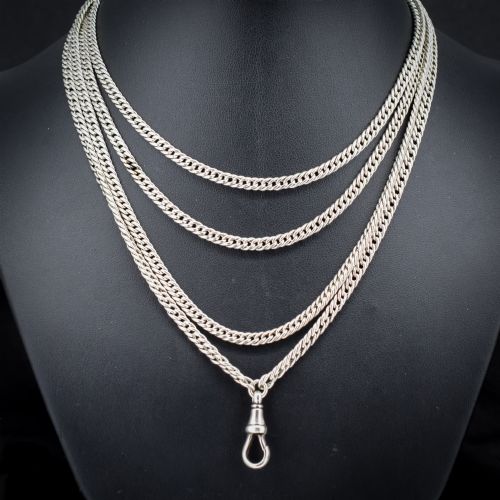
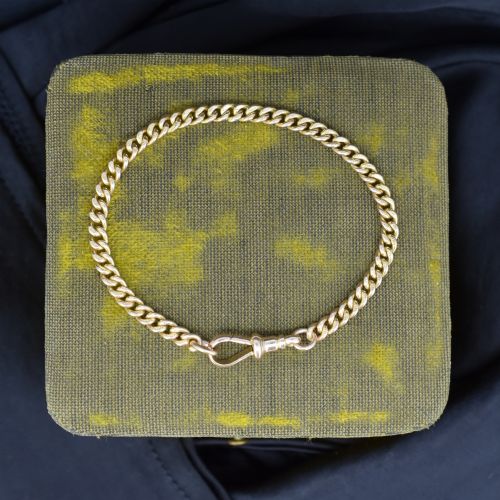
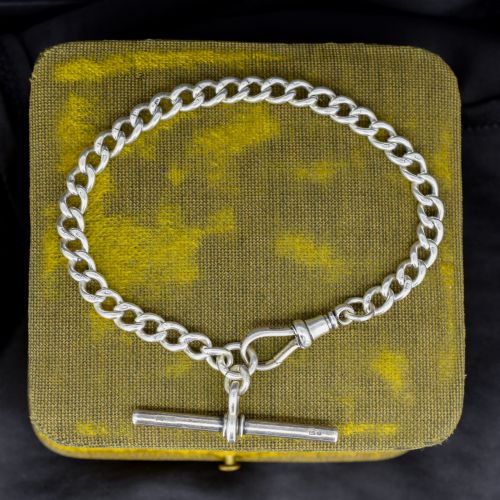
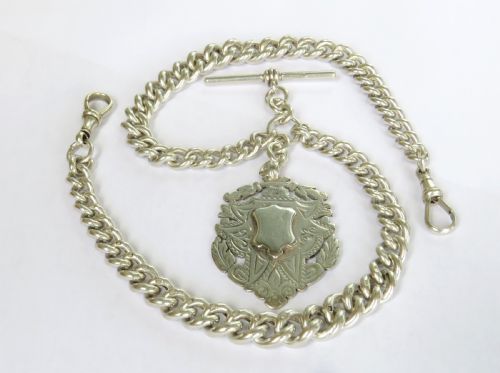
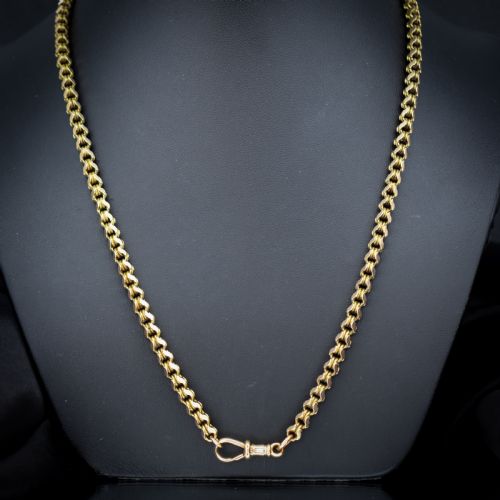
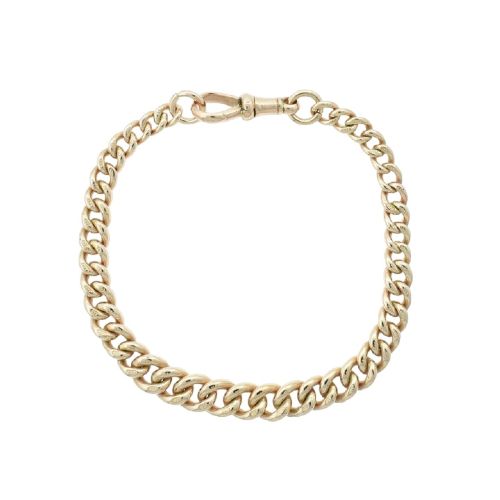
A victorian dog clip functions as a secure fastening device that terminates watch chains, alberts, and longuards from the nineteenth and early twentieth centuries. These clasps appear most frequently attached to curb, fancy link, and trombone chains fashioned into necklaces and bracelets.
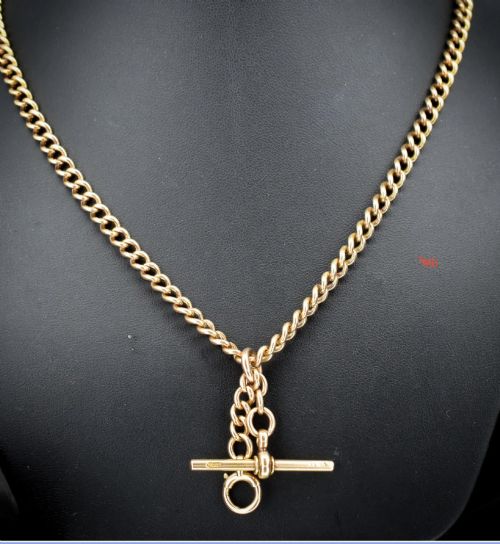
The primary forms on this page include heavy albert chains meant for waistcoats, long muff chains worn draped around the neck, and shorter lengths adapted for modern wrist and neck wear. Many pieces retain their original T-bars and secondary clasps.
Originating largely within the Victorian and Edwardian periods, these items reflect an era when practical utility and ornamentation intersected in daily attire. Collectors encounter them mounted in diverse gold carat weights and sterling silver configurations.
Quality factors in clasps and chains
Quality rests significantly on the strength and responsiveness of the spring mechanism within the dog clip, as weak tension diminishes daily utility. Examples featuring crisp stamping, tight link tolerances, and minimal wear to the swivel loop represent superior manufacture.
Substantial gram weight and original matching components, such as un-rubbed hallmarks and intact T-bars, elevate an albert chain or bracelet above standard production. The purity of the gold or silver alloy alongside the complexity of fancy link patterns further determines the standing of each piece.
Victorian Dog Clip Retail Price Guide 2026
Typical asking prices for victorian dog clip among the pieces listed under this phrase on Sellingantiques today, from the lower quarter to the upper quarter. They describe what is for sale here now, not the wider market.
Some chains incorporate secret love knots intended to keep wandering glances tethered.
The Victorian Dog Clip Glossary
- Dog clip
- A spring-loaded swivel clasp shaped like a miniature hound clip, used historically to secure pocket watches to albert chains. Today, it serves as a versatile closure for necklaces and bracelets.
- Albert chain
- A pocket watch chain designed to be worn across a waistcoat or draped from a pocket, featuring a T-bar at one end and one or more dog clips.
- T-bar
- A short transverse bar attached to the centre of a watch chain, designed to slip through a buttonhole to anchor the chain securely.
- Longuard
- An exceptionally long chain necklace, often exceeding forty inches, worn doubled or tripled around the neck and terminating in a dog clip for charms or watches.
- Trombone link
- A distinctive watch chain link pattern composed of alternating elongated rectangular bars and small circular connecting rings, popular in the nineteenth century.
Victorian Dog Clip: Frequently Asked Questions
What is a dog clip used for?
Originally, a dog clip secured pocket watches and fob pendants to albert chains worn by gentlemen on their waistcoats.
Today, buyers utilise these clasps to fasten necklaces and bracelets, or to suspend charms securely from heavy links.
How do you open a victorian dog clip?
A small lever or push-gate on the side of the clasp retracts inward against an internal spring when pressed with a fingernail.
Releasing the lever allows the spring to snap the gate shut firmly against the oval loop of the body.
Can I wear a watch chain as a necklace?
Many surviving watch chains match standard necklace lengths or feature adjustable configurations well suited for modern neck wear.
Longer albert and guard chains wrap multiple times around the wrist as multi-strand bracelets or drape loosely around the neck.
What carat gold is common in these chains?
Victorian and Edwardian pieces frequently appear in nine-carat yellow or rose gold, alongside richer fifteen-carat and eighteen-carat gold variations.
Sterling silver and rolled gold examples also populate the period alongside rarer platinum highlights.