

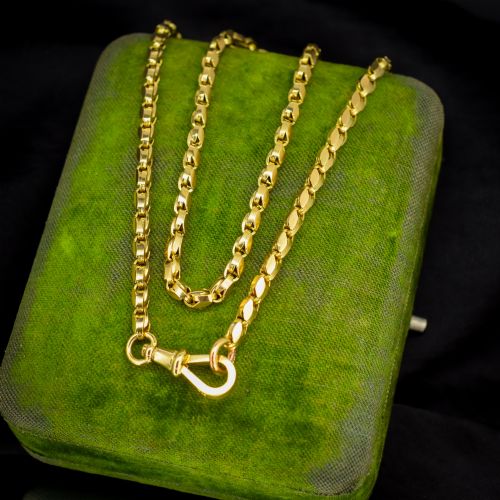
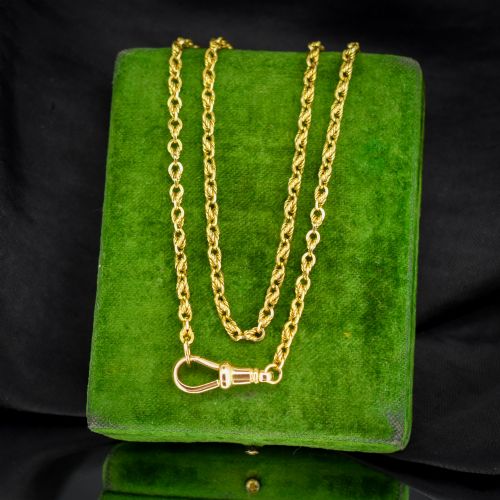
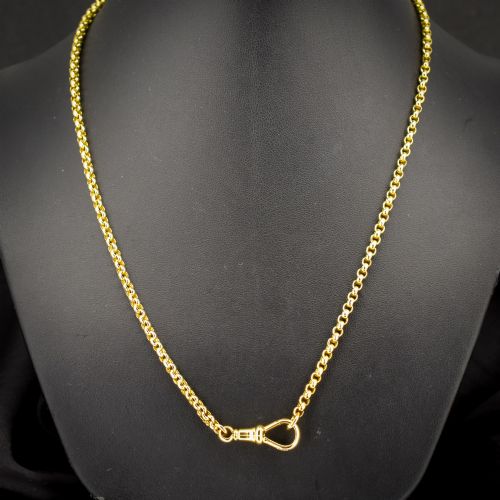
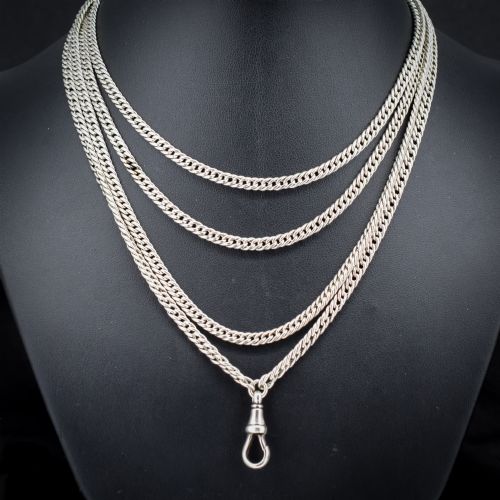




Victorian Swivel Clip Chain
A victorian swivel clip chain is a functional piece of historic jewellery prized for secure fastenings and adaptable lengths.
Victorian Swivel Clip Chain
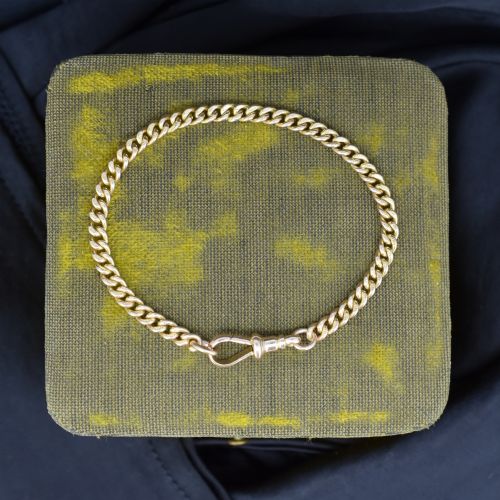
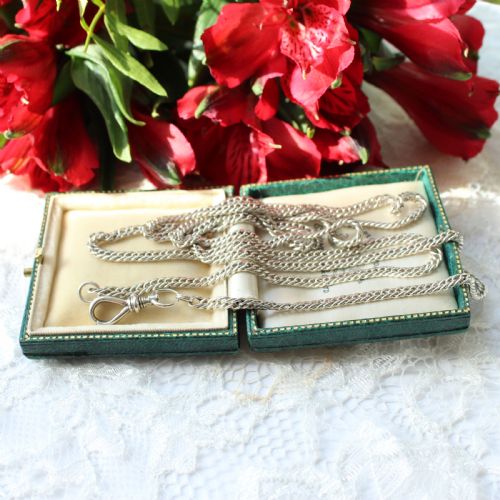
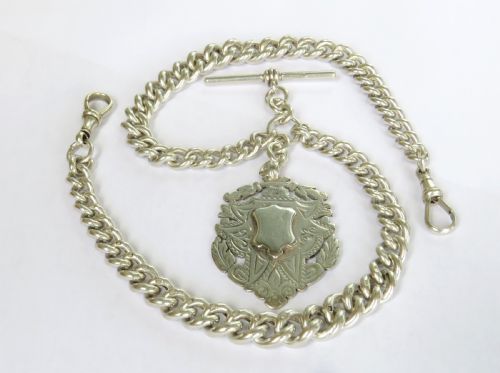
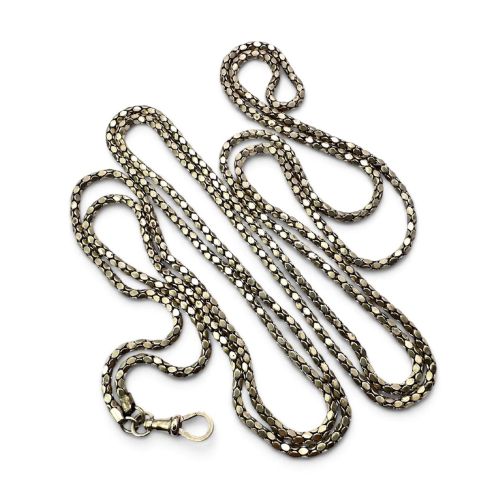
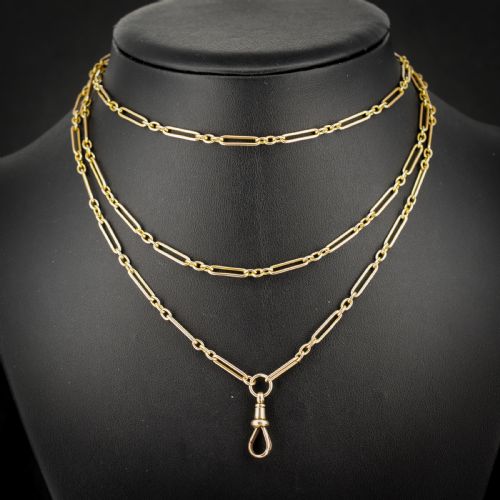
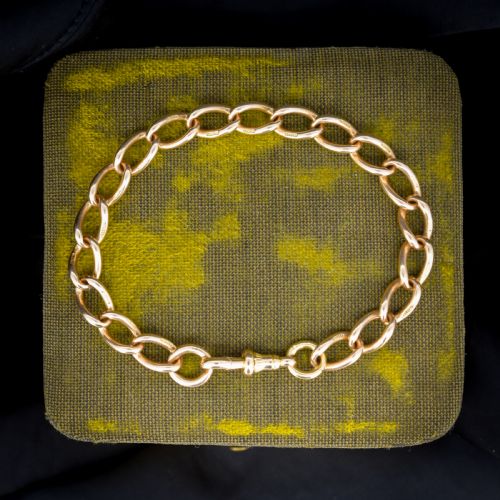
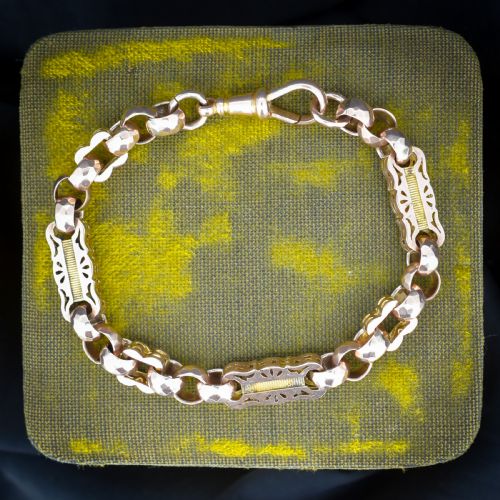
A victorian swivel clip chain combines substantial link construction with functional fasteners designed to secure pocket watches, charms or pendants. Buyers searching for a victorian swivel clip chain encounter long guard lengths, double pocket watch albert chains and shorter curb or fancy link bracelets.
The material evidence shows these pieces span the Victorian period, Edwardian era, and the early twentieth century. Common configurations include oval links, paper links, belcher links, and stars and bars patterns.
Most examples originate from the nineteenth century into the 1920s, appearing in silver, sterling silver, yellow gold, rose gold, white gold, and platinum. Many incorporate dog clips or albert clips alongside bolt rings for practical fastening.
Materials and construction
Makers constructed these chains primarily from yellow gold, rose gold, white gold, and silver. Gold purity spans 9ct, 15ct, 18ct, and 14 carat variants alongside sterling silver.
Link formations include heavy curb patterns, paper links, fancy links, and belcher structures. Goldsmiths integrated rotating swivel mechanisms into dog clips and albert clips to prevent chain twisting during daily use.
Victorian Swivel Clip Chain Retail Price Guide 2026
Typical asking prices for victorian swivel clip chain among the pieces listed under this phrase on Sellingantiques today, from the lower quarter to the upper quarter. They describe what is for sale here now, not the wider market.
Some guard chains stretch to a remarkable seventy inches, requiring multiple wraps to achieve a standard necklace length.
Judging quality in historic chains
Quality rests on the weight and integrity of the individual links and the mechanical reliability of the swivel clips. Heavier chains demonstrate substantial metal usage and robust construction.
The precision of the spring mechanism within the dog clip or swivel clasp indicates standard of manufacture. Original maker marks, such as Connell, contribute to historical interest.
The Victorian Swivel Clip Chain Glossary
- Dog clip
- A spring-loaded fastener with a pivoting tongue used to secure charms or watch chains. It provides a secure closure.
- Albert chain
- A pocket watch chain designed to be worn across a waistcoat or draped around the neck. Double versions attach at multiple points.
- Longuard chain
- An exceptionally long chain worn draped around the neck, often measuring over forty inches. They frequently terminate in swivel clips.
- Curb link
- A chain pattern composed of uniform links twisted to lie flat. It provides strength and flexibility.
- Belcher chain
- A link style featuring uniform round links that are wider than they are thick. It remains a sturdy choice for daily wear.
Victorian Swivel Clip Chain: Frequently Asked Questions
How were these chains originally worn?
Victorian watch chains secured pocket watches to waistcoats or garments for daily timekeeping. Long guard versions draped around the neck to hold watches or pendants safely.
Today, many buyers wear these pieces as necklaces or wrap them as bracelets. The integrated clips make adding charms straightforward.
What metals are these chains made from?
The pieces appear in sterling silver and various gold purities including 9ct, 14 carat, 15ct, and 18ct yellow, rose, and white gold. Platinum also appears in combination with gold.
Different colours reflect period preferences and regional metal standards. Gold content often dictates the overall weight and durability of the link.
How do swivel clips function?
A swivel clip uses a rotating base attached to a spring-loaded tongue. This rotation stops the chain from twisting and tangling during movement.
Users press the spring lever to open the loop and attach pendants or watch loops. The mechanism locks shut once released.
How can I tell the period?
Dating relies on hallmarks, metal purity standards, link styles, and associated clasp designs. Victorian examples often feature distinct curb, paper, or fancy link formations.
Edwardian and later twentieth-century pieces incorporate refined platinum or gold combinations. Maker marks help narrow down the exact production timeframe.