
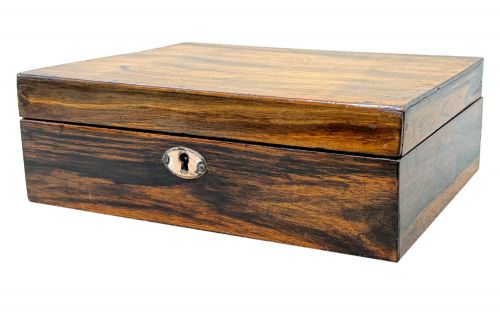
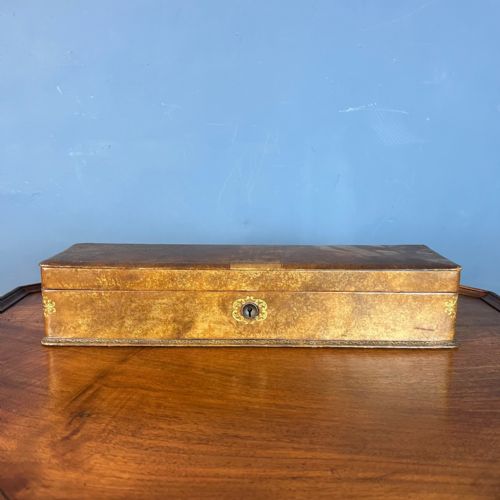


Victorian Document Storage Box
A victorian document storage box organises papers with solid period craft.
Victorian Document Storage Box
A victorian document storage box provides sturdy desktop or campaign housing for papers, deeds and correspondence. These pieces range from mahogany deed boxes and oak stationery cases to leather-tooled boxes and camphor wood chests.
The version most commonly met on this page is the mahogany or oak desk box, often fitted with brass mounts or handles for travel. They also appear in burr walnut, rosewood and pine, spanning the mid-nineteenth century to the Edwardian transition.
How they were made
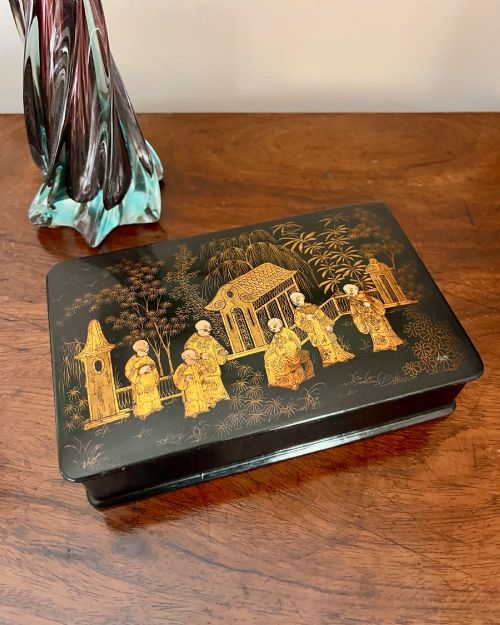
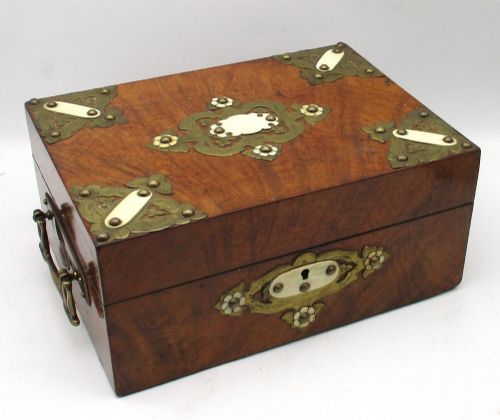
Cabinet makers constructed these boxes using dense timbers such as mahogany, oak, walnut and camphor wood, frequently reinforced with brass corners, straps and flush carrying handles. Surfaces often feature marquetry inlay, tooled leather or carved details.
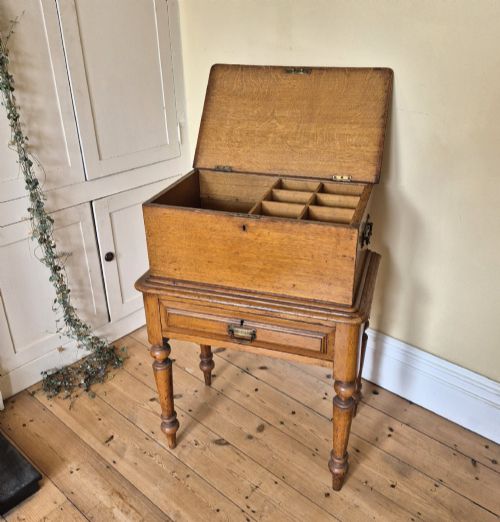
Interiors typically utilise fitted trays, dividers or lined compartments designed to sort letters, documents and writing instruments securely. Joinery relies on precise dovetailing to withstand regular handling and transport.
Listings feature woods including mahogany, oak, walnut, rosewood, burr walnut, teak and camphor wood.
What varies in quality
Quality rests upon the selection of timber and the precision of the brass hardware and joinery. Fine examples display carefully matched burr veneers, crisp carving and robust internal fittings that remain fully operational.
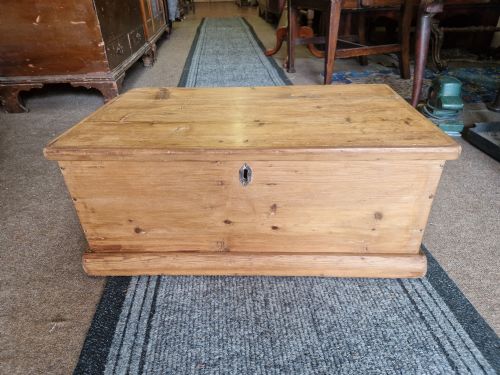
Simpler pine or utilitarian boxes serve functional storage needs with plain board construction. Higher-tier pieces integrate complex locking mechanisms, secret drawers and detailed marquetry inlay.
W J Milne
The Victorian Document Storage Box Glossary
- Campaign
- Furniture and boxes built in sections with recessed brass fittings for military transport. These items are designed to dismantle or travel easily.
- Deed box
- A rigid container specifically sized for legal documents, land indentures and important certificates. They are frequently reinforced in iron or brass.
- Stationery box
- A desktop cabinet featuring tiered slots and compartments for holding paper, envelopes and writing accessories. These often include fall-front or sloping lids.
- Tunbridge ware
- Small wooden items decorated with microscopic mosaic patterns made from differently coloured natural timbers. The designs frequently feature geometric bands or floral motifs.
- Marquetry
- The art of applying decorative veneer pieces to a structure to form picture designs or patterns. Craftsmen use varied woods to achieve tonal contrast.
Victorian Document Storage Box: Frequently Asked Questions
What is a deed box?
A deed box is a heavy-duty container designed to protect legal documents, land titles and important family papers from moisture and theft. They are usually built from dense hardwoods like mahogany or oak and reinforced with metal bands.
Many feature secure locks and internal compartments to keep papers flat and organised. Their robust construction reflects their original purpose as portable archives for lawyers and landowners.
How do I clean the wood?
Clean nineteenth-century wood surfaces using a soft, dry cloth to remove dust and surface grit. Avoid modern liquid polishes that leave silicone buildups and instead apply a traditional beeswax paste sparingly.
Buff the surface gently with a clean cloth to maintain a natural, protective sheen. Keep the box away from direct heat sources and strong sunlight to prevent the timber and veneer from splitting.
Are campaign boxes waterproof?
Campaign boxes are built to withstand travel and changing weather conditions during military service overseas. While tightly joined timbers and brass bindings offer good protection against dust and moisture, they are not hermetically sealed.
Their primary design focus is structural durability during transport rather than long-term archival waterproofing. Storing sensitive papers inside secondary protective folders remains advisable.
How do I date these boxes?
Dating relies on observing construction methods, timber choices, lock types and decorative styles. Mid-nineteenth-century examples often feature heavy mahogany construction with hand-cut dovetails and simpler brass hardware.
Later Victorian pieces from the eighteen-eighties and nineties frequently incorporate machine-cut elements, complex internal stationery tiers or differing veneer styles like burr walnut. Maker stamps and patent locks also provide reliable chronological markers.