



Victorian Dinnerware
Victorian dinnerware comprises plates, bowls and large services in ironstone, porcelain and earthenware, offering durable utility and hand-painted table presence for daily dining or display.
Victorian Dinnerware
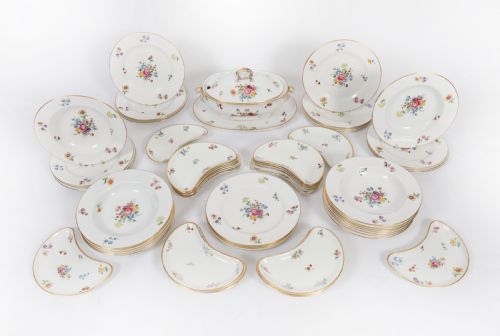
When searching for victorian dinnerware, a buyer encounters a diverse selection ranging from massive multi-piece sets down to individual cabinet plates. The predominant forms appearing here are dinner plates, complete dinner services, soup bowls and decorative cabinet plates created across the nineteenth century.
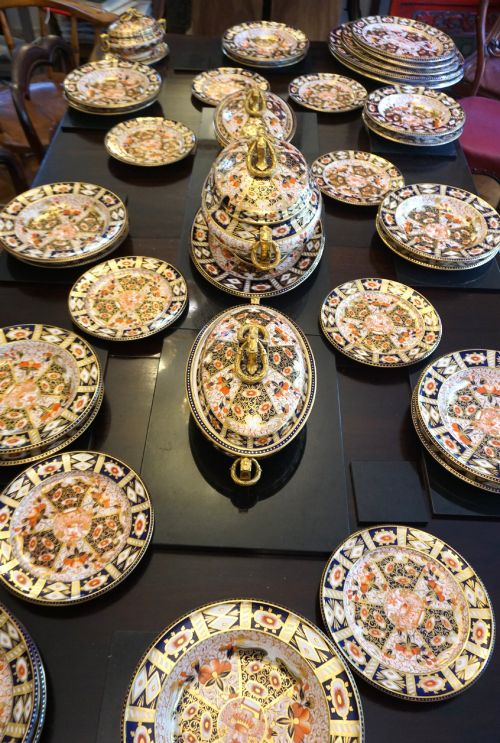
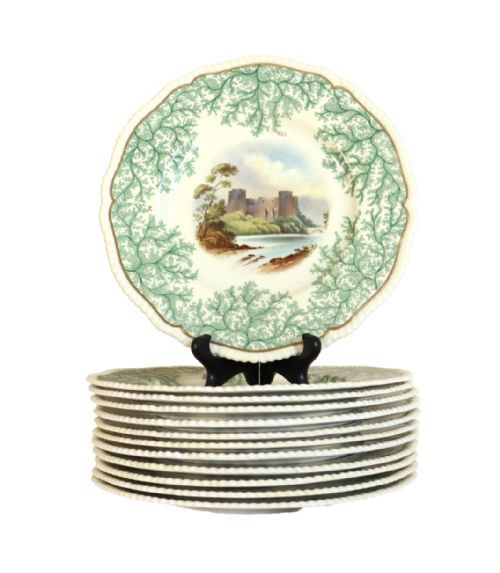
The material foundations span robust ironstone alongside refined porcelain and earthenware. Services often showcase named patterns such as Willow, Imari, and botanical or landscape motifs produced by prominent English factories.
Materials and production
Production relied heavily on durable ironstone and porcelain, providing the structural body for heavy daily use or fine display. Artisans applied glaze, gold leaf, and enamel alongside hand-painted details to finish each surface.
Specialised techniques such as transfer printing created repeating patterns like the Willow scene, whilst intricate hand painting and pate sur pate added raised decorative depth to cabinet porcelain.
Victorian Dinnerware Retail Price Guide 2026
Typical asking prices for victorian dinnerware among the pieces listed under this phrase on Sellingantiques today, from the lower quarter to the upper quarter. They describe what is for sale here now, not the wider market.
Listings feature ironstone, porcelain and earthenware spanning the nineteenth century alongside later Edwardian examples.
Gradations in quality
Quality separates standard utilitarian wares from ambitious cabinet pieces through the crispness of transfer printing and the precision of hand-painted brushwork. Superior examples display meticulous enamel work and carefully preserved gold leaf highlights.
The completeness and extent of a service also define its standing, with large matching sets carrying greater architectural integrity than assembled groups of plates.
Davenport·Spode·Copeland·Coalport·Masons Ironstone·Doulton·Limoges·Minton·Elkin & Newbon·Mintons
The Victorian Dinnerware Glossary
- Ironstone
- A dense, durable type of earthenware patented in the nineteenth century to rival Chinese porcelain. It resists chipping and formed the backbone of heavy-duty dining services.
- Pate sur pate
- A ceramic decoration technique where layers of liquid clay are built up sequentially to create a low relief cameo effect. It requires immense skill from the decorator.
- Cabinet plates
- Decorative plates intended primarily for display in cabinets rather than for holding food at the table. They frequently feature armorial bearings or elaborate hand-painted scenes.
- Imari Japan pattern
- A decorative style inspired by Japanese export wares featuring iron red, cobalt blue and gold. English potteries adopted this palette enthusiastically during the nineteenth century.
Victorian Dinnerware: Frequently Asked Questions
Can I use these antique sets for daily dining?
Many nineteenth-century ironstone and earthenware services were built for robust daily use and handle modern dining well. However, pieces featuring delicate gold leaf, enamel or pate sur pate require gentle hand washing.
Buyers wishing to use their sets regularly should inspect the glaze condition and check for any hairline cracks before serving hot food.
How do I date a set of plates?
Dating relies on impressed factory marks, registration diamonds and maker stamps stamped into the ceramic body. Stylistic clues such as floral borders or transfer-printed scenes also point to specific decades.
Cross-referencing registration numbers with archival records reveals the exact month and year of manufacture for many nineteenth-century services.
What is the difference between porcelain and ironstone?
Porcelain is a vitrified, translucent ceramic fired at high temperatures to achieve a refined, delicate body suited to formal dining and cabinet display. Ironstone is an opaque, heavily reinforced earthenware designed for maximum durability.
Ironstone pieces feel considerably heavier in the hand and show greater resistance to thermal shock and everyday impacts.
How should I display cabinet plates safely?
Cabinet plates look best mounted on secure wire wall hangers or displayed upright in grooved display cabinets. Ensure the mounting hardware supports the full weight of the ceramic without putting pressure on the rim.
Keep display areas away from direct sunlight to protect hand-painted enamel colours and gold leaf highlights from fading over time.